Shinkansen S Work Car: Booking, Seats and Rules
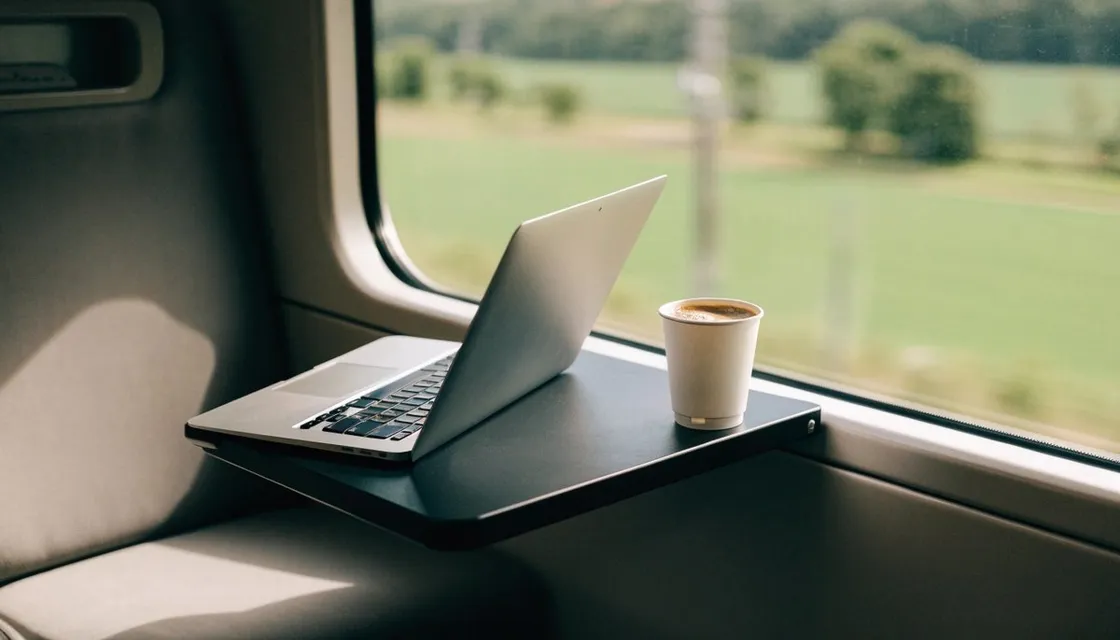
If you work from Tokyo and travel to Nagoya, Kyoto, Osaka or further west, the S Work car is the easiest way to turn the ride into a working session.
It is car 7 of the 16-car Tokaido and Sanyo Shinkansen, set aside for people who want to use a laptop or phone for work.
At the time of writing, a regular S Work seat costs the same as an ordinary reserved seat. What you get is a carriage where typing and quiet calls are expected, not frowned on.
A two-hour train ride is either two hours lost or the most focused block of your week.
What is the S Work car?
The S Work car is a reserved, ordinary-class carriage (car 7) on Nozomi trains between Tokyo and Hakata, according to JR Central’s smartEX FAQ.
It is not a separate class of train and not a private room. It is a normal carriage with house rules that suit work.
Passengers are asked not to chat with each other or turn the seats around. Keyboard noise is accepted within reason, and device sounds should be muted or go through earphones.
How do you book an S Work seat?
You book it online, not at a ticket window. JR Central sells S Work seats through its EX services (EXPRESS Reservation and smartEX), and JR West’s e5489 can also be used.
For many visitors, smartEX is the practical option because it has an English site and is free to register.
Sales open at 10:00 one month before the travel date and run until a few minutes before departure, per the smartEX FAQ. Groups of one to six people can book together.
A few things to know:
- Green Car and non-reserved seats are not part of S Work.
- Some discounted fares, such as certain early-booking tickets, cannot be used for S Work seats.
- If the timetable is disrupted, you may be moved to another car.
S Work P seats: worth the extra?
Inside car 7, rows 6 to 10 have S Work P seats. These are the A and C seats on the three-seat side, with the middle B seat replaced by a partition, which gives you a wider surface and some privacy from your neighbour.
They cost extra on top of the reserved fare. JR West’s page lists the surcharge as ¥2,000 at the time of writing; it was lower when the seats launched, so check the current price before you book.
Many people find the P seat worth it on a long run, such as Tokyo to Osaka, if they plan to work the whole way. For a short hop to Nagoya, a regular S Work seat is usually enough.
Can you take calls in the S Work car?
Yes, with care. JR’s guidance says phone calls and web meetings are allowed at your seat as long as you are considerate of other passengers.
In practice that means a headset or earbuds with a mic, a low voice, and using chat when you can.
For a call where you need to speak freely, the newer N700S trains have a paid business booth in the deck between cars 7 and 8. It is booked on your own phone through a QR code, charged in 10-minute blocks, and limited to 60 minutes per booking. Check the current rates on JR’s site.
If the call matters, it is often easier to take it before you board. Our guide to work booths and video calls in Tokyo covers station booths near the platforms.
Wi-Fi and power on board
Cars 7 and 8 of the N700S have S Wi-Fi for Biz, a free connection with more capacity and no time limit. The older Shinkansen Free Wi-Fi, which needs reconnecting every 30 minutes, is still available on other cars.
Even so, tunnels and mountain sections drop the connection now and then.
Many remote workers treat the Shinkansen as offline-first time: download the files you need, write, review and draft, and save uploads and live calls for the stretches where your phone shows a strong signal.
Power outlets are standard on the newer trains, but bring a short cable. An outlet at your feet and a laptop on the tray table do not always meet comfortably.
Making the most of the ride
The S Work car works best when you plan the work to fit the ride, not the other way around.
- Choose deep work, not meetings. Tokyo to Shin-Osaka on a Nozomi is roughly two and a half hours, a good block for writing or a long review.
- Board with a plan. Pick one or two tasks before you leave, so you are not deciding while the train pulls out.
- Mind the time zone. If your team is in the US or Europe, a morning train can line up with their evening. Our time-zone guide helps you plan around those overlaps.
- Pack light. S Work does not offer seats with an oversized baggage area, so large suitcases are awkward here.
FAQ
Does the S Work car cost more than a normal reserved seat?
A regular S Work seat is priced the same as an ordinary reserved seat for EX members at the time of writing. Only the S Work P seats add a surcharge.
Which trains have the S Work car?
Car 7 on Nozomi trains on the Tokaido and Sanyo Shinkansen between Tokyo and Hakata. Check the booking screen for your specific train.
Can I book it at the station?
S Work seats are sold through online services such as smartEX, EXPRESS Reservation and e5489. Booking online in advance is the reliable route.