Working a Layover: Haneda and Narita for Remote Workers
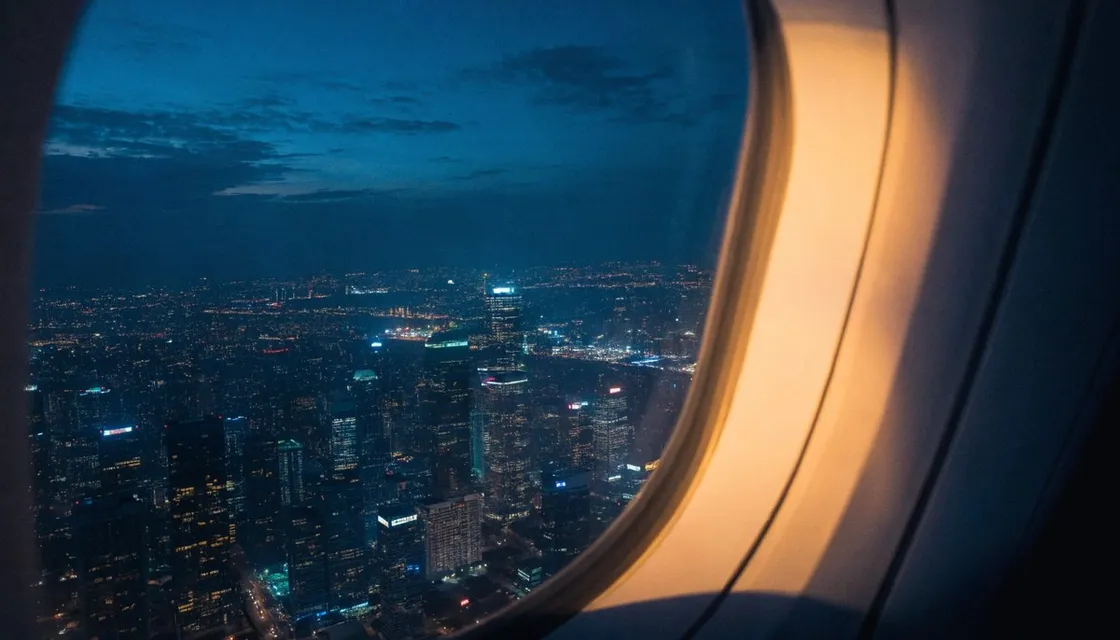
If you are flying through Tokyo with a laptop and a few spare hours, the airport you land at changes the whole calculation.
Haneda sits close enough to the city that a long layover can become an actual afternoon in Tokyo. Narita rarely gives you that, so the terminal itself has to be the office.
That single difference is worth planning around before you book.
Most travelers treat airport time as dead time. It does not have to be. A Tokyo terminal is quiet, clean, reliably powered, and almost aggressively punctual, which turns out to be a decent environment for the kind of focused work that does not survive a noisy café.
A layover is not lost time. It is just an office you did not choose.
The distance question, first
Haneda is the near airport. Depending on which line you take and where you are heading, central Tokyo is usually somewhere in the half-hour to hour range.
That changes what a layover means. With five or six hours between flights, some people leave the terminal entirely, do a couple of hours of work in the city, and come back with time to spare.
Narita is further out. Plan on roughly an hour to ninety minutes each way, depending on whether you take the fast train, the ordinary train, or the highway bus.
The bus is the budget option and it is genuinely cheap, but it is also the one most affected by traffic. If your margin is thin, the train is the calmer choice.
The rough rule many travelers land on: under five hours at Narita, stay in the terminal. Under four hours at Haneda, stay in the terminal. Above that, the city becomes an option worth considering.
Build in a buffer for security and immigration either way, and remember that leaving the international side means clearing it all again on your way back.
What the terminals actually give you
Both airports run free wifi, and it is generally fine for email, documents, and messaging.
For a video call you may want your own connection. If you are already carrying a Japanese SIM or eSIM, tethering tends to be the more predictable path, especially at busy hours.
Power is the thing to scan for. Newer seating areas and the food courts usually have outlets built in, and there are charging counters dotted around, but they fill up fast before evening departures.
Arriving early is not just about security lines. It is also about getting a seat next to a socket.
Coin lockers exist at both airports, and using one is often the difference between a productive few hours and dragging a bag around. Sizes and payment methods vary by location, so check the machine before you commit.
Konbini inside the terminals cover coffee, food, phone cables, and the small things you forgot.
Choosing a spot to actually work
Departure floors are the loud ones. Announcements, queues, families, and rolling luggage.
Look one level away instead. Observation decks, upper-floor restaurant areas outside of meal rushes, and the quieter ends of a concourse tend to be considerably calmer than the space right in front of the check-in counters.
Airline lounges are the obvious upgrade if you have access through status or a lounge card. Some card-access lounges are landside, which is useful when you are early but not yet checked in.
There are also paid rest areas and shower facilities at both airports, and capsule-style accommodation inside or adjacent to some terminals for genuinely long waits and overnight connections. Availability and operating hours shift, so confirm on the day rather than assuming.
For a call you cannot take in the open, the enclosed work booths that have spread across Japanese stations and buildings also appear in airport settings. When you can find one, an hour inside is worth the fee.
Overnight is a different problem
Haneda’s international terminal has traditionally kept areas open through the night, and it is a reasonably comfortable place to be at 3am if that is your situation.
Narita is stricter. Parts of the terminals close overnight, seating is limited, and the experience is closer to endurance than rest.
If your flight leaves early from Narita, the calmer plan is usually a hotel near the airport rather than a night in the building. Several sit within a short shuttle ride and are used to guests checking in late and leaving before dawn.
Timing, and the thing nobody plans for
Japanese airports run on schedule, which is a gift and a trap.
The gift is that you can plan your working block precisely. The trap is that you will be tempted to shave your buffer, and then a train delay or an unexpectedly long security queue eats the margin.
Treat your last working hour as optional. Pack up, get through the gate, and if there is time left over, work at the gate instead.
That one habit turns airport work from stressful into ordinary.
FAQ
Is the free airport wifi good enough for video calls?
Usually workable, sometimes not. It depends heavily on the terminal, the time of day, and how many people are around you. If the call matters, tether from your own SIM or eSIM and treat the airport wifi as the backup.
Can I leave the airport during an international layover?
It depends on your nationality, your visa status, and whether you have cleared immigration. Many travelers can enter Japan on a short-stay basis, but this is not universal, and the rules are worth checking against your own passport and itinerary before you plan around it.
Which airport is better if I only care about working?
Haneda, most of the time. It is closer to the city, the newer terminal spaces are comfortable, and the overnight situation is friendlier. Narita is perfectly workable, it just gives you fewer options once you are inside.