Where to Print and Scan Documents in Tokyo: The Konbini Guide
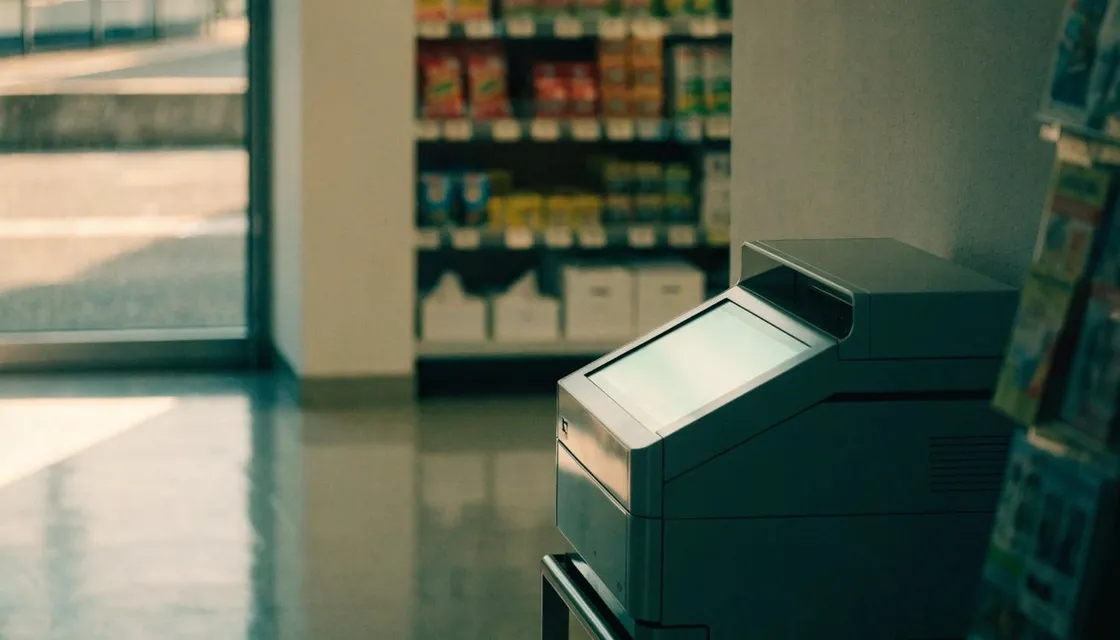
The short version: you do not need a printer in Tokyo, because every convenience store already has one, and it is better than most home printers you have ever owned.
The multicopy machine in the corner of a 7-Eleven, FamilyMart, or Lawson will print your PDF, scan your signed contract, copy your passport, and produce official-quality photos, at almost any hour, for coins.
Remote work is supposed to be paperless. Then a client asks for a signed and scanned agreement, an embassy wants two printed copies of a form, or an airline insists on a paper itinerary, and suddenly the most digital person in the room is hunting for a printer.
In most cities this means finding a print shop during business hours. In Tokyo it means walking to the nearest konbini, which is rarely more than a few minutes away.
How konbini printing actually works
There are two ways to get a file onto the machine: upload it in advance, or bring it with you.
The upload route is the one worth learning. 7-Eleven uses a service commonly known as netprint, while FamilyMart and Lawson share a similar system usually called network print. Both have websites and apps with English options.
You upload a PDF or image from your laptop or phone, and the service gives you a short reservation code. At the store, you tap the print menu on the machine, enter the code, feed in coins or tap an IC card, and your pages appear.
No account with the store, no cable, no driver installation. The file simply waits on a server until you show up.
The code is the whole trick. Upload from your desk, print from any branch in the city.
The bring-it-with-you route also works. The machines read USB drives and SD cards, and most now pair directly with a phone app over Wi-Fi. PDFs are the safest format; Word files can render unpredictably, so export to PDF first.
Prices are modest. Black and white pages cost pocket change, color somewhat more, and A3 tops out around the price of a coffee. Figures shift over time, so treat the machine’s on-screen price as the real one.
Scanning, copying, and the other hidden functions
The same machine scans, and this is the feature that quietly saves nomad paperwork.
Place your signed page on the glass, choose scan, and save the result to a USB drive or straight to your phone via the app as a PDF or JPEG. Resolution is high enough for contracts, visa documents, and anything an embassy or bank might reasonably demand.
Copying works the way you expect, with one pleasant surprise: many machines have a dedicated mode for copying both sides of an ID card onto a single page, which is exactly the format Japanese banks, phone carriers, and landlords tend to ask for.
The machines also print photos, including formal ID photos sized for residence card and visa applications. Photo booths on the street do this too, but the konbini route is cheaper if you already have a suitable photo on your phone.
Some machines still send faxes. You may laugh, and then one day a Japanese institution will ask you for one, and you will know where to go.
When the konbini is not enough
For a ten page contract, the konbini is perfect. For anything bigger or stranger, Tokyo has deeper options.
Dedicated print shops handle large volumes, posters, bound documents, and business cards. Chains with English-friendly self-service machines and staff counters exist in most business districts, and many operate late or around the clock in central areas.
Coworking spaces almost always include a printer, and day-pass visitors can usually use it within a fair-use limit. If you already work from one, this beats coins at the konbini for regular printing.
Business hotels and many share houses keep a printer at the front desk or in a common room. It is always worth asking before assuming you need to go out.
In a city this dense, the question is never whether you can print. It is which of the three options within five minutes is cheapest.
One practical warning: the konbini machines are shared and visible. For sensitive documents, collect your pages promptly, and remember to take the original off the scanner glass. Forgotten passports on copy machines are a small but real genre of traveler misfortune.
A quick workflow that covers most situations
Keep every document you might conceivably need as a PDF in cloud storage. When paper is demanded, upload to netprint or network print from wherever you are, walk to the nearest store, and enter the code.
For signatures, print, sign, scan on the same machine in one visit, and email the result before you leave the store. The whole loop takes ten minutes.
For anything official, print one more copy than requested. Japanese bureaucracy rewards the prepared, and the marginal cost is a few coins.
FAQ
Do the machines have English menus?
Yes. All major chains offer an English language toggle on the touchscreen, usually via a button in a corner of the home screen. The upload websites and apps also have English versions, though some corners of them revert to Japanese.
Can I print directly from my phone without a USB drive?
Yes. Each chain has an app that either uploads to a code-based service or connects to the machine over its own Wi-Fi. The code route is the more reliable of the two, and it means any branch can print your file, not just the one you paired with.
What file formats are safest?
PDF, without question. JPEG and PNG work well for images. Office formats are supported in some services but render inconsistently, so export documents to PDF before uploading and check page sizes, because Japanese machines default to A4 rather than US Letter.