Tokyo Supermarkets: A Nomad's Guide to Shopping and Cooking Cheaply
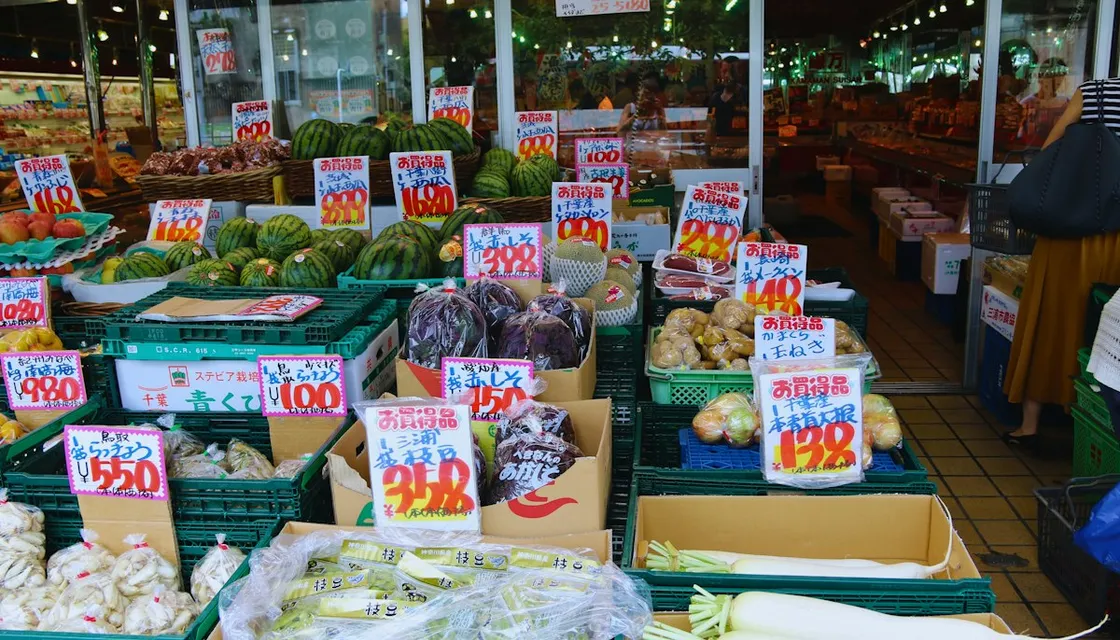
The quickest way to bring down what Tokyo costs you isn’t eating worse. It’s shopping where the people who live here shop.
Two or three trips a week to a neighborhood supermarket usually do more for a monthly budget than any amount of hunting for cheap restaurants.
The food’s good, the portions are fair, and once you know the layout the whole thing takes about fifteen minutes.
The konbini gets you through the next hour. The supermarket gets you through the month.
Why the supermarket saves you the most money
Eating out in Tokyo is famously reasonable, which is exactly why so many remote workers never bother buying groceries.
But a teishoku lunch and a konbini dinner every day add up, and before long they’re one of the biggest lines in your monthly budget.
Shopping instead can shift that number a lot, often by a third or more, depending on what you were spending before.
There’s a less obvious upside too. With food in the fridge, you don’t lose twenty minutes right when you’d finally gotten into a good focus.
Supermarket chains and their price levels
Supermarkets here sit on a rough price ladder. Once you know which rung you’re on, you stop second-guessing every price.
At the cheap end are chains like OK, Gyomu Super, Hanamasa, and the big Aeon and Ito-Yokado stores. Bulk sizes, frozen goods, low prices, not much polish.
In the middle are the everyday neighborhood stores: Life, Summit, Maruetsu, Inageya, Tokyu Store. Good produce, full prepared-food counters, and usually one near any residential station.
At the top are Seijo Ishii, Kinokuniya, and the depachika food halls under department stores. Great imports and beautiful things, at prices that reward a little self-control.
A lot of nomads end up doing one cheap bulk run plus top-ups at a store nearby. That covers most of what a temporary kitchen needs.
The discount sticker, and when to arrive
The most useful habit in a Japanese supermarket is keeping an eye out for the yellow and red stickers.
Prepared food, sashimi, bento, and bakery items get marked down toward the end of the day, usually starting with a small discount and going deeper in steps.
Timing varies by store, but the biggest markdowns generally show up late in the evening. Many stores also do a smaller round at midday for the morning’s prepared food.
You only need a few words: 20%引き and 2割引 both mean 20% off, 100円引き means 100 yen off, and 半額 means half price.
None of this is a secret trick. Staff expect it, regulars plan around it, and it’s just how the day winds down in a Japanese supermarket.
What is genuinely cheap here
Tokyo prices don’t line up neatly with what you may be used to, so it helps to shop around what Japan does well.
Eggs, tofu, natto, noodles, and most seafood are reliably good value, and even the cheap versions are unusually good. Rice is the exception: its price has swung sharply over the past couple of years, so check the tag instead of assuming.
Seasonal vegetables are reasonable if you buy what’s piled up near the entrance, and pricey if you want something out of season.
Fruit, beef, cheese, and imported goods are expensive. Keep them as occasional treats, not staples, and your weekly total stays calm.
Visitors tend to overlook frozen vegetables and pre-cut produce. In a small kitchen, they’re often what decides whether you cook or order in.
Cooking in a tiny kitchen
Most short-term apartments and share houses in Tokyo give you one induction or gas burner, a small sink, and almost no counter space.
That’s easier to work with than it looks, because Japanese home cooking grew up around exactly this kind of kitchen.
A donabe or one deep pot handles soups, nabe, boiled noodles, and rice. One good frying pan handles the rest.
With rice, miso, soy sauce, mirin, dashi packets, and a bag of frozen vegetables, you can have a meal ready in about ten minutes.
If there’s a rice cooker, use it. If not, rice cooks fine in a pot with a lid, and supermarkets also sell perfectly decent microwave pouches.
Bags, price tags, and checkout
Bring a bag. Plastic bags cost a few yen, and the checkout moves faster than most newcomers expect.
Read price tags twice.
Many show both a pre-tax price (税抜 or 本体価格) and the tax-included price (税込), and sometimes the pre-tax one is printed bigger. You pay the 税込 price: 8% on most food and drink, 10% on alcohol and non-food items like detergent.
(A bill approved by the Cabinet in October 2026 would cut the rate on food and drink from 8% to 1% for two years from April 2027, if the Diet passes it. Check the National Tax Agency’s latest guidance for the rate that applies when you visit.)
You bag your own groceries, just not at the register. Pay first, then take your basket to the packing counters behind the tills, where there’s space and free tape.
Most stores now take IC cards and QR payments, but it’s not uniform at the budget end. At Gyomu Super, for example, what’s accepted can differ from store to store, so check the signs at the register before you fill a whole basket.
You’ll be offered point cards all the time. Saying no is completely normal, and a quick “daijobu desu” ends it politely.
Fridges in temporary housing are often shared or tiny, so shopping for two or three days at a time usually works better than one giant weekly haul.
Fitting shopping into a work week
What sticks isn’t a meal-prep system. It’s a short walk you take regularly.
Stopping by the supermarket on your way back from a café or coworking space costs you almost no time, and it takes the “what’s for dinner” question off the table.
Cooking two simple meals a week and eating out the rest is a perfectly good result. What matters is having the option. You don’t have to prove anything.
Keep it up for a month in Tokyo and you’ll usually notice it twice: once in what you spent, and once in how rarely your day got interrupted by figuring out food.
FAQ
Are Tokyo supermarkets actually cheaper than eating out?
For most remote workers, yes, though the gap shrinks if you were already living mostly on konbini and teishoku. The bigger savings usually come from breakfasts, drinks, and snacks, not from replacing every dinner.
Do I need Japanese to shop comfortably?
No. Prices and weights are in numbers, most packaging is easy to read from the pictures, and checkout is short and predictable. A translation app takes care of the odd question about ingredients or allergens on a label.
What if I have no kitchen at all?
Supermarkets still work well. The prepared-food section, especially after the evening markdowns, is usually better and cheaper than the konbini equivalent, and some stores have a microwave you can use.