Day-Use Hotel Rooms in Tokyo: A Private Desk by the Hour
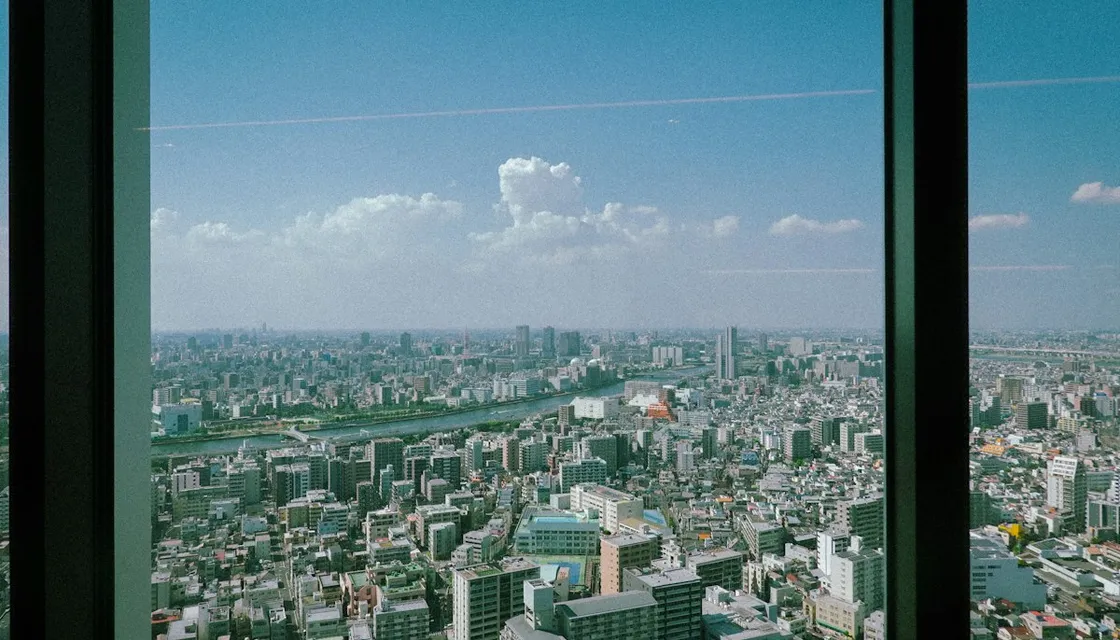
When you need a door that locks for three hours, the answer in Tokyo is usually a hotel room, not a coworking space.
Business hotels across the city sell their empty daytime inventory as day-use plans, and remote workers are exactly who they are hoping will book.
You get a private room, a desk, a bathroom, air conditioning you control and total silence for your calls. Usually for a small fraction of what the same room costs overnight.
It is one of the least-known work options in the city, mostly because the listings are written in Japanese and rarely surface in English searches.
Tokyo has an enormous amount of empty daytime space. The city just does not advertise it in English.
What a day-use plan actually is
Hotels call these デイユース (day use) or テレワークプラン (telework plan), and sometimes 日帰り (day return). Not every hotel sells them, and plans come and go, so check current listings rather than assuming a given hotel still offers one.
The idea is simple. Between checkout in the morning and check-in in the afternoon, a hotel is sitting on hundreds of clean, unused rooms. Selling a few of them by the hour costs almost nothing.
Blocks are typically sold in fixed lengths, such as three or six hours, inside a window the hotel sets, often somewhere between late morning and early evening.
Rates vary enormously by district and by season, so treat any figure you see quoted online as a starting point rather than a rule. The general pattern holds though: a day block costs meaningfully less than a night.
When it beats a coworking day pass
Coworking is better for community, printers, meeting rooms and a reason to leave the house.
A hotel room is better for exactly one thing, and it happens to be the thing that breaks most nomad workdays in Tokyo: uninterrupted private audio.
If you have back-to-back client calls, a recorded interview, a job interview, a presentation, or anything where a background of espresso machines and phone alerts is unacceptable, the hotel room wins outright.
It also wins on comfort. You can lie down between calls, take a shower after a humid commute, and leave your bag in the room while you go find lunch.
And it wins on arrival days. If you land at Haneda or Narita in the morning and your apartment or share house will not let you in until evening, a day-use room turns a dead half-day into a productive one.
How to find them
The search terms matter more than the platform.
Searching in Japanese for デイユース plus a station or ward name gets you far more results than any English query will.
Rakuten Travel and Jalan both have day-use filters, and there are dedicated day-use booking sites that aggregate the same inventory. Some hotels only list these plans on their own websites, so a direct look at a chain’s site is worth the extra click.
Business hotel chains are the most reliable source, since their whole model is built on functional rooms near stations.
Larger city hotels sometimes offer more generous day packages that include lounge access or a meal, which can be a nice occasional splurge but is rarely the efficient choice.
What to check before you book
Not every hotel room is a good office, and the photos will not always tell you.
Look for a proper desk and a real chair. Some compact rooms have only a narrow ledge and a low stool, which is fine for an hour and painful for six.
Check whether the room has a window. Interior rooms exist, and a windowless box does something unhelpful to a long afternoon.
Confirm the wifi situation. Most business hotels have wired LAN as well as wifi, and the wired connection is often noticeably more stable for video calls. Some rooms include a LAN cable, some do not.
Read the time window carefully. A plan advertised as six hours may only be available between fixed hours, and overstaying usually triggers an extra charge.
Finally, note the check-in method. Some hotels now use self-service kiosks, which is convenient if your Japanese is limited but can be confusing the first time.
Small print and etiquette
Day-use guests are still guests, and the usual hotel norms apply.
Bring your passport. Hotels must record the nationality and passport number of any foreign guest without an address in Japan, and a day-use booking is no exception.
If slippers are set out by the door, change into them. Keep noise reasonable even though you have a private room, since the walls in Japanese business hotels are thin.
Most day-use plans do not include breakfast, and the room will not be serviced during your stay.
Bringing a visitor into a day-use room is generally not permitted without registering them, so it is not a substitute for a meeting room.
Cancellation policies tend to be stricter than for overnight stays, sometimes with same-day charges. Worth reading before you click.
Where they cluster
Day-use inventory follows business hotel density, which in Tokyo means the areas built for commuters and business travellers.
Shinbashi, Kanda and the Nihonbashi side of Otemachi are thick with functional business hotels and easy to reach from almost anywhere.
Ikebukuro, Ueno and the west side of Shinjuku have similar density with slightly softer pricing.
Around the airports, hotels in Kamata and along the Keikyu line toward Haneda are useful if you are working around a flight.
Quieter residential areas have fewer options, so this is one case where the busy station districts are actually the better bet.
Making the hours count
The obvious trap is treating a paid room like a free one and drifting.
The nomads who use these plans well tend to book them for a specific reason, not as a general work session. A call block. A deadline. A recording. A day when the share house is unusable.
Go in with a short list of what has to be finished before you hand back the key card, and the room pays for itself.
Then step out into the neighbourhood afterwards. Business hotel districts have excellent cheap lunch, and you have just banked a quiet afternoon.
FAQ
Do I need to speak Japanese to book a day-use plan?
Not necessarily, but it helps. The booking platforms have English interfaces, though the day-use plans themselves are often described only in Japanese. A translation tool on the plan page is usually enough to confirm the hours and what is included.
Can I bring my own monitor or equipment?
Generally yes for anything portable, since it is your room for the block. Do not expect to mount or attach anything, and take everything with you when you leave.
Is a capsule hotel or net café cheaper for the same purpose?
Cheaper, yes. But a standard capsule or an open-ceiling net café booth is not a private room you can take calls in, and that is the entire point of a day-use plan. Some chains, such as Kaikatsu Club, do have lockable fully enclosed rooms; if you go that route, check with the shop that calls are allowed and how much sound carries. If your work is silent and solo, a net café booth or a library desk will cost less. If you need to speak out loud without being overheard, pay for the room.
If all you need is one short call, also look at STATION BOOTH: fully private booths, mostly inside train stations, run by JR East Building and booked through its STATION WORK service.