Working Through a Tokyo Summer Without Losing the Day
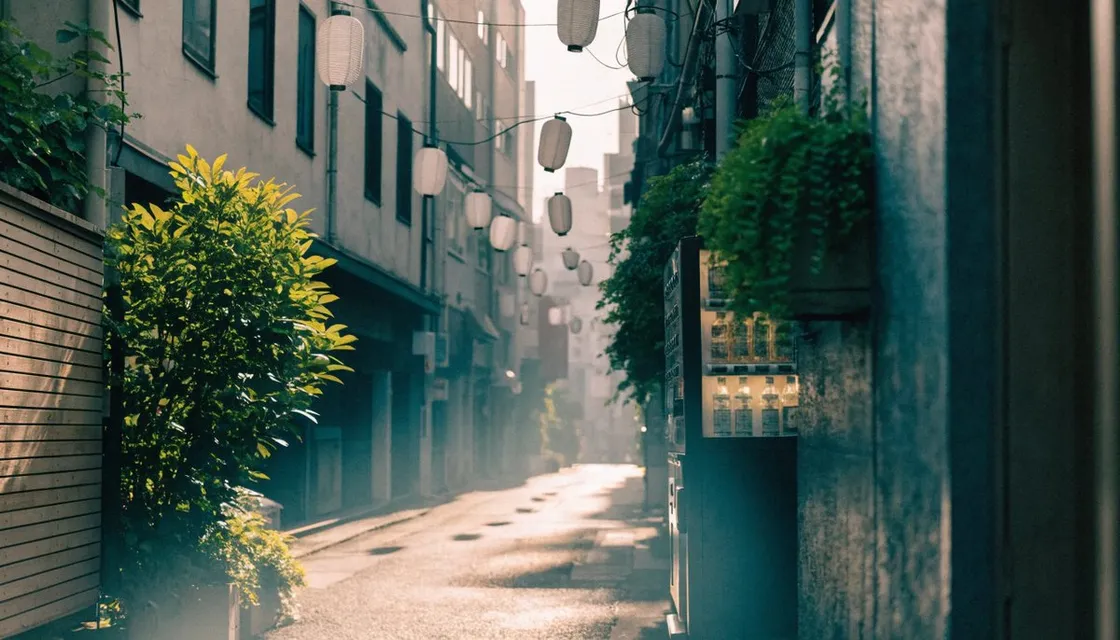
The short version: stop trying to work a Tokyo summer the way you worked a Tokyo spring. From roughly late June through early September, the city’s humidity does something specific to a working day.
It does not simply make you uncomfortable. It quietly removes your afternoon.
Nomads who plan around that keep their output; nomads who fight it spend August wondering why nothing gets finished.
Tokyo’s summer is not the hottest in the world, but the combination of temperature and moisture is what makes it heavy. Air that sits at high humidity stops your body from cooling efficiently, so a fifteen-minute walk to a café costs more than it should.
The practical response is not stoicism. It is scheduling.
Move the working day toward the edges
The most useful adjustment is also the simplest. Front-load the day.
Mornings before about ten are usable, sometimes pleasant, and the trains are survivable if you miss the peak. Many remote workers in Tokyo end up doing focused work from early morning until early afternoon, taking a genuine break through the worst of the heat, and picking up again in the evening when the air finally softens.
This tends to suit people working with European or American teams anyway. If your calls land in the Tokyo evening or late night, the hot middle of the day was never your productive block to begin with.
Summer just makes the case for a split schedule that was already sensible.
The city does not ask you to work harder in August. It asks you to work at different hours.
Evenings are the quiet reward. Once the sun drops, streets that were unpleasant at two in the afternoon become genuinely nice, and the outdoor seating that felt absurd earlier starts to make sense.
Choose rooms, not just cafés
In summer, the question stops being “which café has good coffee” and becomes “which room will hold its temperature for four hours.” Those are different questions.
Large chain cafés cool well but often cool aggressively, which creates its own problem. Cold air blown directly at a desk for hours is a reliable way to end the week with a stiff neck and a sore throat.
A light long-sleeve layer in your bag through August is not overkill in Tokyo; it is standard local practice, and it is why you will see people carrying cardigans in thirty-degree weather.
Public libraries are underrated here. Ward libraries across Tokyo are air-conditioned, quiet, free, and generally have study desks.
Rules on laptops and power outlets vary a lot by ward and by branch, so it is worth checking the specific library rather than assuming. Some allow laptop use only in designated rooms.
Coworking spaces earn their monthly fee in summer more than in any other season, largely because they remove the decision entirely. Department store upper floors, museum cafés, and hotel lobbies also hold up well as half-day options when you want cool air without commitment.
The commute is the part that gets you
Most heat trouble for remote workers happens in transit, not at the desk. Walking from a station to a café at one in the afternoon, standing on an above-ground platform, or crossing an open plaza with a laptop bag is where a day quietly goes wrong.
Underground passageways are a real tool. Central Tokyo has extensive connected basement networks, particularly around the larger stations, and using them can turn an exposed ten-minute walk into a mostly indoor one.
Learning the underground route between two points you travel often is a small piece of local knowledge that pays back all summer.
Hydration is the other half. Vending machines are genuinely everywhere and reliably cold, and convenience stores stock sports drinks and salt tablets through summer for exactly this reason.
Plain water alone is not always enough when you are sweating steadily; drinks marketed for heat management are stocked prominently in summer because heat illness is treated seriously here.
If you feel dizzy, stop sweating, or get a headache that arrives suddenly on a hot day, treat it as a real medical signal rather than tiredness. Get into air conditioning, get fluids, and seek help if it does not resolve.
Typhoons and the rainy edge
Late summer brings typhoon season, which affects working life differently. The heat is a slow constraint; a typhoon is a scheduling event.
Trains may run reduced services or stop, and advance notice is usually good.
The practical habit is to keep the day flexible when a storm is forecast. Avoid booking anything that requires being physically somewhere, make sure your devices are charged, and treat a typhoon day as an at-home deep work day.
Many people find these among their most productive days of the season, precisely because the alternative is not appealing.
Take the season on its own terms
It would be a shame to spend two months only managing the heat. Tokyo’s summer has things that exist at no other time: neighborhood matsuri, evening fireworks along the rivers, beer gardens on department store roofs, and shaved ice that is far better than it sounds.
These almost all happen in the evening, which fits the shifted schedule rather than fighting it.
The nomads who enjoy a Tokyo summer tend to be the ones who stopped treating it as an obstacle to a normal working month and started treating it as a different month with different hours.
FAQ
When is the worst of Tokyo’s summer heat?
Roughly late July through late August is typically the most intense stretch, with humidity high from the end of the rainy season onward. Early September often stays hot as well, so it is safer to plan through the first half of September rather than assuming relief.
Is it worth paying for a coworking space just for the summer?
For many people, yes. Short-term and monthly plans are common in Tokyo, and reliable air conditioning plus a guaranteed seat removes a daily decision that gets harder as the heat builds.
If your accommodation has weak cooling, it is usually the better spend.
How should typhoon days be handled for work?
Watch forecasts a day or two ahead, avoid scheduling anything that requires travel, charge devices beforehand, and plan to work from where you are staying. Train services are often reduced or suspended, and announcements are generally made in advance.