Tokyo Public Libraries as Free Work Spaces: Quiet Desks and Wi-Fi
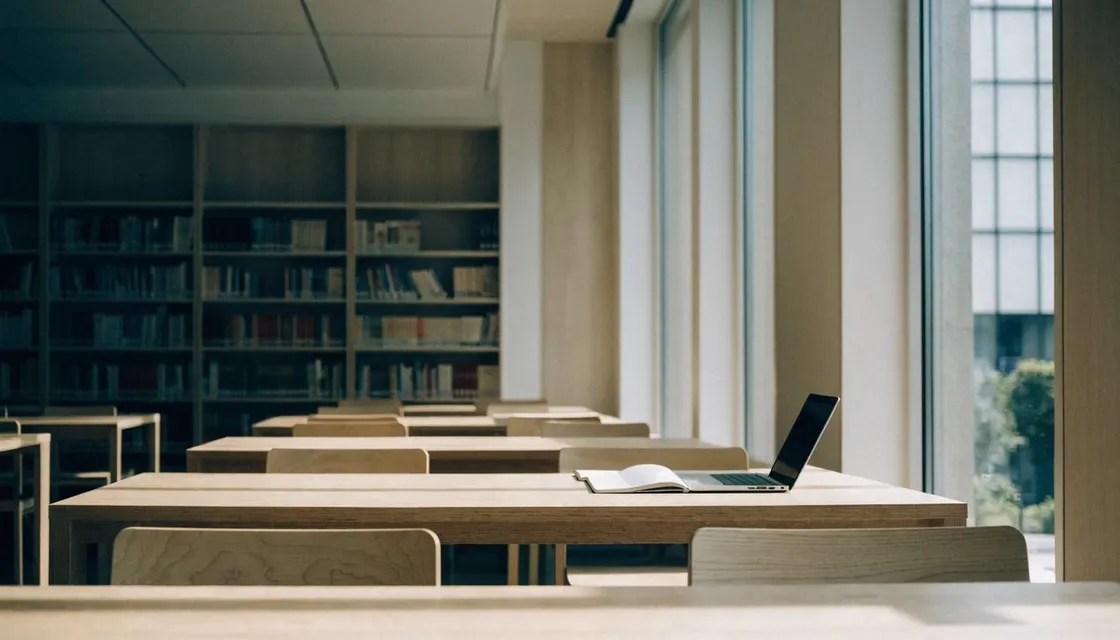
If your café budget is quietly eating your month, Tokyo’s public libraries are the answer hiding in plain sight. Nearly every ward and city in the metropolitan area runs its own library system, most branches have designated study desks, and using them costs nothing.
For focused solo work with no meetings, they often beat both cafés and coworking day passes.
The catch is that libraries are not coworking spaces, and treating them as one is the fastest way to have a bad time. Once you understand what they are actually designed for, they slot neatly into a Tokyo work week.
The city’s quietest desks are the ones nobody is trying to sell you.
Why they work so well
A ward library gives you three things that are surprisingly hard to combine in Tokyo: a proper desk at a proper height, silence that is enforced by everyone around you, and climate control that holds through August humidity and February cold alike. No drink minimum, no ninety-minute glare from staff, no queue of people waiting for your seat.
Many branches also stay open into the evening on weekdays, and the newer ones are genuinely pleasant buildings. Several wards have rebuilt their central libraries in the last decade with large windows, wide tables, and reading rooms that feel closer to a university library than a municipal office.
What you can and cannot do
The single most important rule: most reading rooms do not allow talking, which means no calls and no video meetings. Some libraries permit laptop use only in specific rooms or at specific desks, because keyboard noise carries.
Look for signage marking a パソコン席 (PC seat) or 持ち込みパソコン利用可 area, or ask at the counter.
Power outlets are the second variable. Some branches provide them at every study desk, some at a handful of seats you need to reserve, and some not at all.
Arriving with a full battery and a small power bank removes the problem entirely.
Wi-Fi availability varies too. Many Tokyo libraries now offer free public Wi-Fi, often requiring a short email or SMS registration, and often with a session time limit that you simply renew.
If your work depends on a stable connection, your own eSIM or pocket router is the safer plan, and libraries are excellent places to tether from because the buildings are rarely congested.
Getting a library card, or not
You do not need a card to sit and work. Cards are for borrowing, and they generally require proof that you live, work, or study in that ward, usually a residence card or a piece of mail with your address.
If you are in Tokyo short term without an address, you can still use the reading rooms freely.
If you do have an address, the card is worth getting. Ward library systems tend to have decent English-language sections, and several offer free access to digital databases and newspapers from inside the building.
Fitting them into a week
Libraries reward a particular kind of task. Deep writing, code, editing, spreadsheet work, reading long documents: all excellent.
Anything conversational belongs somewhere else.
A pattern many remote workers land on is to use a library for the long morning block, then move to a café or coworking space in the afternoon when calls start. It keeps costs down, gives the day a clear shape, and means the expensive seat is only paid for during the hours it is actually needed.
The other thing libraries do quietly well is anchor you to a neighborhood. Working from the local branch a few times a week puts you on the same streets, in the same shops, at the same station exit.
That familiarity is worth something when you are new to a city that can otherwise stay abstract for months.
Practical notes before you go
Check the closure day. Most Tokyo libraries close one weekday, commonly a Monday, plus a longer maintenance period once or twice a year.
Ward websites list this clearly, and a machine translation of the 休館日 page is usually enough.
Seat availability in the study rooms peaks around exam seasons and school holidays, when students fill them from opening time. Some branches run a numbered-ticket or online reservation system for study seats during busy periods.
Weekday mornings outside those windows are usually comfortable.
Bring a quiet keyboard if you have one, keep bags off adjacent chairs, and take drinks outside the reading room unless there is a clearly marked area for them. Most Tokyo libraries allow a lidded bottle at the desk, but food belongs in the lobby or outside.
FAQ
Can you take calls in a Tokyo public library? Generally no. Reading rooms are silent zones and phone use is usually restricted to lobbies, corridors, or outside the building.
Plan calls for a café, a coworking space, or your accommodation.
Do you need to be a resident to use a library? Not to sit and read or work. Borrowing books normally requires a card tied to a local address, but the reading rooms and study desks are open to anyone who walks in.
Is there Wi-Fi and power? Often, but not everywhere and not at every seat. Many branches offer free Wi-Fi with a quick registration step, and outlet availability differs branch to branch.
Carrying a power bank and your own mobile data makes any branch usable.