Where to Take a Video Call in Tokyo: Work Booths and Private Rooms
If you only solve one logistics problem in Tokyo, make it this one: where you take your calls.
The city gives you an enormous amount of quiet, cheap space for solo work. It gives you almost none for talking.
The fix is to stop looking for a café that tolerates meetings and start using the infrastructure Japan built specifically for people who need to speak in private for thirty minutes. Station work booths, karaoke rooms and net café cabins cover almost every situation, and between them you are rarely more than a few minutes’ walk from a door that closes.
In Tokyo, a desk is easy to find. A door is the thing worth paying for.
Why cafés fail for calls here
Tokyo café culture is quiet by default. People work, read and talk in low voices, and the social contract assumes you will not broadcast.
A laptop and headphones are completely normal. A forty-minute standup where you are the one talking is not.
This is not a rule anyone will enforce at you. Staff are unlikely to say anything, which is exactly why visitors keep getting it wrong and slowly making themselves unwelcome.
The same applies on trains, where speaking on the phone is one of the few things Japanese commuters genuinely find rude. Announcements ask passengers to keep phones on silent, and the carriage is noticeably quieter than most other countries.
Plan around it rather than testing it.
Station work booths
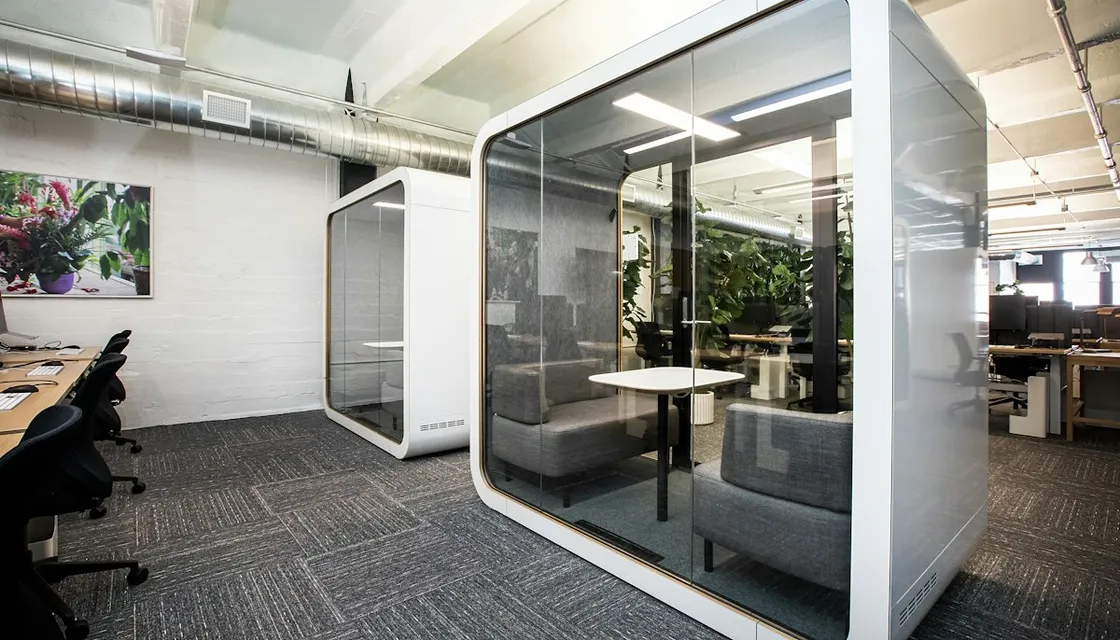
The most Tokyo-specific answer is the smart work booth: a small soundproofed pod with a desk, a chair, power and Wi-Fi, installed inside train stations, office building lobbies and shopping centres.
JR East operates a widely available network, STATION BOOTH, under its STATION WORK brand. Several private operators run similar pods in commercial buildings.
JR East’s booths are the easiest for a short stay. At most locations you do not need an account at all: if a booth is free, you pay with a transit IC card such as Suica and go in. Reserving ahead requires free membership, and a few locations are members-only. Private operators generally ask you to register first and reserve from an app or website.
Before you book, check whether the booth is inside or outside the ticket gates. Booths inside the gates are easy if you are riding anyway, but if you are not taking a train you may need a valid ticket or an admission ticket to get in, and time and entry conditions can apply. The booth listing and the station staff can tell you what that location requires, so sort it out before the call rather than at the gate.
Billing is by short block rather than by hour. JR East’s one-person booth costs 330 yen per fifteen minutes (the rate since May 2025). Rates change, so check the current price before you commit to a long meeting.
The upside is enormous for a nomad. When the booth sits inside the gates and you are travelling anyway, you can finish a café work session in Shibuya, walk into the station, take a client call in a genuinely private box, and be back on a train right after.
The limitations are worth knowing.
Booths are small, and if you are tall or claustrophobic the single-person size can feel tight. Ventilation is usually fine but the air gets warm in summer.
They are also sound-reducing rather than truly soundproof. Nobody outside will follow your conversation, but you will hear station announcements bleed through, so a good headset matters.
Availability is the real constraint. Booths near major business districts fill up in the standard meeting slots, so reserving the night before is much safer than hoping at ten to the hour.
Karaoke rooms as meeting rooms
For anything longer than an hour, karaoke is often the better value.
Daytime rates at the big chains are low, rooms are fully private, and most have power outlets and Wi-Fi. Several chains market daytime work plans directly at remote workers, sometimes bundling a drink bar.
The trade-offs are honest ones. Sound insulation between rooms is decent but not perfect, so you may catch a neighbour’s chorus during a quiet moment.
Lighting is dim and the aesthetic is not exactly boardroom, which matters if your camera is on. Sitting with your back to a plain wall and adding a small clip light solves most of it.
Booking ahead helps on weekends and in the evening. On a weekday morning you can usually walk in.
Net cafés, coworking and hotel options
Net cafés give you a private cabin for a few hours at low cost, and many branches offer enclosed rooms rather than open partitioned seats.
Check which seat type you are booking. Open seats are fine for solo work but the walls do not reach the ceiling, which makes them poor for speaking. Even in a private room, ask at the counter whether calls are allowed before you plan a meeting there. Membership also involves an ID check: Kaikatsu Club, for example, will not register you without an original ID document, so bring your passport and confirm it is accepted.
Coworking spaces solve this most cleanly if you are in Tokyo for more than a couple of weeks. Almost every space in the city now includes phone booths, and a day pass usually covers their use.
If you have a genuinely important call, a day-use hotel room is the most reliable option in the city. It costs more than everything above, but you get a proper desk, a lockable door, controllable light and a bathroom.
Match the room to the stakes. Not every call deserves a hotel, and not every call survives a café.
Building a simple call routine
Most nomads end up with a three-tier habit.
Short internal calls go in a station booth, booked the night before, slotted between other things.
Long workshops and anything over an hour go in a karaoke room, because the hourly maths stops making sense in a pod.
Client pitches and anything where the background matters go in a day-use hotel room or a coworking meeting room.
Two practical details make all three work better.
Download the relevant apps and complete registration before you need them. Apart from walk-in use of JR East booths, these systems ask for account setup, and doing that under time pressure five minutes before a call is miserable.
Then check your connection. Booth and karaoke Wi-Fi is usually adequate, but a mobile hotspot as backup costs nothing to carry and saves the one meeting where it matters.
FAQ
Do station work booths require Japanese to use?
Most of the major operators offer English interfaces in their apps, though the level of English support varies and some registration screens are Japanese-only. Setting up your account on a laptop with a browser translation extension is usually easier than fighting it on a phone.
Can I take a call in a Tokyo coworking space without a booth?
At the open desks, no. Tokyo coworking floors are quieter than the international norm and speaking at a hot desk will get you noticed. Use the booths, and if a space has none, treat it as a solo-work venue only.
Is it really that bad to take a call on the train?
You will not be confronted, but it registers clearly as bad manners, and on a quiet carriage it is genuinely disruptive. If a call comes through while you are riding, the usual move is to decline it and message back that you will call in a few minutes.