Tokyo Family Restaurants as Backup Work Spaces
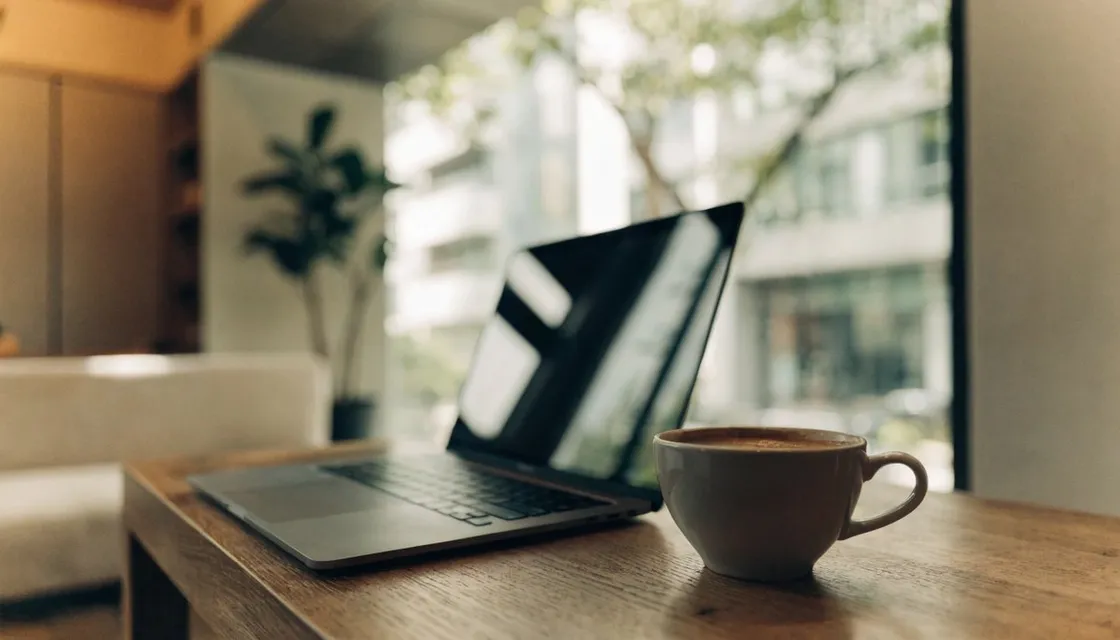
It is raining, it is two in the afternoon, and the third café in a row has a queue outside.
This is the moment the family restaurant stops being a joke and starts being the answer.
Tokyo’s famiresu chains are not glamorous. Nobody photographs them. Gusto, Jonathan’s, Denny’s, Coco’s, Royal Host, Saizeriya, Bamiyan: the picture menus, the tablet on the table, the fluorescent hum.
But they have a wide table, a bench you can sink into, air conditioning that works, and no clock running against you.
The best work spot in Tokyo is often the one nobody is competing for.
What you are actually buying
The food is beside the point. What you are buying is the drink bar.
Self-service coffee, tea, soda and juice, refilled as often as you like, for roughly what one café coffee costs.
That single detail rewrites the arithmetic of a working day. A café charges you again every ninety minutes to keep your seat morally defensible. A famiresu charges you once, and if you add a meal you have handled lunch too, usually still under a coworking day pass.
Ordering happens on a tablet at the table, which means you can work an entire afternoon without speaking a word of Japanese. Staff will not come near you unless you press the button.
For a certain kind of long, unglamorous solo work, that combination is hard to beat.
Two in the afternoon
The single most useful thing to know is the clock.
Roughly noon to one thirty, and again around seven in the evening, those tables belong to people who came to eat. Turning up with a laptop then is the one way to make yourself a problem.
Arrive at two and you become invisible in the best possible way. The lunch rush has cleared, dinner is hours off, and the room is two thirds empty.
The other end of the clock is where famiresu genuinely have no competitor. Many branches open early and close very late, and some run around the clock. If your team sits in Berlin or New York, a warm room with unlimited coffee at eleven at night is not a small thing.
None of this requires a rulebook. Order properly, keep ordering if you stay long, do not spread out across a booth for four while people are waiting, and clear your table on the way out.
Staff almost never say anything, which is precisely why it is worth reading the room yourself. A few branches now post notices limiting long stays or laptop use at busy hours. Take those at face value rather than testing them.
Three things that decide the branch
Chains are consistent about food and wildly inconsistent about everything a remote worker cares about.
Power. Pure lottery. Some branches have an outlet at every booth, some have four seats along one wall, some have none. Carry a battery pack and the question disappears.
Wi-Fi. Common, not universal, and rarely fast. Treat it as a bonus. If your afternoon involves large uploads, tether from your phone and stop hoping.
Noise. This is the real ceiling. Families, students, a permanent background hum. Fine for admin, email, invoicing and slow grinding tasks. Bad for anything that needs a closed door in your head.
Video calls are the clear no. Not forbidden, just inconsiderate and unpleasant for everyone, yourself included. Step outside or book a work booth.
Where it stops being optional
Inside the Yamanote loop, a famiresu is one option among many.
Get out past it and the picture changes fast. Specialty cafés thin out, coworking spaces disappear, and near a station in Nerima, Adachi or somewhere along the western stretch of the Chuo line, the family restaurant is often the only room in walking distance with a table, power and a reason to let you sit.
Same for group work. A four-person booth you can spread across is genuinely scarce in this city.
Not your office
A famiresu is not where you do your best thinking. It is what makes the rest of your setup resilient.
Cafés for the good hours. A library or coworking space when you need real quiet. A famiresu for the late shift, the wet afternoon, the unfamiliar neighbourhood, the day everything else is full.
Knowing there is always a seat somewhere changes how the whole city feels to work in.
FAQ
Is it rude to use a laptop in a Japanese family restaurant?
Generally no, as long as you order reasonably and stay away from peak meal hours. Some individual branches post notices restricting long stays or laptop use, and those should be respected.
Do family restaurants in Tokyo have free Wi-Fi?
Many chains offer it, but coverage and speed vary by branch. Treat it as a bonus rather than a guarantee, and carry a phone plan you can tether from.
How long can you reasonably stay?
A few hours with a drink bar and a meal is normal and uncontroversial. Beyond that, order again or move on, especially once the restaurant starts filling up.