Working Through Tokyo's Autumn
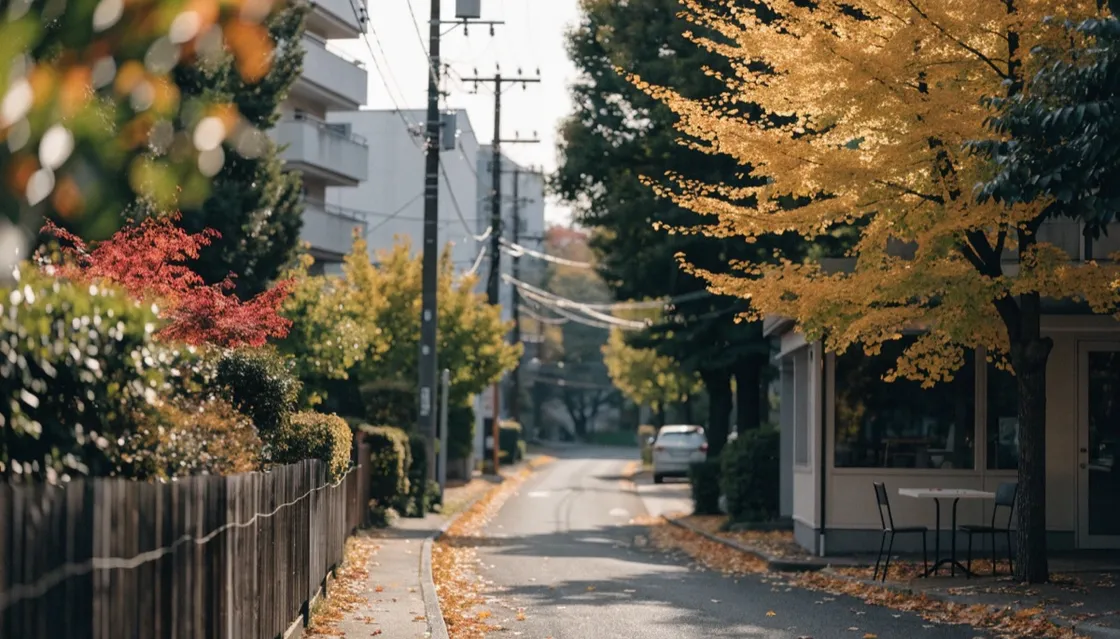
If you only have one season in Tokyo, make it autumn.
The humidity that made August feel like working inside a warm towel lifts sometime in late September. Cafés open their doors again. Walking between meetings stops being a decision you have to justify.
For remote workers, this matters more than it sounds. Tokyo summer quietly costs you productivity through logistics: choosing venues by air conditioning, timing every walk, showering twice a day. Autumn hands those hours back.
Summer in Tokyo is survived. Autumn is used.
The catch is that autumn is short, and the city gets busy. A little planning turns it from a pleasant few weeks into the best working stretch of your year.
The weather actually shifts twice
Early autumn and late autumn are different seasons wearing the same name.
September is still summer with better lighting. Humidity often stays high, and it is also the tail of typhoon season, so keep an eye on forecasts if you have travel booked.
Mid-October through late November is the version people mean when they praise Tokyo autumn. Dry air, mild days, comfortable evenings.
Then it turns quickly. By early December mornings are properly cold, and if you arrived with a summer suitcase you will feel it.
The practical read: plan outdoor-heavy work weeks for late October and November, and expect to buy a layer or two.
Rethink where you work
Summer forces you indoors. Autumn removes the constraint, and it is worth actively taking advantage of it rather than defaulting to the same three cafés.
Park benches become viable for a focused hour of reading or writing. Yoyogi, Kinuta, Rinshinomori and Shinjuku Gyoen all have enough space to find a quiet corner on a weekday.
Terrace seating that was unusable in August comes back. Many cafés along the Meguro River, in Kiyosumi-shirakawa and around Nakameguro have outdoor tables that only make sense for a couple of months a year.
Battery life is the real limiter outdoors, not comfort. A power bank turns a two-hour outdoor block into a realistic option, and mobile signal is generally strong across central Tokyo parks.
One honest caveat: outdoor work is good for reading, drafting, and thinking. It is not good for calls. Wind noise and passersby will do you no favours.
Walk your commute
If you are staying somewhere central, autumn is the season to stop taking short train hops.
A twenty-five minute walk that felt punishing in August is pleasant in November, and it doubles as the exercise you have probably been skipping.
Walking also fixes something specific about remote work in Tokyo. Days can compress into a single room, and the city stops registering. Walking between a coworking space and a café keeps it in view.
The crowds are real, and predictable
Autumn foliage draws serious domestic tourism, and it concentrates in a narrow window.
Peak colour in central Tokyo usually lands from mid-November into early December, later than most visitors expect. Mountain areas such as Nikko and Hakone turn several weeks earlier.
Weekends at the well-known spots get genuinely crowded. Rikugien, Meiji Jingu Gaien and Showa Kinen Park are worth seeing, and worth seeing on a Tuesday morning.
This is one of the clearest advantages remote work gives you here. Most people cannot visit on a weekday. You can, and the difference in experience is not subtle.
If a weekday is impossible, early morning on a weekend is the next best thing. Many gardens open around nine and are calm for the first hour.
Accommodation gets harder
Autumn is high season. If you are moving between monthly apartments, share houses, or hotels, book earlier than you would in, say, February.
Rates tend to rise from October, and availability in popular central areas thins out. Booking four to six weeks ahead rather than one is a reasonable rule of thumb, though exact pricing shifts year to year.
Late November and early December also collide with year-end business travel and bonenkai season, which tightens hotel supply further.
Small seasonal adjustments that help
Layers matter more than a heavy coat. Tokyo autumn days can swing several degrees between a sunny afternoon and a dark evening, and indoor heating starts before you expect it.
The air gets dry. If your throat starts complaining in November, that is usually why, and it is a common reason remote workers lose a day to feeling run down.
Daylight shortens fast. Sunset moves noticeably earlier through October and November, so if you rely on natural light to feel awake, shift your outdoor block earlier in the day.
Seasonal food is genuinely good and worth building into a routine rather than treating as a novelty. Sanma, chestnuts, persimmons, new-crop rice, and roasted sweet potatoes sold from small trucks in the evening.
Use the season for people, not just work
Autumn is when Tokyo’s nomad and startup community gets active again after the summer lull.
Meetups, conferences and community events cluster in October and November. If you have been meaning to move from working in Tokyo to knowing people in Tokyo, this is the window where it costs the least effort.
The same applies to clients and collaborators. In-person coffee is easier to arrange when nobody has to walk ten minutes in thirty-five degree heat.
FAQ
When is the best month to be in Tokyo for autumn?
November is generally the strongest single month: dry, mild, and reliably clear. Late October is close behind and slightly less crowded.
Do I need to book accommodation far in advance?
Further than in low season, yes. Autumn is a peak travel period in Japan, so aim for several weeks ahead for popular central areas rather than booking last minute.
Is autumn a good time for outdoor coworking?
For solo, focused work, yes, especially mid-October through November. For video calls, stick to indoor spaces or a booked work booth.