The Tokyo Morning Shift: Working Before the City Wakes Up
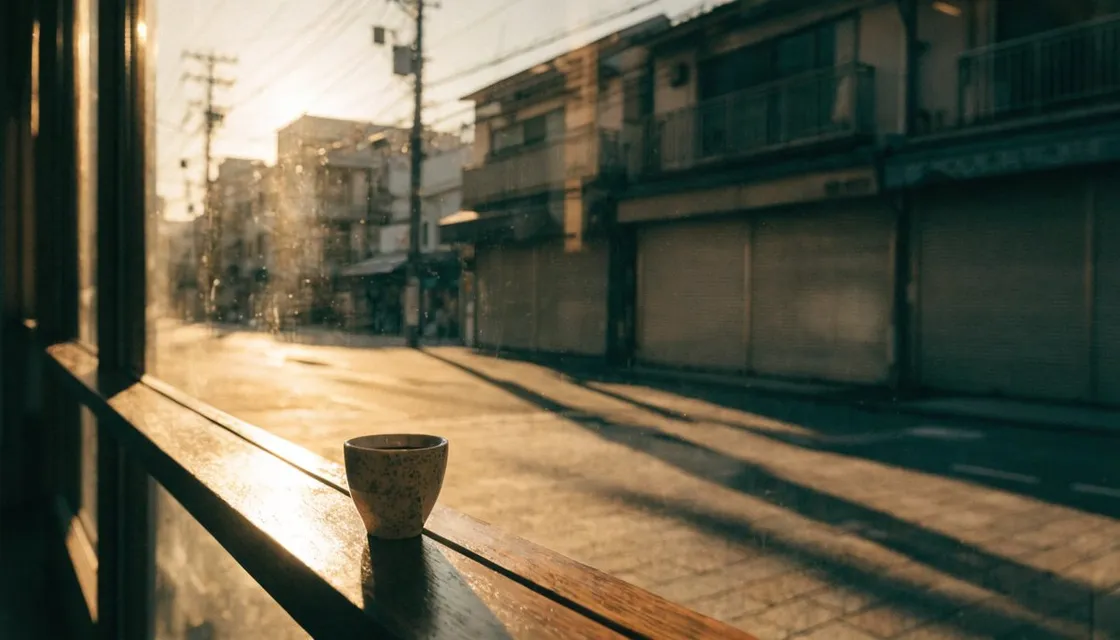
If you are looking for the most reliably quiet, most reliably available working hours in Tokyo, they are already sitting in your calendar unused. They run roughly from six to ten in the morning.
This is the window most remote workers here skip. Coworking spaces have not opened. Cafés are assumed to be closed. So the day starts at ten, at a table someone else also wanted, in a room that has already filled up.
The city is doing something else entirely at that hour, and it is worth joining.
Tokyo is not a late city so much as an early one that keeps its doors open late.
Why mornings work better here than they do elsewhere
Tokyo runs on a commuter rhythm, and that rhythm has a side effect: an enormous amount of hospitality infrastructure exists to serve people before nine.
Coffee chains open early because salarymen need somewhere to sit before a meeting. Stations have bakeries running at seven. Parks are full of people stretching at half past six. None of this is aimed at remote workers, but all of it is usable by them.
The second reason is quieter and more practical. Between six and nine, the seats that are impossible to get at two in the afternoon are simply free.
You are not competing with students, other laptop users, or a lunch rush. You get a window seat and a power outlet without negotiating for either.
And if your clients or team sit in Europe, that morning block is genuinely yours. Tokyo mornings are the middle of Europe’s night and the tail end of the American workday, which means the notifications mostly stop.
Where to actually sit before nine
The most dependable option is the older generation of Japanese coffee chains. Doutor, Excelsior, Veloce, Komeda and Café de Crié tend to open somewhere between seven and eight, sometimes earlier at large stations. Many of these branches run a morning set: toast, an egg, and a drink, bundled at a lower price until around ten or eleven.
The morning set is worth understanding as a piece of local culture, not just a discount. It exists because the morning customer is expected to eat, sit for a while, and leave before the day begins properly. That expectation is doing you a favour.
Do check the hours of the specific branch rather than the chain. Opening times in Tokyo are set per store, and the difference between a station-front branch and a residential one can be an hour or more.
Hotel lobbies are the second option, and an underrated one. If you are staying somewhere with a lobby café or a lounge, it is often open and nearly empty at seven, with better chairs than any chain.
Some larger hotels sell breakfast or lounge access to non-guests as well, which can be a reasonable trade if you want a guaranteed table and a proper meal in one move.
Third, there is the option that never closed in the first place. Net cafés, some family restaurants, and a handful of 24-hour chains have been running all night and are at their emptiest around dawn.
If you have a call at seven and no quiet room, a private net café booth is unglamorous and completely effective.
The parks nobody mentions
Tokyo’s parks are at their best before eight, and this is where the morning stops being a productivity tactic and becomes a reason to stay in the city.
The Imperial Palace outer moat, Yoyogi, Kinuta, Komazawa, and most large riverside paths fill up early with runners, walkers, and groups doing radio calisthenics. It is sociable without requiring you to be social.
A common pattern that works well: an hour of focused work, then thirty minutes outside, then back to the desk before the rest of the world logs on. The break is more effective at seven than it will be at three.
What to avoid
Do not try to move across the city between roughly seven forty and nine. Tokyo’s rush hour is efficient but genuinely crowded, and moving toward the centre during it with a laptop bag is unpleasant enough to undo the calm you just built.
The fix is simple. Either work near where you sleep, or make your move before seven thirty. Riding one or two stops in the opposite direction of the commuter flow also helps more than people expect.
Also be careful with convenience-store seating early in the morning. Some konbini have counters, but they are meant for a quick coffee, not a two-hour session, and staff are restocking at that hour.
Making it a habit rather than an experiment
The honest difficulty is not finding a seat. It is getting up.
Jet lag, if you have just arrived, is the one moment when this is easy, and it is worth using rather than fighting. Arriving from Europe or the Americas usually leaves you awake at five for several days. Instead of forcing yourself back to a normal schedule, you can build the morning block first and let the rest of the day settle around it.
If you are already adjusted, a gentler approach tends to hold: pick two mornings a week rather than five, and put the work you actually care about in them.
The point of the Tokyo morning is not to work more hours. It is to move your best hours to the part of the day when the city gives you room.
FAQ
Are cafés in Tokyo really open before eight?
Many are, particularly the older Japanese chains near stations, though opening times vary by individual branch. Independent cafés and specialty coffee shops are more likely to open at ten or eleven.
Is it rude to work on a laptop during the morning set?
Generally it is fine in chain cafés, which are used to it. Watch for signs about laptop or phone use, keep calls out of the seating area, and be more conservative in small independent shops.
What is the best morning setup if I have European calls?
Tokyo mornings overlap poorly with Europe, which is the advantage. Use six to ten for deep work rather than meetings, and keep late afternoon and evening for anything that needs European colleagues live.