Roppongi for Remote Workers: Tokyo's English-Speaking Business Base
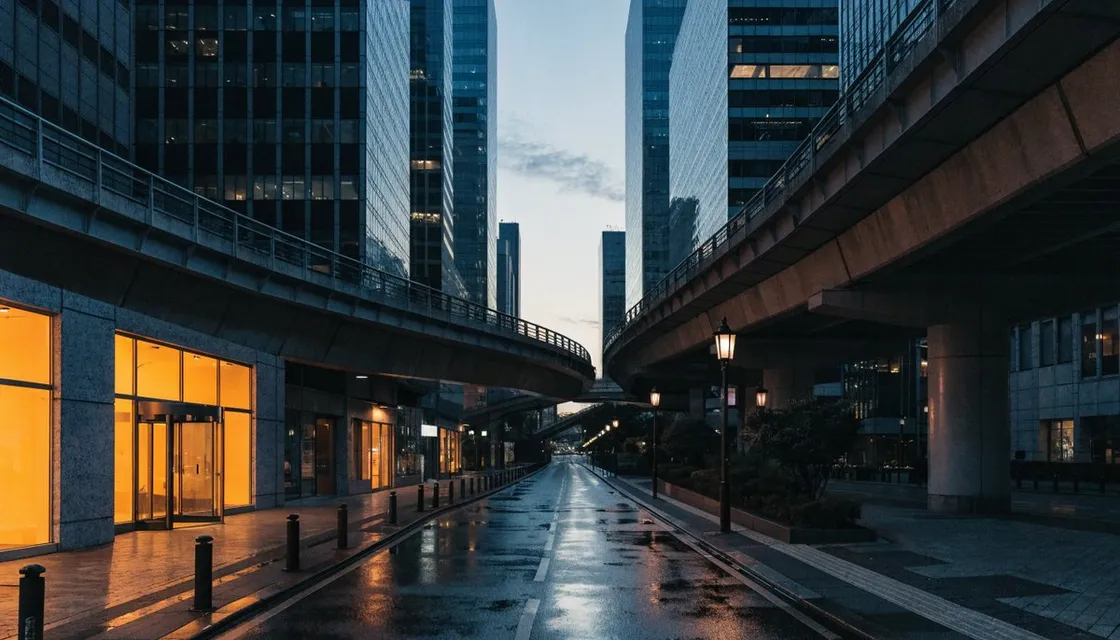
Roppongi is the right base if your work happens in English and your budget is not the binding constraint. If either of those is untrue, almost anywhere else in Tokyo is a better deal.
That is the whole decision, and it is worth making deliberately, because Roppongi is the area most often recommended to newcomers and the area most often regretted three weeks later.
What makes it genuinely different is density of a specific kind. Embassies, foreign companies, international schools, and the people who work in all three are concentrated here in a way they are nowhere else in the city.
What that concentration actually buys you
English is not a special accommodation in Roppongi. It is the working assumption at a lot of counters, clinics, gyms and real estate offices.
If you have ever spent an afternoon trying to explain a billing problem in a language you half know, you will understand why some people pay a premium for this and consider it money well spent.
The area also runs on two large complexes, Roppongi Hills and Tokyo Midtown, which between them hold offices, restaurants, cinemas, clinics and quiet indoor public seating. On a wet Tuesday that matters more than it sounds.
Roppongi is also the closest thing Tokyo has to an art district. The Mori Art Museum, the Suntory Museum of Art and the National Art Center sit within walking distance of each other, which is a good default plan for a slow afternoon.
Roppongi does not ask you to adapt. That is its selling point and, over months, its limitation.
Working here
Coworking in Roppongi skews corporate: staffed reception, meeting rooms, phone booths, and pricing to match. Expect premium rates rather than the cheaper end of the Tokyo market.
The trade is real, though. If your week contains client calls rather than deep solo work, the infrastructure here is built for exactly that, and the other people in the room are doing the same job.
Cafés are plentiful but not especially laptop-friendly at peak hours, because the lunch crowd is a business crowd and turnover matters. Mid-morning and mid-afternoon are the workable windows.
Hotel lobbies and the upper-floor lounges in the big complexes are the underused option. Many are open to non-guests buying a coffee, and they are quiet in a way cafés are not.
Daily life happens in Azabu-Juban, not Roppongi
This is the part most guides miss.
Roppongi proper is offices, museums and nightlife. The everyday version of the neighborhood is Azabu-Juban, a short walk south, where there is an actual shopping street with small shops, bakeries, a public bath and the ordinary business of living.
If you are staying more than a couple of weeks, the walkability of Azabu-Juban is what will decide whether you like the area. Base your accommodation search around that walk rather than around Roppongi Crossing.
Hiroo, to the west, plays a similar role and is where a lot of the long-term international residents actually live. It is calmer, greener and slightly less expensive than the towers.
Transport, and the one thing to check
Roppongi has no JR station. It is served by the Tokyo Metro Hibiya Line and the Toei Oedo Line, with Roppongi-itchome on the Namboku Line and Azabu-Juban on the Namboku and Oedo lines.
This matters more than it looks. If your routine depends on the Yamanote Line, Roppongi will feel oddly disconnected, and you will spend a lot of time transferring.
If your routine involves Hibiya, Ginza, Shibuya, Ebisu or the Oedo loop, it is excellent.
Check this against your actual week before signing anything. It is the single most common practical complaint about the area, and it is entirely predictable in advance.
The honest cost picture
Roppongi sits at the top end of Tokyo rents for a small apartment, and serviced apartments marketed to foreign residents go higher again. Lunch runs well above the city average, and premium coworking does too.
Treat any specific figure you read, here or elsewhere, as a rough band rather than a quote. What is reliable is the direction: assume Roppongi costs meaningfully more than most other Tokyo bases for the same square meters.
There is a version of this that makes sense. If a company is covering your housing, or your income is in a stronger currency and your time is the scarce resource, the premium buys real friction reduction.
There is also a version that does not. Paying Roppongi rent to work alone on a laptop, when you could do the same work in Nakano or Kuramae for much less, is a decision worth examining.
The nightlife caveat
Roppongi has a long-standing reputation for aggressive street touts around the main crossing after dark, and for bars where the bill does not match what was agreed. Several embassies have published warnings about specific venue practices in the area over the years.
None of this makes the neighborhood dangerous to live in. Daytime Roppongi is corporate and unremarkable, and plenty of people live here for years without incident.
But it does mean the sensible habit is to decline street invitations, and to choose bars deliberately rather than by being walked into one. That is a small adjustment, not a reason to avoid the area.
Who should base somewhere else
If you are optimizing for cost, Roppongi is the wrong answer and there is no clever workaround.
If you want to be somewhere that feels specifically Japanese day to day, the international density here works against you. Yanaka or Koenji will give you more of that for less money.
If you mostly do quiet solo work, you are paying for business infrastructure you will not touch.
FAQ
Is Roppongi good for digital nomads?
It is good for a specific kind: people working in English, on a corporate schedule, with a budget that can absorb central Tokyo pricing. For budget-focused independent workers it is one of the weaker choices in the city.
Is Roppongi expensive compared with the rest of Tokyo?
Yes, consistently. Rents, lunch and coworking all sit above the Tokyo average, and the gap widens for accommodation marketed to foreign residents. Areas like Asakusa, Akihabara or Nakano cost substantially less for comparable space.
Do I need Japanese to live in Roppongi?
Less than almost anywhere else in Tokyo. Many services in the area operate in English by default. That convenience is genuine, though it also means you will pick up far less Japanese than you would elsewhere.