Kawagoe: A Half Day of Edo, Thirty Minutes from Ikebukuro
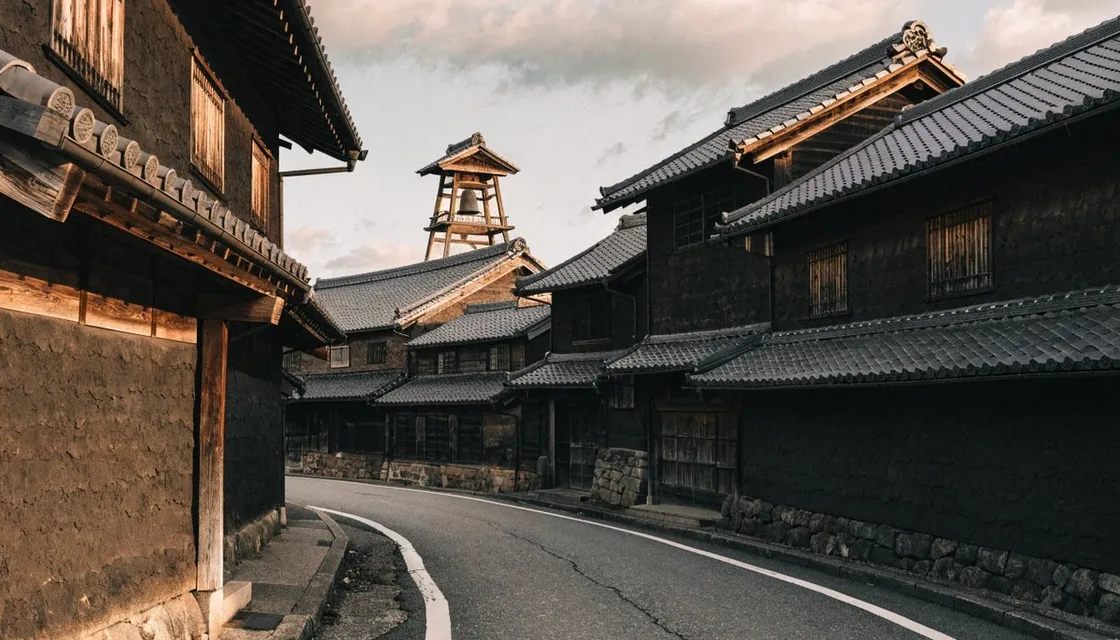
If you have one free afternoon and no appetite for a two-hour train ride, go to Kawagoe.
It sits in Saitama Prefecture, just north of Tokyo, and the fast train from Ikebukuro gets you there in around thirty minutes. That is shorter than plenty of cross-town commutes inside Tokyo itself.
What you get at the other end is a street of surviving Edo-period merchant houses, dark clay walls, heavy grey roof tiles, and a wooden bell tower that still rings.
Locals call it Koedo, “Little Edo”. The nickname is marketing, but it is not a lie.
Why it works as a half day
Most day trips from Tokyo ask for a full day. Kawagoe does not.
You can finish your morning calls, leave at noon, walk the old town, eat something, and be back in the city before dinner.
That makes it one of the few escapes that fits around a working week rather than replacing it.
The other advantage is scale. The historic area is compact enough to cover on foot without planning a route. You wander, you get slightly lost, you end up somewhere interesting anyway.
The best trips out of Tokyo are not the longest ones. They are the ones you actually take.
Getting there
Three lines run to Kawagoe, and which one you use depends on where you start.
From Ikebukuro, the Tobu Tojo Line is usually the quickest. Look for a rapid or express service rather than the local, and get off at Kawagoe or Kawagoe-shi.
From Shinjuku, the Seibu Shinjuku Line runs to Hon-Kawagoe, which drops you closest to the old town.
The JR Kawagoe Line also connects via Omiya if you are coming from that side of the map.
Your IC card works on all of them. Reserved seats are not necessary, though the Seibu and Tobu limited express services offer them if you want a guaranteed seat and a quieter carriage.
From the station to the warehouse district is roughly a twenty minute walk, or a short ride on the loop bus that circles the sightseeing spots.
What to actually see
The main event is Kurazukuri Street, the row of thick-walled warehouse-style buildings that survived the fires which took most of the rest.
They look heavy because they were built to be. The clay walls were fireproofing, and the merchants who paid for them were protecting stock, not making a style statement.
Just off the main street is Toki no Kane, the wooden bell tower. It has been rebuilt several times over the centuries and still sounds a few times a day.
Then there is Kashiya Yokocho, a short lane of old-fashioned sweet shops. It is unashamedly touristy and also genuinely fun, especially the enormous sticks of dark brown sugar candy.
Kita-in temple, a walk south, has a quieter draw: a set of hundreds of small stone rakan statues, each with a different face. It rewards slowing down.
Eating
Kawagoe’s local obsession is sweet potato. You will see it as chips, as soft serve, as cakes, as beer.
Some of it is novelty. Some of it is very good. Trying one or two is part of the trip.
The other local specialty is unagi, freshwater eel, which has been served here since the town’s river-trade days. It is not a cheap lunch, so treat it as a decision rather than a default.
If you want something ordinary, the streets behind the main tourist row have normal soba and udon shops at normal prices. Walking two blocks off the route usually halves the bill.
Timing your visit
Weekday afternoons are the sweet spot. Kurazukuri Street is narrow, and on weekends the crowd fills it wall to wall.
Many shops close earlier than you might expect, often by late afternoon, so arriving at four leaves you with a nice street and very little open.
Autumn and spring are the most comfortable seasons for walking. In midsummer, the clay-walled street holds heat and there is not much shade.
If you happen to be around in mid-October, the Kawagoe Festival brings enormous wooden floats through the same streets. It is worth planning around, and it is also extremely crowded, so decide which experience you want.
Can you work there?
Not really, and that is fine.
There are cafes, and some of them are lovely, but this is not a place with reliable power outlets and long-stay etiquette. Treat it as time off rather than a change of desk.
If you need to stay reachable, do what you would do anywhere: tether from your phone, keep the laptop shut, and answer anything urgent from a bench.
FAQ
How much does the trip cost? Round-trip train fare from central Tokyo is modest, usually well under two thousand yen unless you take a limited express. Add food and entry fees and a relaxed half day still comes out cheap by Tokyo standards.
Do I need to book anything in advance? No. Everything on this route runs on turn-up-and-go trains, and the sights do not require reservations. Only the festival weekend really calls for planning.
Is it worth it if I have already been to Kamakura or Nikko? Yes, because it is a different thing. Kamakura is temples and coastline, Nikko is mountains and grandeur, and Kawagoe is a merchant town. It is also by far the easiest of the three to fit into a working week.