Mount Takao: The Half-Day Mountain Inside Tokyo
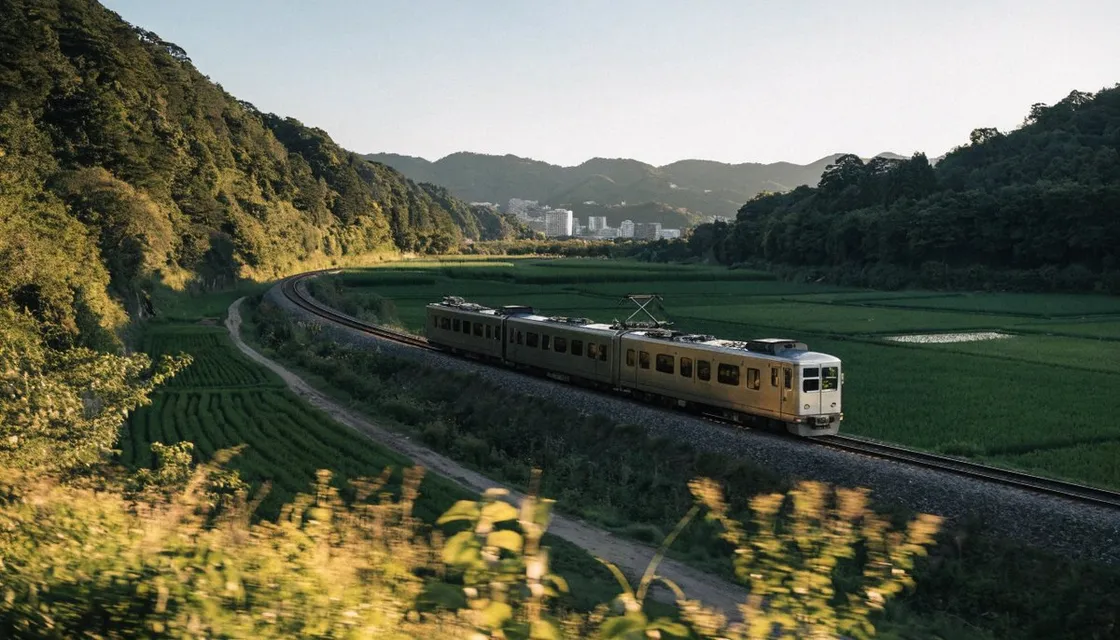
If you want a mountain but only have a morning, take the train to Takaosanguchi.
Mount Takao is still Tokyo. It sits at the western end of the Keio line, roughly an hour from Shinjuku, and it is high enough to feel like a genuine climb without demanding a full day or any gear you do not already own.
That combination is rare. Most escapes from Tokyo cost you the whole weekend. This one costs you a morning.
For a remote worker, that matters more than the scenery. You can leave at seven, be on a forest trail by half past eight, reach the summit before eleven, and be back at your laptop by mid-afternoon with the day still intact.
Why it works for a working week
The appeal is not that Takao is spectacular. Plenty of Japanese mountains are more dramatic.
The appeal is that it is close enough to be casual. You do not need to plan it a week ahead, book anything, or commit a full day you cannot spare.
That lowers the threshold enormously. A mountain you can do on a Tuesday morning is a mountain you will actually do, whereas the perfect weekend hike three hours away tends to stay on the list.
There is also the altitude. Summer in Tokyo is brutal at ground level, and the forest on the way up is noticeably cooler and shadier than the pavement you left behind.
The best trip is not the most impressive one. It is the one you will repeat.
The trails, briefly
There are several marked routes up, and the choice matters less than people assume.
Trail 1 is the paved main route. It is the busiest, it passes the temple complex, and it is the one to take if you want food stalls and facilities along the way.
Trail 6 follows a stream and stays under trees for most of its length. It is unpaved, often damp, and generally the more pleasant walk if you want the forest rather than the crowd.
The Inariyama trail runs along a ridge and is the quietest of the popular options, with a bit more up and down.
Any of them will get you to the summit in roughly ninety minutes at a moderate pace, though this varies with fitness, footwear and how often you stop.
There is also a cable car and a chairlift partway up. Using them is not cheating. It is a reasonable way to save an hour if your afternoon is tight, and the walk from the upper station to the summit is still a proper walk.
What to take, and what to skip
Ordinary trainers are fine on the paved route. On the unpaved trails, something with grip is a better idea, especially after rain, when the stream route turns slippery.
Take water. There are vending machines and shops on the mountain, but fewer than you would expect once you are off the main trail.
Take cash. Some of the smaller stalls and the temple do not run on cards or QR payments, and this is the sort of place where being cashless quietly stops working.
Skip the full hiking kit. Takao does not require it, and carrying it will make you feel faintly ridiculous next to the local retirees moving past you at speed.
The temple you will walk through
About two thirds of the way up sits Yakuo-in, a working Buddhist temple complex that the main trail runs directly through.
It is not a detour or an attraction bolted onto the hike. The path goes under the gates, past the statues and up the stone steps, and you find yourself walking through it whether or not you intended to.
Take the few minutes. There are tengu statues, incense, and a set of stone steps that reliably remind you how your legs are doing.
If you are on Trail 6 or Inariyama, you will miss it on the way up, which is a decent argument for going up one route and down another.
The summit, and expectations
The top is a broad open area with benches, a small visitor centre and a view west.
On a clear cold morning, particularly in winter, Mount Fuji is visible from the western viewpoint. On a hazy summer day it is not, and no amount of waiting will change that.
Set your expectations accordingly. The view is a bonus rather than the point, and treating it as the reason for the trip is a good way to be disappointed by an otherwise excellent morning.
If you want to keep walking, the trail continues west toward Mount Shiro and onward along the ridge. That turns a half-day into a full one, so make the call before you start rather than at the summit.
Timing, crowds and seasons
Takao is one of the most-visited mountains in the world by sheer numbers, and on an autumn weekend the main trail can feel like a queue.
Weekday mornings are a different mountain entirely. This is the single biggest advantage remote work gives you here, and it is worth using.
Late autumn brings the maples and the largest crowds. Winter brings the clearest Fuji views and cold, quiet trails. Spring is green and pleasant. Summer is hot but survivable under the canopy, and the forest genuinely helps.
Aim to be on the train before eight if you want the trail mostly to yourself.
Working around it
The practical structure that tends to work is simple.
Do your focused work the evening before, or on the train. The Keio line ride is long enough to clear an inbox and short enough not to need a power outlet.
Keep the afternoon for calls and lighter tasks. You will come back pleasantly tired rather than sharp, and scheduling deep work for three in the afternoon after a climb is optimistic.
Cafés near Takaosanguchi station are limited, so if you want to work on the way back, plan to stop somewhere along the line rather than at the trailhead.
FAQ
How long does the climb actually take?
Roughly ninety minutes up at a moderate pace on most trails, and a little less coming down. Using the cable car cuts a substantial chunk from that, though the remaining walk to the summit still takes real effort.
Do I need to book anything?
No. There is no reservation system for the trails, and tickets for the cable car and chairlift are bought on the day. This is part of why it suits a spontaneous morning.
Is it doable without any Japanese?
Yes. Trail signage includes English, the route numbers are clearly marked, and the train is straightforward from Shinjuku. Ordering at a mountain food stall may involve pointing, which is entirely normal.