Kichijoji for Remote Workers: The Suburb That Refuses to Feel Like One
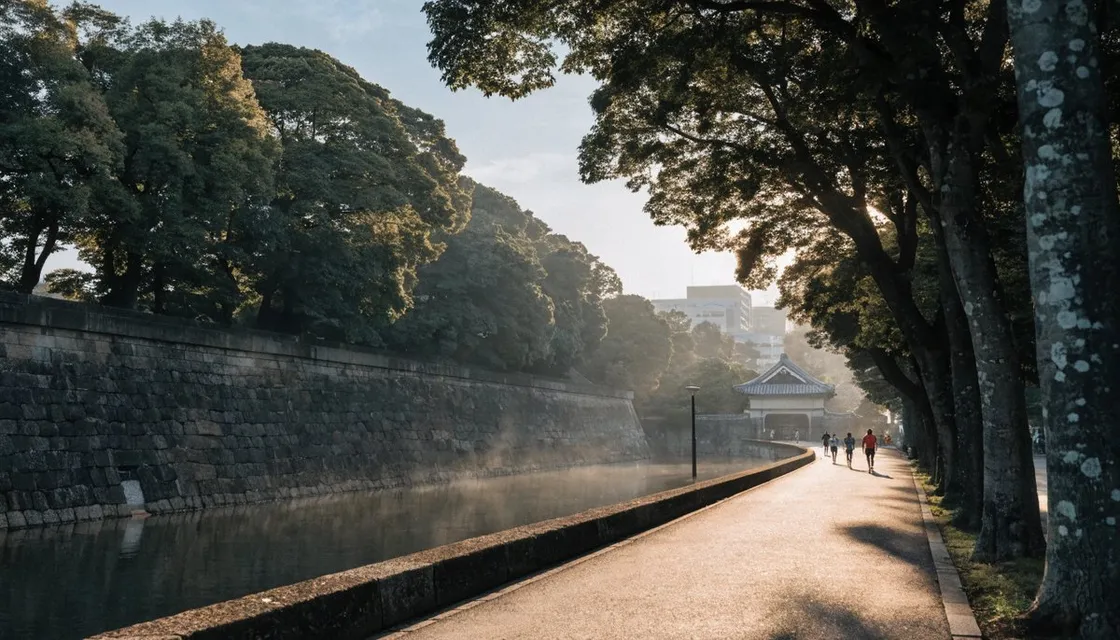
If you want a base where the workday can end at a pond instead of a station concourse, Kichijoji is probably the strongest option in west Tokyo.
It is roughly fifteen minutes from Shinjuku on the Chuo line, and it has consistently placed near the top of Japan’s “most desirable place to live” surveys for years.
That popularity is not accidental, and it is not only about the park.
Kichijoji manages something most Tokyo neighborhoods do not: it has real density of shops, food, and culture, while still opening onto green space large enough to forget the trains for an hour.
What the location actually buys you
The Chuo line runs east into Shinjuku, Yotsuya, and Tokyo Station. The Keio Inokashira line runs south to Shibuya in about twenty minutes.
Two independent lines to two different hubs is the practical advantage. When one is delayed, you still have a route.
For remote workers this matters less for commuting and more for spontaneity. Client meeting in Otemachi at three, dinner in Shibuya at seven, home before the shops close. All of that stays feasible.
The trade is distance from the eastern half of the city. Asakusa, Kiyosumi, and the Chiba side are a genuine trek. If your Tokyo revolves around Sumida River neighborhoods, Kichijoji will feel far.
A good base is not the place closest to everything. It is the place where the trips you actually make are short.
The park is the reason people stay
Inokashira Park sits a few minutes’ walk south of the station, and it changes how the neighborhood feels.
There is a large pond with rowboats, wide walking paths, and enough tree cover that summer afternoons stay bearable. The Ghibli Museum sits on the western edge, in Mitaka, and requires advance tickets that tend to sell out.
For a working week, the park functions as a reset button. A loop before the first call, a bench for a phone meeting, an hour of reading when a deadline finally clears.
Weekends bring crowds, street musicians, and small craft stalls. Weekday mornings are quiet enough that you will mostly share it with dog walkers and joggers.
If you work Europe or US hours, that early-morning quiet is a real asset.
Working from Kichijoji
The station area has a dense supply of cafes, including several long-running independents alongside the usual chains.
Seating turns over quickly at peak hours, and some of the smaller places discourage laptops during lunch. Reading the room applies here more than in Shibuya.
For calls, the reliable options are the same as elsewhere in Tokyo: paid work booths near the station, coworking spaces with day passes, and family restaurants for longer sessions when you need a table and a power outlet.
Kichijoji does not have the sheer coworking density of Shibuya or Otemachi. Expect a handful of options rather than dozens, and check opening hours in advance, since suburban locations tend to close earlier.
Many people who base here end up doing focused work at home or in a nearby space, and using the neighborhood for everything that happens around the work.
Eating, drinking, and the alley
Harmonica Yokocho is the narrow warren of alleys just northwest of the station, built out of a post-war black market and now packed with tiny bars and standing counters.
Most seats there number in single digits. Some places open in the afternoon, more open at night, and the mood shifts noticeably after eight.
It is one of the friendlier yokocho for newcomers, though it helps to go early, go with someone, or simply be willing to sit at a counter and say very little.
Beyond the alley, the neighborhood covers most bases. Sun Road and Diamond Street arcades handle everyday shopping, the department stores near the station cover groceries and gifts, and there is a steady supply of ramen, curry, izakaya, and bakeries.
Grocery prices sit around the Tokyo average rather than below it. You are paying a small premium for the location.
Where to stay, and what it costs
Kichijoji rents run higher than Koenji or Nakano, and generally below Nakameguro or the central wards. Its popularity is priced in.
Monthly apartments and share houses exist here, but inventory is thinner than in the central wards, so booking further ahead is wise, especially in spring.
One useful strategy is to look one station away. Nishi-Ogikubo to the east and Mitaka to the west both put you within walking or short-train distance of Inokashira Park, usually at lower rent, with quieter streets.
Nishi-Ogikubo in particular has a strong secondhand and antique shop culture and a slower pace, while keeping the same Chuo line access.
Who this neighborhood suits
Kichijoji works well if you want a genuine daily-life base rather than a nightlife base, if green space affects your mood, and if your Tokyo tends to sit on the western side.
It works less well if you want maximum access to the whole city, if you are on a tight budget, or if you like being able to reach three coworking spaces on foot.
For a stay of a month or longer, the case for Kichijoji is that you stop feeling like you are visiting Tokyo and start feeling like you live somewhere in it.
That shift is hard to engineer deliberately. Neighborhoods with a park, an arcade, and a decent bakery tend to produce it on their own.
If you are still deciding where to base yourself, it is worth putting Kichijoji next to the alternatives in the Tokyo neighborhood comparison, which lines up seven areas on cost, transport and workspace.
FAQ
How far is Kichijoji from central Tokyo?
Roughly fifteen minutes to Shinjuku on the Chuo line and about twenty minutes to Shibuya on the Inokashira line, outside of heavy delays. Trains are crowded during morning peak in the Shinjuku direction.
Is Kichijoji expensive compared to other nomad-friendly areas?
It sits in the middle. Expect to pay more than Koenji, Nakano, or Nishi-Ogikubo, and less than most central wards. Checking one station out in either direction often lowers the cost noticeably.
Do I need Japanese to enjoy living there?
Not to get by day to day. Larger shops and chains handle English well enough, and translation apps cover most of the rest. In the smaller bars in Harmonica Yokocho, even a little Japanese changes the experience considerably.