Nakano for Remote Workers: Tokyo's Cheap, Loud, Comfortable Base
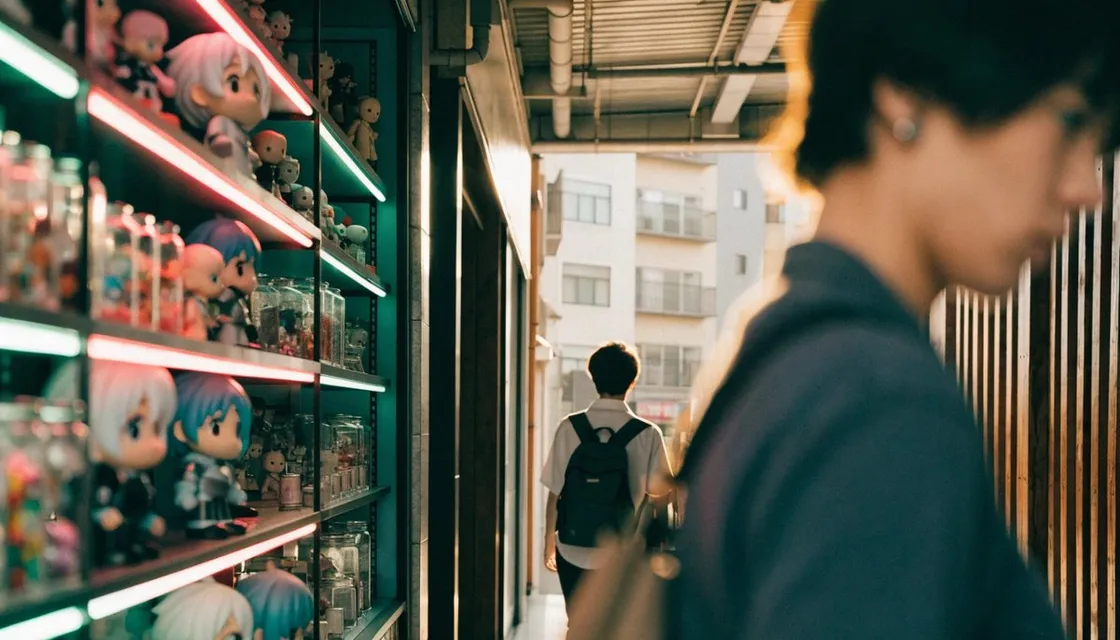
If your priority is being close to central Tokyo without paying central Tokyo prices, Nakano is one of the strongest trades in the city.
It sits four minutes from Shinjuku on the Chuo rapid line. Rents run noticeably lower than Shinjuku or Nakameguro. And the neighborhood has a real daily-life texture, which matters more than most people expect when you are working from a place for a month or three.
Nakano is not a scenic neighborhood. It will not photograph well the way Kagurazaka or Yanaka do.
What it offers instead is friction removal: everything you need within a ten minute walk, at a price that leaves room in the budget for the rest of Japan.
Why the location does so much work
The Chuo line is the spine of west Tokyo, and Nakano is the first meaningful stop on it heading out from Shinjuku.
That single fact solves a lot. Shinjuku puts you on the Yamanote loop, the Narita Express, and most highway bus routes. Getting there in a handful of minutes, without a transfer, changes how spontaneous your week can be.
The Tozai subway line also terminates at Nakano, which gives you a direct seated ride into Otemachi and Nihonbashi if your coworking space or client office sits on that side of town.
The best nomad neighborhoods are rarely the beautiful ones. They are the ones where nothing costs you extra effort.
Worth knowing: Chuo rapid trains skip several stations, so check whether the train you are boarding is a rapid or a local before you settle in. During weekday rush the westbound platforms get genuinely crowded, and Nakano is early enough in the line that you can sometimes get a seat others cannot.
Where the work actually happens
Nakano does not have the dense coworking scene that Shibuya or Otemachi do, but it has enough.
You will find a handful of independent coworking spaces near the station, plus branches of the larger drop-in chains. Because demand is lower here, hot desks tend to be easier to get without booking days ahead.
The bigger asset is the cafe layer.
Nakano has a long-running kissaten culture alongside newer specialty roasters, and many of the older shops are quieter than a Shibuya chain ever is. That quiet is for focused work, not calls: in a hushed room your voice carries. Take calls somewhere they are explicitly allowed, such as the phone booth at a coworking space near the station. Rules on laptops also vary shop to shop, so it is worth a quick look at whether other customers have screens open before you settle in for three hours.
The Nakano Central Library and nearby ward facilities are also an option for focused, silent work. Public libraries in Tokyo generally do not allow calls, but for heads-down writing or code they are hard to beat, and they cost nothing.
For anything requiring a reliable connection at odd hours, the net cafes near the station are open around the clock and give you a booth, a desk, and unlimited soft drinks. Tokyo rules require ID to register, so bring your passport. Standard booths are open above, so they suit typing, not talking.
The arcade, and why it matters daily
Nakano Sun Mall runs north from the station exit and is covered end to end, which means your commute to dinner does not depend on the weather.
That sounds trivial until you have spent a rainy June in Tokyo.
The arcade holds the practical layer of daily life: drugstores, a hundred-yen shop, cheap eateries, bakeries, a supermarket or two nearby, and enough small izakaya that you can eat differently every night for weeks.
Prices in this stretch tend to sit below what you would pay for the equivalent in Shinjuku, though the gap varies by shop and has narrowed in recent years.
At the end of the arcade sits Nakano Broadway, the multi-floor complex that made the neighborhood internationally known.
It is best understood as a vertical maze of specialist shops: vintage manga, used watches, figures, secondhand cameras, small galleries. Even if none of that is your thing, it is a genuinely strange and interesting place to wander for an hour when your brain is done for the day.
Living here for a month or more
The residential streets north and west of the station are low-rise, quiet, and full of small apartment buildings.
This is where the value shows up. Monthly furnished apartments and share houses in Nakano generally price below equivalent stock in Shinjuku, Shibuya, or Nakameguro, while still being inside the same practical commuting radius.
Nakano ward is dense and young, with a large student and single-occupant population. That shapes the neighborhood: lots of small apartments, cheap food, late-opening shops, and coin laundries on most blocks.
It also means less English than you would find in Roppongi or Hiroo. Not a problem for most daily transactions, but worth expecting.
For groceries, you have a mix of the arcade supermarkets and larger stores a short walk out. Late-night konbini coverage is thorough.
One honest tradeoff: Nakano is loud in places, especially the blocks immediately around the station and the drinking alleys nearby. If you are noise sensitive, look at listings a few streets back rather than directly above the arcade.
Getting out of the neighborhood
Nakano works well as a launch point.
The Chuo line runs west through Koenji, Asagaya, and Kichijoji, which gives you a string of very different neighborhoods to explore on foot without ever leaving one train line.
Kichijoji and Inokashira Park are close enough for a casual afternoon. Koenji, one stop away, has the live house and secondhand clothing scene that Nakano mostly lacks.
One catch for weekend outings: on Saturdays, Sundays and holidays, Chuo rapid trains run straight through Koenji, Asagaya and Nishi-Ogikubo. On those days, take the yellow Chuo-Sobu local line instead, which stops everywhere.
Head the other direction and you are in Shinjuku, with everything that implies.
Nakano Central Park, just west of the station, is a modern redevelopment with open lawn space and office towers. It is not a beautiful park, but it is a real one, and it gives you somewhere to sit outside with a coffee that is not a train platform.
Is Nakano right for you?
Nakano suits a specific kind of remote worker: someone who values access and cost over atmosphere, who does not need a scenic morning walk, and who wants their neighborhood to be functional rather than photogenic.
If you want Tokyo to feel calm and low-rise and slow, Kuramae or Yanaka will serve you better.
If you want it to feel creative and scruffy, Koenji or Shimokitazawa are the call.
But if you want to be four minutes from everything, eat well for very little, and keep your monthly costs down while you figure out the rest of Japan, Nakano is difficult to beat.
If you are still deciding where to base yourself, it is worth putting Nakano next to the alternatives in the Tokyo neighborhood comparison, which lines up seven areas on cost, transport and workspace.
FAQ
Is Nakano a good area for someone who does not speak Japanese?
It is workable but not especially English-friendly. Most shops and restaurants operate primarily in Japanese, and menus with English are the exception rather than the rule. Translation apps handle the daily gaps fine, and the neighborhood is used to foreign residents, but expect fewer English signs than in central or expat-heavy districts.
How does Nakano compare on price to Shinjuku or Shibuya?
Rents and everyday costs are generally lower, though how much lower depends on the building, the distance from the station, and the season. The gap has narrowed as the neighborhood has become better known, so treat any specific figure you read online as a starting point for your own search rather than a fixed rate.
Can you find quiet places to take video calls?
Yes, though it takes a little scouting. Coworking spaces near the station have booths, and some net cafes have lockable private rooms by the hour, though call rules vary by store, so check before you dial. Cafes are a mixed bag, and libraries will not work for calls at all. Most people who stay a while settle on one or two reliable spots rather than improvising each time.