Kagurazaka for Remote Workers: Tokyo's Hillside Detour
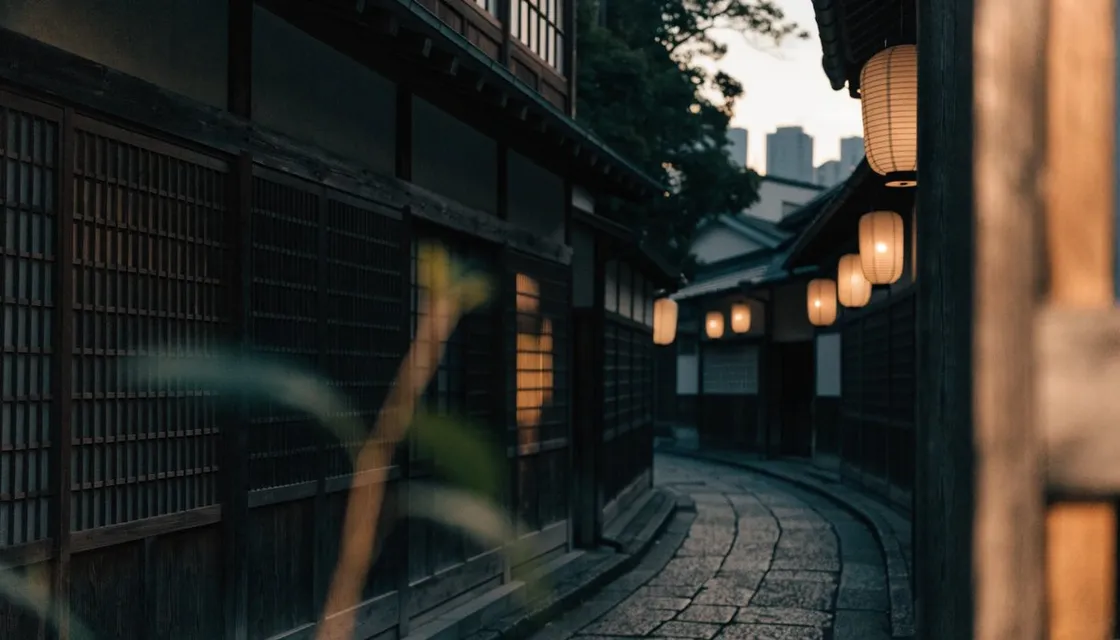
If you want a Tokyo base that is genuinely central but does not feel like it, Kagurazaka is one of the strongest options in the city.
It sits on a slope in Shinjuku ward, right at the edge of Iidabashi station, which means the JR Chuo-Sobu line and four subway lines are within a few minutes of your door. Yet walk two blocks off the main street and the noise drops away almost completely.
That combination is rare. Most neighborhoods in Tokyo give you either connectivity or calm.
Kagurazaka gives you both, and it charges for the privilege in rent rather than in commute time.
What the neighborhood actually is
The name means “kagura slope,” a reference to the shrine music that once drifted down the hill. The main street, Kagurazaka-dori, climbs from Iidabashi up toward Ushigome-kagurazaka, and everything interesting branches off it.
This was a hanamachi, a licensed geisha district, from the Meiji era onward. A small number of traditional restaurants still operate behind wooden gates, and the stone-paved alleys that served them are the reason the area looks the way it does today.
The other layer is French. A cluster of French institutions and schools settled here decades ago, and the neighborhood absorbed the influence without much fuss.
The result is a street where a soba shop that has been there for generations sits near a bakery selling proper baguettes, and neither seems out of place.
A neighborhood that has already survived one reinvention tends to handle the next one gracefully.
Working here day to day
Kagurazaka is not a coworking hub. There are some options around Iidabashi and Kagurazaka stations, and a few in the direction of Ichigaya, but the density is nothing like Shibuya or Otemachi.
What it has instead is cafes with the right shape for focused work: small, quiet, and largely populated by people reading rather than pitching.
The tradeoff is honest. Many of the best places are small, which means seats are limited and long laptop sessions are not always welcome.
The local convention is to read the room. If a shop has four tables and a queue outside, treat it as a coffee stop, not an office.
For a full working day, the more reliable pattern is a coworking membership near Iidabashi combined with cafes for the afternoon shift. Shinjuku ward also runs public libraries within reach if you want free, quiet desk space.
Mobile coverage is solid throughout, and you are close enough to the center that a same-day client meeting in Marunouchi, Shibuya, or Shinjuku is a short ride rather than a logistics problem.
The alleys are the point
The reason people fall for Kagurazaka is the side streets.
Hyogo Yokocho and Kakurenbo Yokocho, the “hide and seek alley,” are narrow stone lanes with black wooden fences and almost no signage. They are still working streets, not a preserved museum piece.
They are also genuinely disorienting. The slope plus the curved lanes means map apps struggle here, and getting lost for ten minutes is a normal part of the experience.
Many remote workers end up treating a walk through these alleys as their between-meetings reset. It is a better break than another scroll through a feed.
Akagi Shrine sits near the top of the hill with a modern glass-and-wood redesign, and its grounds make a quiet spot to pause between work sessions.
Eating and the evening
Food is where Kagurazaka earns its rent.
The range runs from standing bars and ramen counters near the station up through mid-range izakaya on the slope, and then into the reservation-only end of the market hidden behind the gates.
For a nomad budget, the useful zone is the middle. Lunch sets on and around the main street are reasonably priced, and a lot of the better restaurants offer a lunch version of the same kitchen at a fraction of the dinner cost.
Prices at the top end climb steeply, so treat the hidden ryotei as an occasional event rather than a habit.
Evenings are calm by Tokyo standards. The area quiets down earlier than Shinjuku or Shibuya, which is either a drawback or the entire reason you moved here.
Practical considerations
Rent is on the higher side for the ward, driven by the location and the neighborhood’s reputation. Short-term furnished apartments and share houses exist here but the supply is thinner than in Shinjuku proper, so start looking earlier than you would elsewhere.
The slope is real. If you cycle, the climb is short but steep, and rain makes the stone paving slippery.
Grocery access is fine. There are supermarkets near the station and the usual convenience store coverage, plus a few specialty shops if you cook seriously.
For quiet, the further you go up the hill and off the main street, the better. The blocks immediately around Iidabashi station carry more traffic noise than the numbers on a map would suggest.
Who it suits
Kagurazaka works well if you write, design, or do deep solo work and want an environment that supports concentration without isolating you from the center of the city.
It works less well if your day depends on running into people, or if you need a large coworking floor with a community attached. Those needs are better served in Shibuya, Ebisu, or the Otemachi corridor.
It also suits people staying a month or more. The neighborhood rewards repeat visits to the same few places, and the alleys only start making sense once you have walked them enough times to stop needing the map.
Some Tokyo neighborhoods impress you on day one. Kagurazaka is one of the ones that gets better in week three.
If you are still deciding where to base yourself, it is worth putting Kagurazaka next to the alternatives in the Tokyo neighborhood comparison, which lines up seven areas on cost, transport and workspace.
FAQ
Is Kagurazaka expensive to live in?
It sits above the Tokyo average for its ward, mainly because of the central location and the neighborhood’s popularity. Expect to pay a premium over somewhere like Koenji or Nakano for a comparable place, though exact figures shift with the market and the building.
Can you get by without Japanese here?
For daily life, yes. The station area and the main street handle English reasonably. Some of the older, smaller establishments in the alleys are far less set up for it, and a few operate on introduction only, which is a cultural convention rather than a language barrier.
Is it a good base if I need to travel around Japan?
It is workable. Iidabashi connects you to Tokyo Station and Shinjuku quickly, which covers both shinkansen and highway bus departures. It is less convenient than living directly on a major terminal, but the tradeoff in daily quality is usually worth it.