Tokyo From Above for Free: Which Observation Decks Are Actually Open
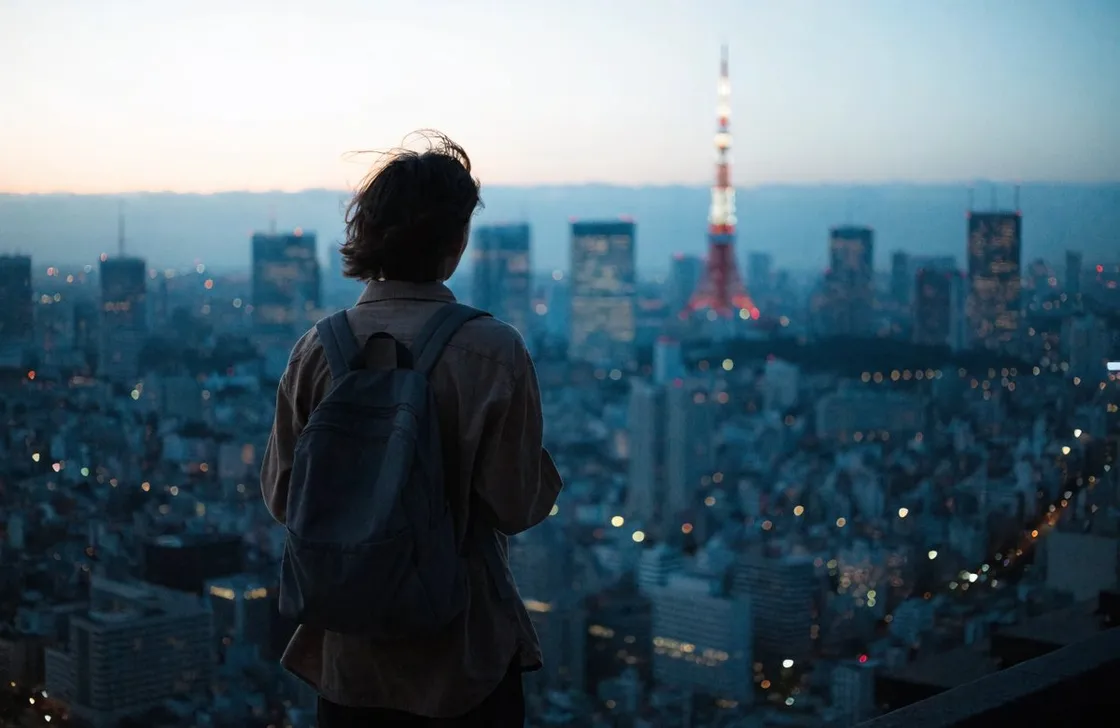
You do not need to pay for the view in Tokyo. You mostly need to know which door to walk through.
Shibuya Sky, Tokyo Skytree and the Roppongi Hills deck are all genuinely good, and they all charge. Meanwhile the city keeps a handful of high floors open to anyone who wants to ride the lift, with no ticket and no reservation.
The catch, in September 2026, is that two of the most-recommended free decks are shut for repairs. Several guides have not caught up. So here is the current map.
Height is cheap in Tokyo. It is the timing that costs you.
Start with the Metropolitan Government Building
If you only go to one, go to the Tocho in Shinjuku.
It sits about 202 metres up, it is free, and it is roughly a ten minute walk from the west exit of JR Shinjuku Station. There are two towers with separate observatories, and they keep different hours.
The South deck runs late, roughly 9:30 to 22:00 with last entry around 21:30. The North deck closes much earlier, in the late afternoon.
They also close on staggered days: the North tower on the second and fourth Monday of the month, the South tower on the first and third Tuesday, with the closure pushed to the next day when that falls on a national holiday. Both can shut for building inspections.
The practical version of all that: check the day before, and assume the South deck is your default.
Expect a short security check on the way in. On a clear evening the queue can build, but it moves.
Caretta Shiodome is the highest free one
The 46th floor of Caretta Shiodome has a free viewing space called SKY VIEW, at roughly 200 metres.
It looks out over Tokyo Bay, so you get Ginza, Odaiba and the Rainbow Bridge in one sweep rather than the endless grey grid you see from Shinjuku.
It is a quieter, smaller space than the Tocho, and it is attached to a restaurant floor, which means you can go up, look, and then decide whether you feel like sitting down.
Ebisu Garden Place Sky Lounge
The 38th floor of Ebisu Garden Place Tower, around 160 metres, is open and free.
The view leans toward Roppongi and the bay. It is worth pairing with the walk up from Ebisu Station, which is one of the more pleasant approaches to any building in Tokyo.
Nerima Ward Office, for the west-facing version
This is the one most visitors never hear about.
The 20th floor of the Nerima Ward Office has a free observation lobby that stays open into the evening, later than most ward buildings. Windows face north and south, and on a clear day you can pick out the Shinjuku towers, Tokyo Tower, Roppongi Hills, and Mount Fuji sitting low on the horizon.
It is a municipal office, so the atmosphere is fluorescent rather than romantic. That is also why it is empty.
Asakusa, for the view that is not about height
The Asakusa Culture Tourist Information Center is only eight floors up, which is nothing by Tokyo standards.
It is on the list anyway, because the composition is better than the altitude. The free terrace looks straight down Nakamise-dori toward Senso-ji, with the Skytree off to the side. Kengo Kuma designed the building, and it sits directly across from Kaminarimon.
Go at dusk when the approach lights come on.
Two that are closed right now
Bunkyo Civic Center is the one everyone recommends for Mount Fuji, from the 25th floor at around 105 metres. It has been closed for construction since early 2025, with reopening reported as planned for early December 2026. Worth noting for later, not for this month.
Carrot Tower in Sangenjaya, 26 floors and about 124 metres, is normally one of the best free sunset spots in the city, with Fuji sitting behind the western glass. Setagaya Ward suspended the observation lobby and its café in July 2026 after an air-conditioning compressor failed. No reopening date had been announced at the time of writing.
Both are worth checking before you write them off, since these situations change.
Can you actually work up there?
Mostly, no. Set expectations accordingly.
These are viewing spaces, not lounges. Seating is limited, power outlets are rare to nonexistent, and the ones attached to cafés or restaurants expect you to be a customer rather than a tenant.
What they are good for is the thing a long remote-work day quietly eats: a change of altitude. Twenty minutes looking at something more than three metres away resets your eyes and your head in a way another café cannot.
Treat it as a break, not a desk.
When to go
Clear air matters more than time of day.
September and October in Tokyo give you the best odds right after a typhoon or a strong wind, when the haze has been pushed out and Fuji becomes visible from places it usually is not. Winter mornings are the reliable season for that, but a washed-clean autumn afternoon comes close.
For night views, arrive about half an hour before sunset and stay through it. You get the daylight version, the blue hour, and the lit city for one trip up.
Weekday evenings are calmer than weekends everywhere on this list.
FAQ
Do any of these need a reservation?
No. All of the decks above are walk-in and free. The paid ones like Shibuya Sky are where timed tickets come in.
Which one has the best chance of Mount Fuji?
Normally Bunkyo Civic Center or Carrot Tower, both of which are currently closed. Of what is open, Nerima Ward Office has the west-facing angle, and the Tocho works on a very clear day.
Is the Tokyo Metropolitan Government Building worth it if you have already paid for Skytree?
Yes, because it shows you a different thing. Skytree shows you how far Tokyo goes. The Tocho, sitting inside Shinjuku rather than above the outskirts, shows you how dense it is.