Nakameguro Guide for Remote Workers in Tokyo
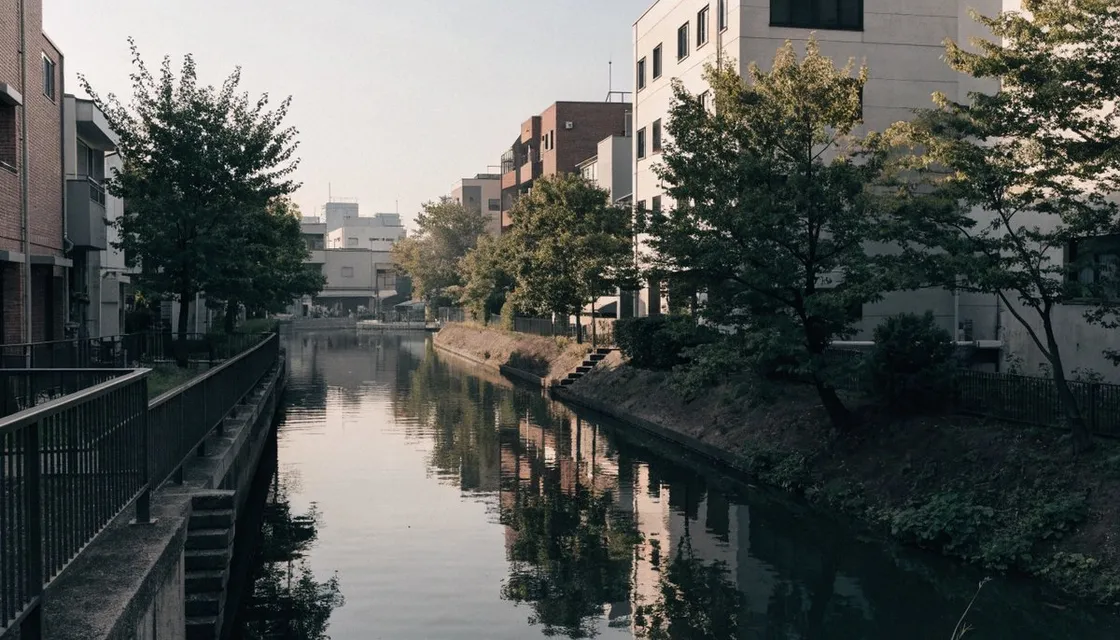
Nakameguro works best for remote workers who want a quiet, walkable base and are willing to pay a bit more for it.
The neighborhood sits along the Meguro River in Meguro ward, one stop from Shibuya on the Tokyu Toyoko line and directly on the Hibiya subway line. That combination is the practical argument for staying here: you are minutes from a major hub without living inside one.
Weekdays are calm. Weekends, especially in late March and early April, are not.
Why the location matters more than the hype
Most writing about Nakameguro leads with cherry blossoms and boutique coffee. Those are real, but they are not what makes the area useful if you are working here rather than visiting.
The useful part is the transit position.
The Hibiya line runs through Ebisu, Roppongi, Ginza, and on toward Akihabara and Ueno, which covers most places a client meeting might land. The Toyoko line takes you to Shibuya in about three minutes and continues south to Yokohama, and through-running services connect further into the Fukutoshin line network.
In practice that means you can accept an in-person meeting almost anywhere in central Tokyo without rebuilding your day around it.
The second useful part is scale. Nakameguro is small. The main strip along the canal is walkable end to end in roughly twenty minutes, and the residential streets behind it climb gently away from the water into quiet blocks.
You will learn the neighborhood in about three days, which is not true of Shibuya or Shinjuku.
A base you can memorize is a base you stop thinking about, and that is most of what a working neighborhood has to give you.
Working from cafes here
Cafe density is high, and the quality of the coffee is genuinely good. Whether the cafes work for working is a separate question.
Many of the better-known places along the canal are small, popular, and built around short visits. Counter seating, limited outlets, and an unstated expectation that you will not settle in for four hours.
That is not hostility. It is a reasonable response to a narrow room and a queue outside.
The practical approach is to split your day. Use the canal-side places for a focused ninety-minute block in the morning, then move somewhere with more tolerance for a long session in the afternoon.
Chain cafes near the station handle the long sessions better, and the general rules for reading a Tokyo cafe apply here as much as anywhere. Our guide to cafes for remote work in Tokyo covers how to judge a room before you sit down.
One more thing worth knowing: many independent shops in this area close one weekday a month, and hours shift seasonally. Checking before you walk over saves a wasted trip.
Coworking and the Ebisu fallback
Nakameguro itself has a modest coworking presence rather than a dense one. There are small spaces and a few drop-in options, but the neighborhood is residential and boutique-retail first.
If you need a dedicated desk, a phone booth, or a meeting room on short notice, Ebisu is one stop away on the Hibiya line and has considerably more capacity. Shibuya, two minutes in the other direction, has more still.
This is a reasonable trade. Living somewhere quiet and commuting three minutes to a busier working district is often better than the reverse.
What it costs to stay
Nakameguro is not a budget neighborhood. Rents run above the Tokyo average, and monthly apartment and share house listings here tend to sit toward the upper end of what you would see in a comparable size elsewhere in the city.
Figures move constantly, so treat any number you read as a starting point rather than a quote. What holds steady is the relative position: expect to pay a premium over eastern or western Tokyo for the same square meters.
Food follows the same pattern. Sit-down restaurants along the canal are priced for the neighborhood’s reputation, while the supermarkets and the shops a few streets back from the water are priced normally.
If you are cooking most days and eating out selectively, the gap narrows a lot.
The cherry blossom problem
For about two weeks in spring, the canal becomes one of Tokyo’s most photographed places, and the neighborhood fills accordingly.
During that window the main strip is difficult to walk, the cafes are full, and the convenience stores near the station run low on basics by evening.
It is genuinely beautiful. It is also worth planning around if you have deadlines. Shift your working hours earlier, stock up before the weekend, and use the residential streets rather than the canal path to move around.
The rest of the year, none of this applies.
Daily life details
The area around the station covers most ordinary needs. Supermarkets, a drugstore, convenience stores, and a coin laundry are all within a short walk, and Meguro and Ebisu fill any gaps.
Green space is limited. The canal path is pleasant but narrow, and it is a walking route more than a park. For running or a longer outdoor stretch, most people head toward Komazawa Olympic Park or use the river path itself early in the morning before the foot traffic builds.
Nakameguro is also a workable hub for exploring nearby neighborhoods on foot. Daikanyama is a fifteen minute walk uphill, Ebisu slightly further, and Naka-Meguro to Yutenji is a pleasant thirty minutes along quiet streets.
Who it suits, and who it does not
Nakameguro suits remote workers who value a calm residential base, walk more than they ride, and want fast access to central Tokyo without living in the noise.
It suits shorter stays reasonably well, because the neighborhood is easy to learn.
It suits people on a tight budget poorly. If cost is your main constraint, eastern Tokyo gives you more room for the same money, and our complete guide to Tokyo areas lays out the trade-offs across the city. For a similar calm at a lower price point, Kiyosumi-Shirakawa covers comparable ground on the other side of the city.
FAQ
Is Nakameguro good for a first stay in Tokyo?
It works, with one caveat. The area is quiet and easy to navigate, which helps early on, but it has fewer English-language services than Shibuya or Roppongi. If you want more support while you settle in, somewhere more central may be easier for the first few weeks.
How noisy is it at night?
Quiet by Tokyo standards on weeknights. The canal-side bars draw a crowd on Friday and Saturday evenings, so a room facing the water will hear more than one facing the residential blocks behind.
Do I need to avoid cherry blossom season entirely?
No, but plan for it. The crowds are concentrated on the canal path and heaviest on weekend afternoons. Mornings and the back streets stay manageable throughout.