Enoshima Day Trip from Tokyo: Island, Sea and a Laptop
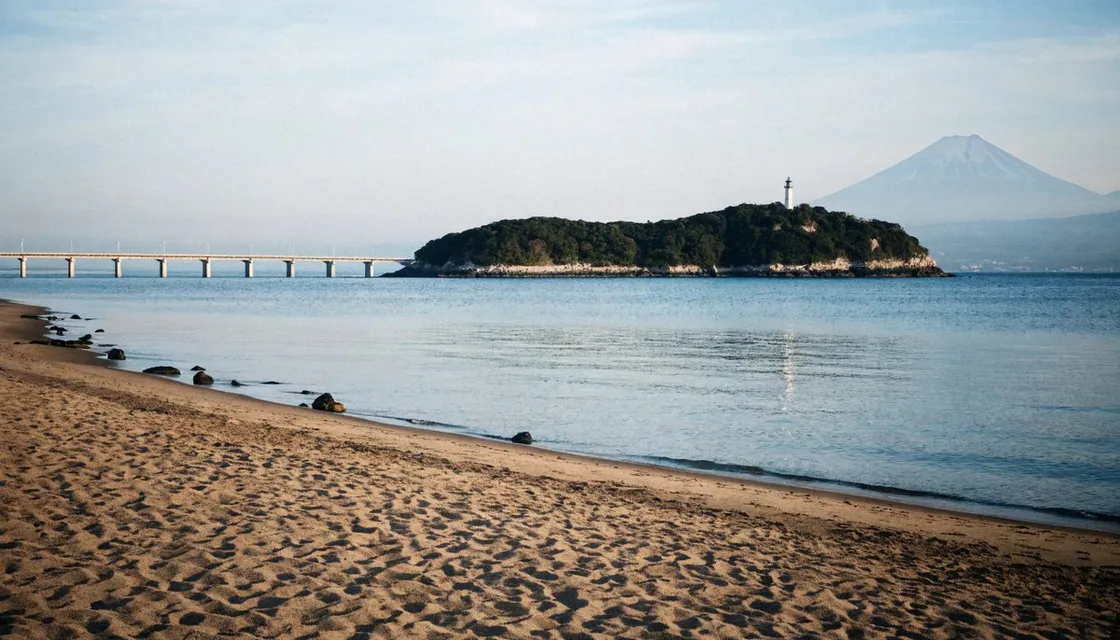
Enoshima is the easiest sea day you can take from Tokyo, and it is small enough to fit around a half day of work.
That is the case for it in one line. About an hour from Shinjuku on the Odakyu line, a short walk across a bridge, and you are on a tiny island with a shrine path, a lighthouse, sea caves, and, on a clear day, Mount Fuji sitting across the bay.
Kamakura gets most of the attention on this stretch of coast. Enoshima is the lighter, saltier version: fewer temples, more sea, and a much shorter list of things you feel obliged to see.
If you have a call at 9pm Tokyo time and want to spend the daylight hours somewhere that does not look like a city, this is a good answer.
Getting there
The simplest route is the Odakyu line from Shinjuku to Katase-Enoshima, roughly 60 to 70 minutes. Ordinary trains no longer run through: you change once at Fujisawa, where the Katase-Enoshima shuttle leaves from its own platform. The Romancecar limited express (the Enoshima service) runs straight through and gives you a reserved seat.
Odakyu sells a discounted day pass that bundles the round trip with unlimited rides on the Enoden, the small local line that runs along the coast to Kamakura. Prices change, so check the current version at the station, but it is usually cheaper than buying the legs separately if you plan to ride the Enoden at all.
From Katase-Enoshima Station, the island is about a ten minute walk: through the underpass, along the river mouth, and over the bridge.
If you are coming from the Kamakura side instead, the Enoden stops at Enoshima Station, which is a slightly longer walk to the bridge but a nicer approach.
The Enoden is the reason to combine Enoshima with Kamakura. The train itself is the attraction.
Our Kamakura day trip guide covers the other end of that line, and the two pair well if you have a full free day rather than a half one.
What the island is
Enoshima is small. You can cross it end to end in about 30 to 40 minutes without stopping, and most of that is stairs.
From the bridge, a narrow shopping street climbs toward the shrine gate. Past the gate, the path continues up in stages, with Enoshima Shrine spread across several halls along the way.
If you would rather skip the climbing, there is a paid escalator system called the Enoshima Escar that carries you up the steep parts. It is a modest fee and worth it on a hot day.
At the top sits the Samuel Cocking Garden and the Sea Candle, a lighthouse with an observation deck. This is where the Fuji view lives on clear days, and where the coastline opens out toward Kamakura on one side and Chigasaki on the other.
Beyond the garden, the path drops down the far side to the Iwaya caves, cut into the cliffs at sea level. The caves are the quiet end of the island. Fewer people get this far, and the walk down passes some of the best views of the rocks and the surf.
Check opening times before you commit to the caves. They close in rough weather, and the closing time is earlier than you might expect.
To skip the long climb back, take the Benten-maru boat from Chigogafuchi, the rocks near the caves, to the bridge. The ride is about six minutes and costs 500 yen for adults, cash only. It runs until around 14:30, not on weekdays in December to February, and is cancelled when wind or waves are high; whether it runs is decided at about 10:30 that morning and posted on the Fujisawa tourism site.
Where to work
Enoshima is a sightseeing island, not a coworking district. Set expectations accordingly.
The realistic plan is two or three focused hours in a cafe with a sea view, not a full workday. Cafes on the island lean toward lunch and dessert, so long laptop sessions are better suited to the mainland side around Katase-Enoshima and the beach road.
Look for places along the coast with counter seating facing the water. Many have outlets, but not all, so arrive charged.
Mobile signal on the island and the beach is generally fine, which matters more here than Wi-Fi. If you tether, you will be fine for email and documents. For video calls, the station area is safer than the island itself. See our mobile and internet setup guide if you are still on airport Wi-Fi.
A pattern that works well: leave Tokyo early, work the morning from a beach-side cafe on the mainland, cross to the island around lunch when you have earned the break, and ride back in the late afternoon.
Eating
The island’s specialty is shirasu, tiny whitebait served raw when in season and boiled or dried the rest of the year. Rice bowls topped with it are everywhere on the shopping street and around the bridge.
Shirasu fishing in the area is closed from January 1 to March 10, so if you see it on a menu out of season, it will be the frozen or boiled version.
Grilled seafood on sticks, senbei rice crackers pressed with whole octopus, and soft serve fill in the gaps. Nothing here is fancy, and nothing needs to be.
Prices on the island itself run a little higher than in Tokyo for what you get. Eating on the mainland side before or after the crossing is the budget move.
When to go
Weekday mornings are noticeably quieter than weekends, which is one of the small structural advantages of remote work.
Autumn and winter give the clearest Fuji views. Summer brings the beach crowds to the Shonan coast and the island shopping street can feel like a festival queue.
Sunset from the Sea Candle is popular for a reason. If your evening is free, the lighthouse deck in the last hour of daylight is the best moment on the island.
Rainy days are a hard no. The stairs are slippery, the caves may be closed, and the view is the whole point.
A realistic itinerary
Leave Shinjuku around 8am. Work two to three hours from a cafe near the beach. Cross the bridge before noon.
Climb through the shrine, ride the Escar if you like, spend time in the garden and on the lighthouse deck. Eat a shirasu bowl. Walk down to the caves if they are open.
Head back across the bridge by mid-afternoon, and either ride the Enoden toward Kamakura for a second half or catch the Odakyu straight home.
You will be back in Tokyo with time to shower before a late call, having spent the day next to the sea.
FAQ
Can you see Mount Fuji from Enoshima? Yes, on clear days, most reliably in the cooler months. The lighthouse deck and the west-facing coast paths have the best angles. Summer haze often hides it.
Is Enoshima better than Kamakura for a day trip? They are different. Kamakura is temples and hiking trails; Enoshima is sea, stairs and views. With a full day, the Enoden links them and you can do a lighter version of both.
Can you work a full day from Enoshima? Not comfortably. Plan for a half day of focused work on the mainland side and treat the island as the reward. The area is set up for visitors, not for laptops.