Apartment Noise in Tokyo: Quiet Hours, Calls and Neighbors
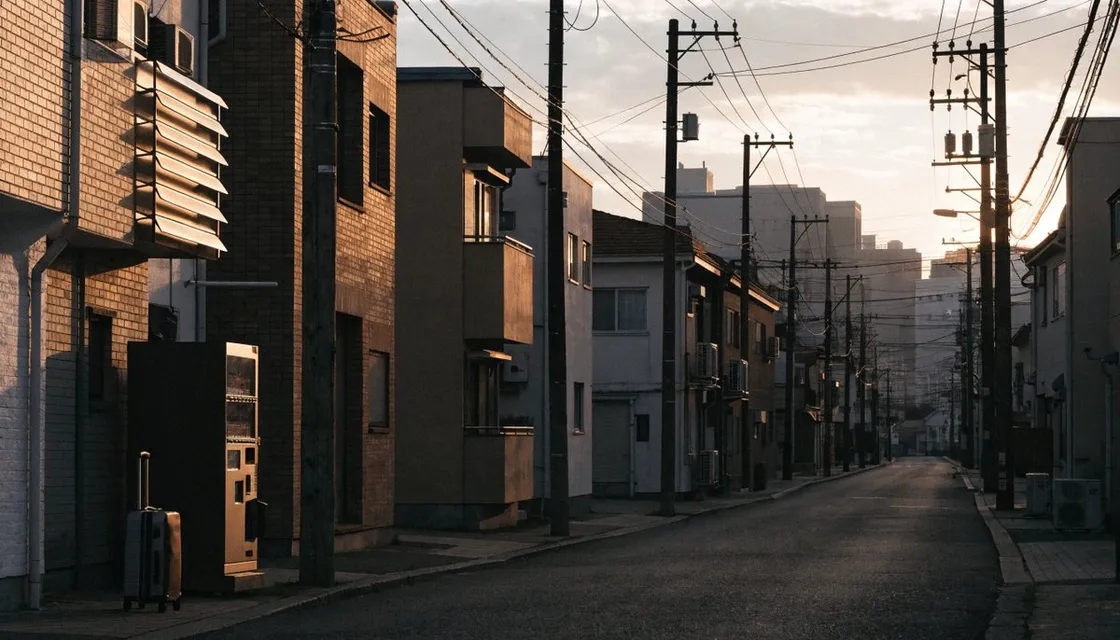
Short version first: there is no single citywide “quiet hours” law for Tokyo apartments.
What you actually live by is your building’s house rules, the walls you happen to have, and a shared, mostly unspoken expectation that nights are quiet.
Get those three right and noise is much less likely to become a problem.
Get them wrong and the first sign may be a polite notice in your mailbox.
For remote workers this matters more than for most people. You are home all day, and if your team sits in another time zone, your loudest hours may land at 11 p.m.
What the rules actually are
Everyday household noise, like footsteps, voices, TVs and washing machines, sits in an awkward spot in Japan.
Tokyo does have an environmental ordinance with noise standards, but Edogawa City’s guidance on household noise explains that applying those standards uniformly to ordinary living noise would restrict daily life too much. So household noise is generally not policed that way.
The ordinance’s limits are set by time of day and measured at the boundary between properties. According to Edogawa City, they do not apply to problems inside the same building.
Inside an apartment building, noise between floors and units is treated as something for the residents and the building’s management to sort out, not the city.
In Tokyo, quiet is less a law than a shared agreement. Your neighbors assume you have signed it.
In practice, the rules that bind you are the ones in your rental contract and the building’s house rules. Monthly apartments and share houses usually spell these out in a welcome sheet or rulebook.
Many ask residents to keep noise down late at night and early in the morning. The exact hours vary by building, so read the sheet rather than guessing.
Why some buildings are louder than others
Construction makes a real difference. Check the building’s structure in the listing before you sign. If it is not shown, ask the operator.
Wooden (木造) and light-steel-frame (軽量鉄骨) buildings tend to carry sound more easily between units. Reinforced concrete (RC, 鉄筋コンクリート) and steel-reinforced concrete (SRC) buildings tend to be quieter.
That is a tendency, not a guarantee. An older concrete building can still carry footsteps through the floor.
If you plan to take long calls from home, a concrete building and a corner or top-floor unit are worth asking about. Our guide to monthly apartments and share houses covers what else to check on a short-term rental.
Sounds to watch for
Think about the following sounds when planning your day.
Footsteps. Japanese residents usually walk around at home in socks or slippers. Heavy heel strikes on a wooden floor travel straight down to the unit below.
Laundry and vacuuming at night. Running a washing machine or vacuum late in the evening is a classic source of complaints, especially in smaller buildings.
Doors and balconies. Letting doors slam, and talking on the balcony or in shared corridors, carries further than you would expect.
Music and TV. Bass is the main problem. It passes through walls more easily than voices do.
Video calls and late meetings
Late calls deserve particular care when the next room may be someone’s bedroom.
Use a headset so the other participants’ voices do not play through your speakers. You still need to watch your own voice level; a microphone does not soundproof the room.
Keep late calls away from the shared wall if you can, and close the window. An open window in summer carries your voice to the whole street.
The meeting is in New York. The wall is in Tokyo. Plan for both.
If your team regularly meets in the middle of your night, it is worth thinking about where you take those calls. Our pieces on working across time zones from Tokyo and work booths for video calls cover the options outside your apartment.
If you receive a complaint
You may receive a printed notice in the building’s entrance, a note in your mailbox, or a message from the management company.
Do not take it as an accusation. Many residents genuinely do not realize they are the source.
Edogawa City’s guidance asks people who receive a complaint to listen humbly, talk it through, and act quickly on whatever they can improve.
A short apology to the management company and one visible change, like moving your calls or your laundry time, is a sensible first step.
If you are the one being disturbed
The same guidance works in reverse. Start calmly.
In a managed building, start with the management company or landlord. For noise between floors or units, Edogawa City’s guidance also points residents to the management company or owners’ association, to settle it under the building’s own rules.
For household noise in general, the same guidance suggests first telling the other person calmly, and writing a letter when talking face to face feels difficult.
Edogawa also lends simple sound level meters for up to 14 days. Units are limited, so call first, and bring ID if you pick one up at the ward office. Online applications are also accepted.
Loan conditions vary by ward. Itabashi, for example, lends to people who live or run a business in the ward, so check with your own ward.
If you are on a monthly or share-house contract, raise it with the operator early. Describe the time, duration and type of sound so they can investigate.
FAQ
Is there a legal quiet time in Tokyo apartments?
Not for noise between units in the same building. Tokyo’s ordinance sets limits by time of day, but they are measured at the property boundary, and Edogawa City notes they do not apply inside the same building. Quiet hours in an apartment come from your building’s rules and your contract, so check those.
Can I take video calls at night?
Check whether your building allows calls at that hour. If it does, use a headset, keep away from the shared wall, close the windows, and keep your voice low. These steps reduce disturbance, but do not guarantee that neighbors cannot hear you.
Who do I contact about a noisy neighbor?
Usually your management company or landlord first. For noise inside the same building, that is also where Edogawa City’s guidance points residents.
Sources
Checked on November 22, 2026. All pages are in Japanese.
- Edogawa City, Household noise (page updated October 24, 2024)
- Edogawa City, Simple sound level meter loans (page updated February 9, 2024)
- Itabashi City, Sound level meter loans (page updated May 21, 2026)
- Tokyo Metropolitan Government, Environmental ordinance, Appended Table 13: standards for daily life (PDF)