Togoshi-Ginza Guide for Remote Workers in Tokyo
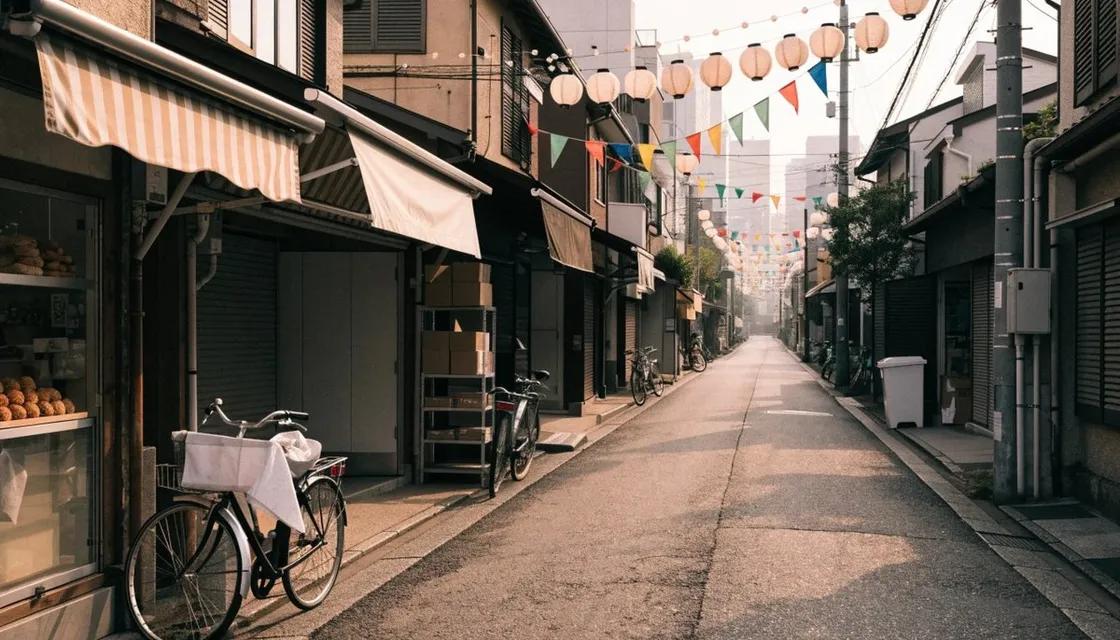
Togoshi-Ginza is the answer when you want a base where daily life is easy, cheap-ish, and a short ride from the business side of Tokyo.
It sits in Shinagawa ward, a few minutes from Gotanda. Its shopping street, the Togoshi-Ginza shotengai, runs for well over a kilometer and is often described as one of the longest in the Tokyo area.
There is no famous sight here. That is rather the point.
A good base is not where you go on your day off. It is where your Tuesday works.
Who Togoshi-Ginza suits
It suits nomads staying a month or more who want a real neighborhood, not a tourist district.
Groceries, a pharmacy, a dry cleaner, a cheap lunch, a hardware shop: almost everything you need on an ordinary day is somewhere along one long street.
If the idea of a shotengai is new to you, this is one of the clearest examples in the city.
It also suits people who work from home. The surrounding streets are mostly residential and quiet, so a monthly apartment or share house here can be calmer than its location suggests.
If you want nightlife, design-forward cafes, or a scene of other nomads, you will probably be happier in Shibuya or Nakameguro, visiting here when you want a slower afternoon.
Where the name comes from
The “Ginza” is borrowed. The commonly told story is that after the 1923 Great Kanto Earthquake, bricks from the rebuilding of central Ginza were brought here to fix the muddy local road, and the street took the name along with them.
Many Tokyo shopping streets now call themselves “something-Ginza.” Togoshi is usually credited as the first.
It is a nice detail to know when you walk it. The street was built for locals, by locals, and it still feels that way.
Getting around
Three stations serve the area, which is more than you would expect for a residential district.
Togoshi-Ginza Station on the Tokyu Ikegami line sits right on the shopping street. Gotanda, where you can change to the JR Yamanote line, is only a couple of stops away.
Togoshi Station on the Toei Asakusa line is a short walk off the street. It runs toward Shinbashi, Nihonbashi, and Asakusa, and with one change at Sengakuji you can ride Keikyu trains to Haneda Airport, which is handy for a nomad who flies often.
Togoshi-koen Station on the Tokyu Oimachi line is south of the shopping street and connects toward Oimachi and Jiyugaoka.
Check a route app for current times, but in practice most of central Tokyo is reachable without much effort.
Working from Togoshi-Ginza
This is not a coworking district. Plan around that from the start.
Along the street you will find chain cafes, family restaurants, and small independent coffee shops. They are fine for an hour or two of email, but most are not built for long laptop sessions, and seating can be tight at lunch.
For focused days, the practical move is to keep your desk in Gotanda or Osaki, a short ride away. Both have coworking spaces and rentable work booths aimed at office workers.
Our Shinagawa guide covers the wider area.
Shinagawa ward’s public libraries are another option worth checking for quiet desk time, though rules on laptops and seating vary by branch.
Video calls are best done from home or a paid booth. A small cafe on a busy shopping street is lively in exactly the way a call does not need.
Eating along the street
The shotengai is known for food you can carry. Croquettes, yakitori, fried snacks, onigiri, and sweets are sold over the counter at many shops, and walking and snacking is part of the local rhythm.
Etiquette is simple. Many shops prefer you eat near the counter or step aside rather than walk while eating through a crowd, so watch what others do and follow along.
For a proper meal, there is a wide range of small set-meal restaurants, ramen shops, and izakaya. Prices tend to be friendlier than in the big stations, though they vary, and the cheapest places may be cash only.
Supermarkets near the street make cooking at home easy. If you are staying longer, this is where Togoshi-Ginza saves you real money.
A slower afternoon
When you need a break, walk off the main street. Togoshi Hachiman Shrine is a short detour and a quiet place to clear your head.
Togoshi Park, near the Oimachi line station, has a Japanese garden that is pleasant on a weekday afternoon.
The shotengai itself changes through the day. Mornings are deliveries and early shoppers, early evening is the busiest, and by night it calms into a long, lit-up corridor that is nice for a walk after work.
Is it worth it?
Togoshi-Ginza will not impress you on day one. It impresses you on day twenty, when you realize you have not had to think about errands once.
For remote workers who value routine, quick access to Gotanda and the airport, and living somewhere people actually live, it is one of the most underrated bases in southern Tokyo.
FAQ
Is Togoshi-Ginza a good place to stay as a digital nomad? Yes, if you want a quiet, practical neighborhood with easy errands and good train links. It is less suited to people looking for nightlife or a nomad community on their doorstep.
How long is the Togoshi-Ginza shopping street? It is commonly cited as about 1.3 kilometers, made up of several connected shopping street associations. Figures vary slightly by source.
Is there coworking in Togoshi-Ginza? Options in the neighborhood itself are limited. Most remote workers here use coworking spaces or work booths in nearby Gotanda or Osaki.