Nishi-Ogikubo for Nomads: Tokyo's Quiet Antique Town
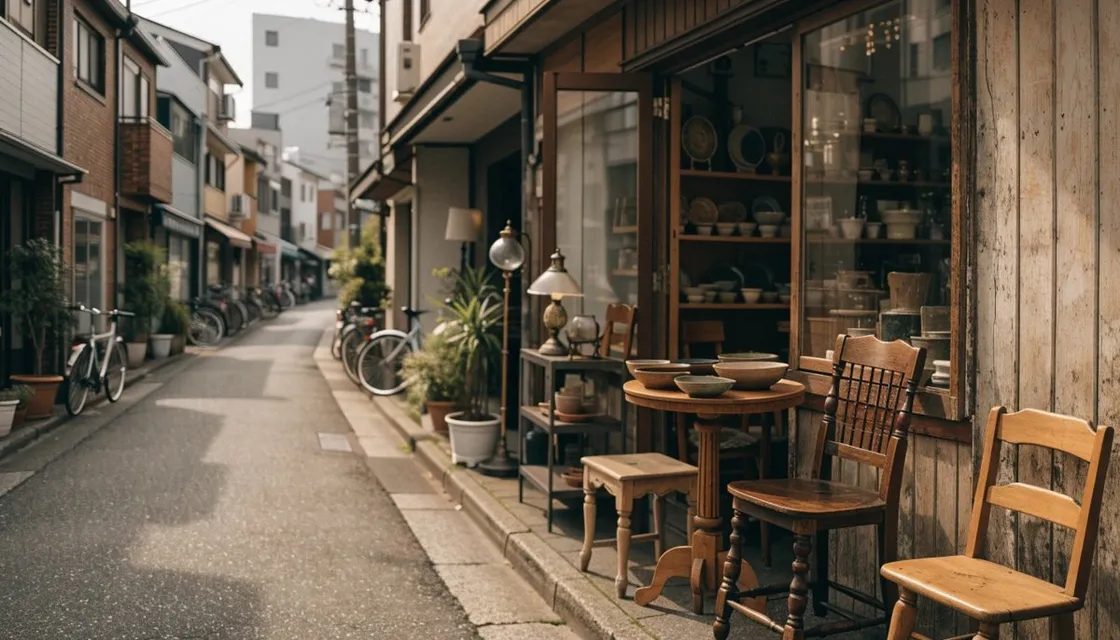
Nishi-Ogikubo is what you pick when you want west Tokyo’s character without west Tokyo’s noise.
It sits on the JR Chuo line between Ogikubo and Kichijoji, in Suginami ward. Locals shorten it to “Nishiogi.”
The neighborhood is best known for its antique and secondhand shops, and for a dense spread of small, independent cafes and restaurants. It is busy enough to be interesting and calm enough to actually work.
Some neighborhoods impress you on day one. Nishiogi grows on you by week three.
Who Nishiogi suits
If Koenji is the loud, creative cousin on the Chuo line, Nishiogi is the one who reads in the corner and knows every good shop within ten minutes’ walk.
It suits nomads staying a month or longer, who want a routine more than a scene.
It also suits people who like to wander. The shops are scattered across the side streets in every direction from the station rather than packed into one strip, so the area rewards slow walks.
If you want nightlife, big-brand shopping, or a glass coworking tower downstairs, you will probably be happier in Shinjuku or Shibuya and visiting here on a weekend.
Getting around
On weekdays the plain Chuo Rapid trains stop at Nishi-Ogikubo (the Special Rapid and Commuter Special Rapid pass through), and Shinjuku is usually around a quarter of an hour away. Check a route app for the current timing.
On weekends and public holidays all rapid trains skip the station. You ride the slower Chuo-Sobu local line instead, which adds some minutes but still gets you into town without a transfer.
Kichijoji is one stop west. That matters more than it sounds: when you need a big supermarket, an electronics store, or a wider choice of coworking spaces, it is a few minutes away. Our Kichijoji guide covers what is there.
A bicycle makes the area even easier. The streets are mostly residential and flat.
Working from Nishi-Ogikubo
This is not a coworking district. Plan your work setup around that.
The cafes are the draw, but many are small, personal places run by one or two people. Some welcome laptops for a while, some prefer you didn’t, and a few older kissaten may still allow smoking.
A good habit is to look around before you open your laptop. If everyone else is reading or chatting and the room only has a handful of seats, that is your cue to keep the session short.
For full focus days, many nomads in this part of the Chuo line keep a coworking membership in Kichijoji, Ogikubo, or Shinjuku. Public libraries in Suginami are another option worth checking for quiet reading and desk time, though rules on laptops and seats vary by branch.
Video calls are the trickiest part. Small cafes are not the place for them. A paid work booth or a coworking day pass is the polite and practical answer.
The antique shops
Nishiogi’s reputation rests on its antique and secondhand shops. You will find old Japanese tableware, furniture, vintage clothing, books, and the occasional thing nobody can quite identify.
For nomads, this is mostly a pleasure, not a shopping plan. You are probably not shipping a chest of drawers home.
But small things travel well. A handmade cup, a used book, a piece of old fabric: these are the souvenirs that actually mean something later.
Opening days and hours at small shops are irregular, and many close one or two days a week. Weekday afternoons tend to be relaxed for browsing. If a shop looks closed, it probably is.
If you enjoy this side of Tokyo, our secondhand shops guide covers the chains and thrift options citywide.
Eating and everyday life
Food here leans small and independent. Bakeries, curry shops, set-meal places, little bars, and restaurants from many cuisines fill the streets around the station.
Prices generally sit in the comfortable middle for Tokyo, though it varies a lot by place.
Daily errands are easy. There are supermarkets, drugstores, and convenience stores near the station, and the shopping streets cover most of what you need day to day.
What you will not find much of is late-night energy. Most places close at a reasonable hour, and the streets go quiet. For many remote workers, that is exactly the appeal.
Green space
Zenpukuji Park lies north of the station, roughly a 15 to 20 minute walk depending on where you start. It has ponds, trees, and walking paths, and on weekdays it is calm.
It is a good place for a midday reset. Walk there, loop the pond, walk back, and the afternoon tends to go better.
Inokashira Park in Kichijoji is also within easy reach by train or bike.
Finding a place to stay
Nishiogi is mostly residential, so monthly apartments and share houses come up more often than hotels.
Rents are usually lower than in the central wards for comparable space, but they change with building age, size, and distance from the station. Treat any number you see as a starting point.
Being a few minutes from the station on the north or south side can feel very different. It is worth walking both before you commit.
FAQ
Is Nishi-Ogikubo good for a short stay?
It works, but it shines over weeks, not days. If you only have a few nights in Tokyo, a central base and a half-day visit here is the better plan.
Do the rapid trains stop there every day?
No. Only the plain Chuo Rapid stops there, and only on weekdays. The Special Rapid never stops. On weekends and holidays, use the Chuo-Sobu local line.
Where is the nearest big coworking space?
Kichijoji and Ogikubo, one stop either side, have more options than Nishiogi itself. Shinjuku has the widest choice.