Tsukishima Monja Street: A Nomad's Guide to Eating and Staying
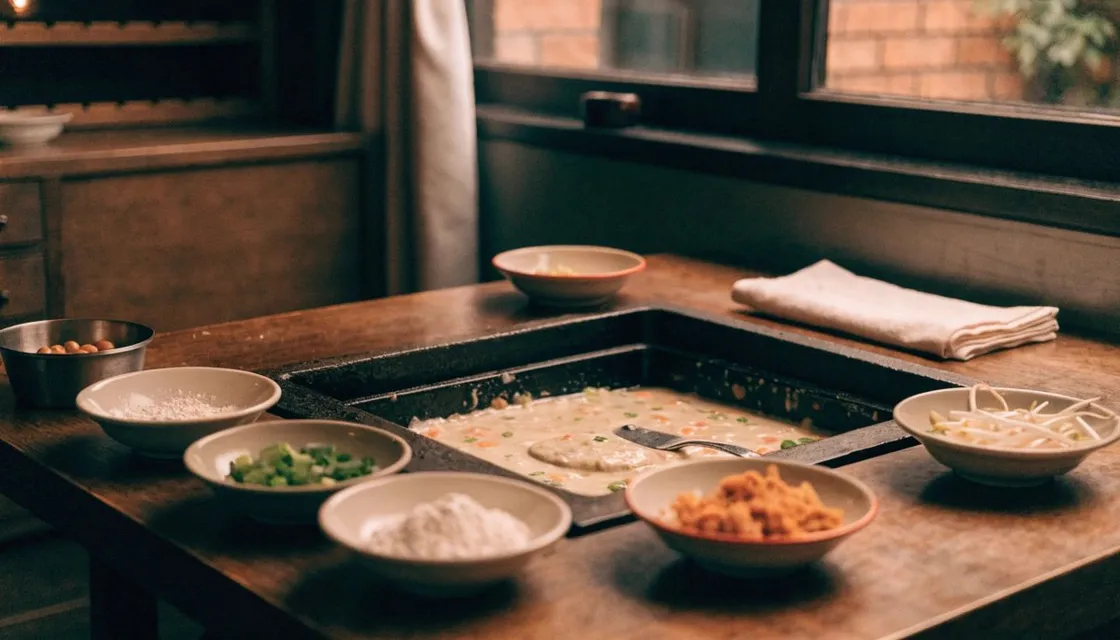
Tsukishima is the easiest place in Tokyo to learn what monjayaki is, and the best reason to go is a relaxed evening with a few friends.
The area is a short ride from central Tokyo, yet it feels like a neighborhood of its own, with low buildings and a slower pace.
What Monja Street is
Monja Street is the nickname for Nishinaka-dori, a shopping street in Tsukishima lined with monjayaki restaurants. Take the Tokyo Metro Yurakucho Line or the Toei Oedo Line to Tsukishima Station, and Exit 7 puts you right at the start of it.
Monjayaki is a runny batter cooked on a griddle at your table. It looks messy at first, and that is part of the charm.
Many people compare it to okonomiyaki, but the texture is softer and the flavor is more concentrated.
A meal you cook yourself is a meal you remember.
How the table works
Most restaurants seat you around a built-in griddle. Staff often help with the first round, and many will show you how to build the ring of ingredients before the batter goes in.
You then eat directly from the griddle using a small metal spatula. It is normal, and nobody expects you to use a plate.
If you are unsure, ask the staff to cook the first portion for you. Most places are used to visitors.
Ordering without stress
Choosing a shop is the first decision. The Tsukishima Monja Promotion Association has about 50 member shops and publishes a map, including an English version, on its website, and its office near Exit 7 is a good first stop. Rather than joining the longest queue on the main street, pick a few shops on the map, including some on the side alleys, and walk past them first.
Menus tend to be long, so it helps to pick a classic and build from there.
Common choices include versions with mentaiko and mochi, cheese, or seafood. Sizes and prices vary by shop, so check the board before you sit down.
Okonomiyaki and yakisoba are usually available too, which makes it easier when a group has mixed tastes.
Vegetarian and allergy needs are worth raising early, since batters and toppings often include fish stock. Our dietary restrictions guide has phrases that help.
Working from Tsukishima
Tsukishima is better for eating than for long laptop sessions, because the street is mostly restaurants rather than cafes.
A practical rhythm is to work elsewhere during the day and come here in the evening. Many nomads find that a weekday visit is calmer than a weekend one, when queues can form.
Staying nearby is also possible. The area is residential and quiet at night. Tsukishima Station is on the Yurakucho and Oedo lines, and Kachidoki Station on the Oedo Line is about seven minutes on foot from the street. Check the exact walking time to your accommodation, since neither line is part of the JR loop.
Pair it with a morning at the market
Tsukishima sits close to the Tsukiji Outer Market, the shopping streets of the old Tsukiji market that are still open after the wholesale market moved to Toyosu, so one easy plan is a slow morning there and an early dinner on Monja Street.
If that sounds appealing, our Tsukiji and Toyosu morning market guide covers what to see and when to go.
Practical tips
Go with at least two people if you can, since portions suit sharing and griddle cooking is more fun in a group.
Try to arrive a little before the busiest dinner hours. Waiting lists are common on weekends.
Wear something you do not mind getting a little oil on. The griddle and the batter are not always tidy.
Cash and cards are both increasingly accepted, but it is wise to confirm at the door.
FAQ
Is Monja Street good for solo travelers?
Yes, though the format suits groups. Some shops will seat a single diner, and smaller portions are usually possible, but it helps to ask.
How long should I plan for a meal?
Many people spend about an hour to ninety minutes, since the cooking is part of the experience.
Do I need to book?
Weekdays are often fine without a reservation. On weekends, booking or arriving early is a good idea where the shop allows it.