Marunouchi and Tokyo Station for Remote Workers
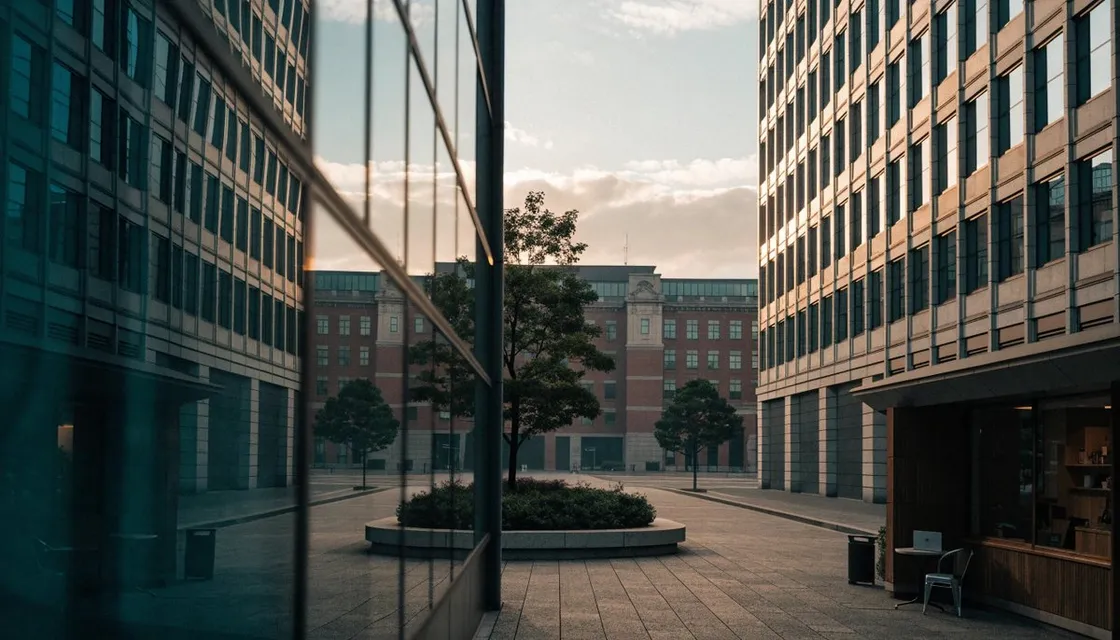
Marunouchi and the Tokyo Station area work best as a place to spend a focused day, not a place to live.
It is polished, well connected and very orderly. It is also quiet on weekends and priced for the corporate crowd.
If you treat it as a work-and-transit hub, it earns its place in a Tokyo routine.
Why this district suits a work day
Tokyo Station is the point where most long-distance lines meet. Shinkansen, the Yamanote Line, the Chuo Line and several subway lines all pass through.
That makes it an easy meeting point, and an easy place to start or end a trip.
The streets around it were built for office workers. Wide pavements, reliable restrooms and plenty of seating in the lobbies of large buildings are part of the appeal.
A district designed for the commute tends to be very good at the work day, and not much else.
Where to sit and work
The office towers facing the station have shopping and restaurant floors that anyone can walk into. Four are worth knowing by name:
- Marunouchi Building (Marubiru) and Shin-Marunouchi Building (Shin-Marubiru), the pair directly across from the Marunouchi exits. Shops run 11:00 to 21:00 and restaurants 11:00 to 23:00 (Sundays and holidays 11:00 to 20:00 and 22:00).
- Marunouchi House, the seventh floor of Shin-Marubiru, is a single floor of restaurants with a terrace where you can eat and drink. The terrace follows the restaurant hours but closes in strong wind, and a few places stay open until 4:00 the next morning.
- Marunouchi OAZO, on the north side, has a large bookstore over floors 1 to 4 open 9:00 to 21:00, and a convenience store open 6:00 to midnight. Useful when you arrive before the other buildings open.
- KITTE, in the old Central Post Office building on the south side. Shops open 11:00 to 20:00 and restaurants and cafes 11:00 to 22:00, and the rooftop garden on the sixth floor overlooks the station building up close.
All four close only on January 1 and building inspection days. Hours above are for the building as a whole, and individual shops vary. Whether a cafe is happy with a laptop for two hours is a per-shop call, so check on the day.
Hotel lobbies and lounges in the area are another option. Expect to buy a drink and to find prices on the higher side.
Coworking operators also tend to cluster here because tenants want an address near the station. You can compare options in our guide to coworking spaces in Tokyo.
For a quieter reset, the open plaza in front of the station and the paths toward the Imperial Palace grounds are pleasant on a clear morning.
To get around without paying a fare, the free Marunouchi Shuttle loops through Marunouchi and Hibiya every 15 to 25 minutes (weekdays 10:00 to 19:00, weekends and holidays 11:00 to 18:00).
Rhythm of the day
Weekday mornings are busy but fast-moving. Cafes fill up between roughly 8 and 9, and then thin out.
Mid-morning to early afternoon is usually the calmest stretch for settling in with a laptop.
Lunch hour is crowded in the office buildings. Eating a little before noon or after one o’clock avoids the main rush.
Evenings stay lively near the restaurant floors, then the office streets empty out quickly.
Weekends split in two. The office blocks behind the main street go quiet, while the station, the shopping floors and Naka-dori, the tree-lined street running through Marunouchi, fill with shoppers. For a calm weekend seat, look away from the station rather than toward it.
Food and everyday needs
The station complex has a large number of eating options, from quick counters to sit-down restaurants. You will rarely struggle to find something.
Prices lean higher than in residential neighbourhoods. For cheaper everyday meals, a konbini or a shotengai in another part of the city is usually the better call.
Pharmacies, bookshops, bakeries and department stores sit within a short walk, which helps on a day when you need errands and work in the same trip.
Luggage and arrivals
Because it is such a major hub, this is a natural place to arrive, change trains or store bags between check-out and a late departure.
Our notes on coin lockers and luggage storage cover how that works, and why larger lockers can fill up at peak times.
The station is also large and layered. Give yourself extra time the first time you change lines, and follow the colour-coded signs.
Pairing it with a neighbour
Marunouchi pairs well with a walk toward Nihonbashi, which has older streets and a more local feel.
You can also continue to Ginza on foot, for a different kind of urban polish.
Is it right for you?
It suits people who need reliable infrastructure, a professional setting and quick access to the rest of Japan.
It suits less well anyone looking for neighbourhood character, late-night spots or low prices.
A day here, followed by an evening somewhere with more texture, is a good balance.
FAQ
Can I work from Tokyo Station itself? Seating inside the station is limited and mostly meant for waiting. Cafes and lounges in the surrounding buildings are a better fit for a longer session.
Is Marunouchi a good place to stay? It is convenient for travel and business, though hotel prices tend to be high. Staying elsewhere and coming in for the day is usually cheaper.
Is it busy on weekends? The office streets are calmer than on weekdays. The station, the shopping floors and Naka-dori are the opposite, and get busier.