Tokyo Coworking Spaces: A Digital Nomad's Guide (2026)
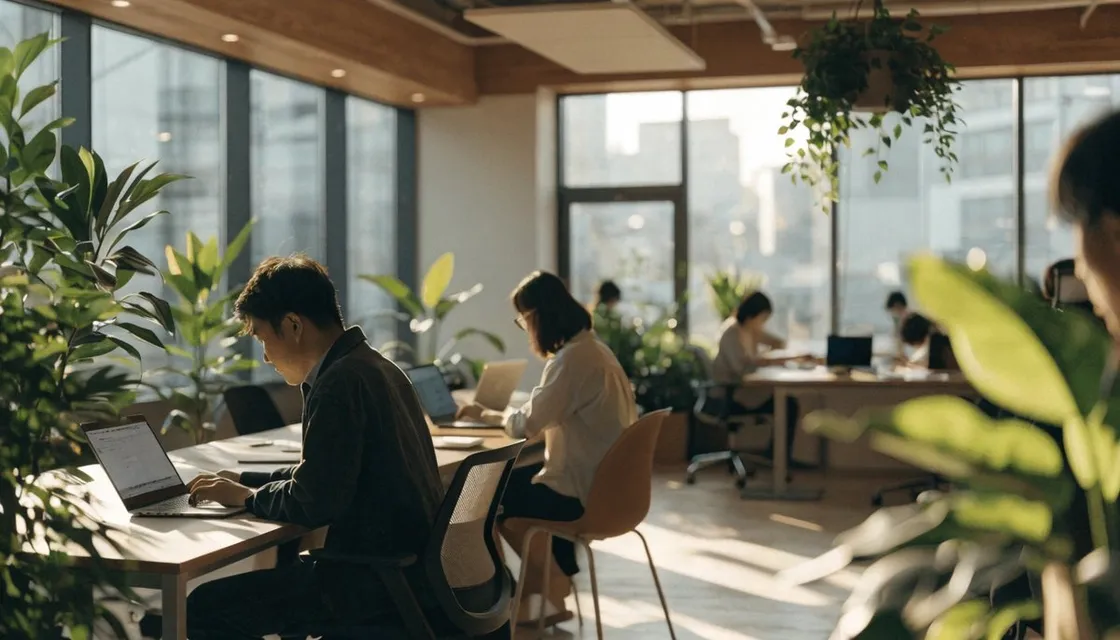
To choose a coworking space in Tokyo, match the type to how you work. Global chains are reliable and quiet and professional, community-driven spaces are about people and events, and niche spaces are built around a specific industry. Use drop-in passes if you’re here briefly or work irregularly, and a monthly membership if you keep set hours.
Before you sign up, check the Wi-Fi speed, opening hours, meeting rooms, and how close it is to where you’re staying.
When should you use a coworking space over a café?
Go for a coworking space when you’ve got back-to-back calls, a deadline, or you just need a real desk and things that work. Cafés are fine for an hour or two of focus, but if your work needs phone booths, meeting rooms, and a guaranteed seat, a coworking space makes a much better daily base.
Types of coworking spaces in Tokyo
Global chains are consistent: meeting rooms, fast Wi-Fi, phone booths, and locations all over the city. They suit nomads who want a quiet, businesslike place to work.
Community-driven spaces care more about people than polish. They run events, introduce members to each other, and each has its own local feel. S-TOKYO in Nihonbashi is a good example, combining a workspace with a real international nomad community. (Full disclosure: Digital Nomads Tokyo holds its regular meetups at S-TOKYO.)
Niche and specialist spaces are built for creatives, founders, or developers, and they’re a quick way to meet people in your own field in a new city.
Pay-as-you-go chains and station booths are at the other end. BasisPoint runs drop-in spaces at Nishi-Shinjuku, Shimbashi, Gotanda, Jimbocho, Ikebukuro, Kichijoji and Hachioji, and registration on your first visit is free. If all you need is a quiet box for one call, JR East’s STATION BOOTH single-person booths in and around stations cost ¥330 per 15 minutes including tax (the rate since May 2025), and most can be used without a membership by tapping a transit IC card.
Drop-in or monthly membership: which is cheaper?
If you’re here briefly or your schedule is all over the place, drop-in day passes keep you flexible and let you try out a few spaces. If you’re staying longer and keep regular hours, a monthly membership usually works out cheaper per day, and often comes with 24-hour access, free meeting-room hours, and member events.
To give you a feel for the range as of October 2026:
| Option | Price | Good for |
|---|---|---|
| STATION BOOTH | ¥330 per 15 min (tax incl.) | A single call between errands |
| BasisPoint drop-in | ¥330 for the first 30 min, then ¥260 per 15 min, capped at ¥3,300 a day | Occasional days, no commitment |
| S-TOKYO | ¥3,300 a day, ¥27,500 for 30 days | A month-long stay near Nihonbashi |
| WeWork All Access Plus | ¥42,900 a month (tax incl.), lounges at around 40 locations in Japan | Moving around the city |
BasisPoint’s and S-TOKYO’s published prices don’t say whether tax is included. Check each operator’s site for current prices before you go.
What to check before you commit
Look past the photos and check:
- Wi-Fi speed, and whether there’s a backup connection.
- Opening hours, since not every space is open 24/7.
- Meeting rooms and phone booths, if you take a lot of calls.
- Noise level and desk type, free-address or fixed.
- Location, close to where you’re staying or on a handy train line.
A great space across town gets used far less than a good one near home.
How to get the most from a coworking space
A coworking space isn’t just desks and Wi-Fi. Go to the events, introduce yourself, and use the community channels.
Plenty of nomads find their best friends, clients, and collaborators through the people at the next desk, not the fast Wi-Fi. Pick a space whose community fits the connections you’re after, not just the one with the nicest photos.
FAQ
How much do coworking spaces cost in Tokyo? It varies a lot by location and brand. Some reference points as of October 2026: BasisPoint drop-in tops out at ¥3,300 a day, S-TOKYO in Nihonbashi is ¥3,300 a day or ¥27,500 for 30 days, and WeWork’s All Access Plus is ¥42,900 a month including tax. For a single call, a STATION BOOTH costs ¥330 per 15 minutes. Day passes are best for occasional use; monthly plans work out cheaper per day if you work there regularly.
Are there 24-hour coworking spaces in Tokyo? Some. S-TOKYO is open 24 hours, but many drop-in spaces close in the evening; most BasisPoint locations, for example, close at 22:00. Check the hours for the specific location, and whether night access is members only.
Can tourists use coworking spaces in Tokyo? Yes. Drop-in passes are open to visitors, and many community spaces are happy to see short-term nomads at their events.