Tokyo Coin Lockers by Station: Sizes, Costs and Finding an Empty One
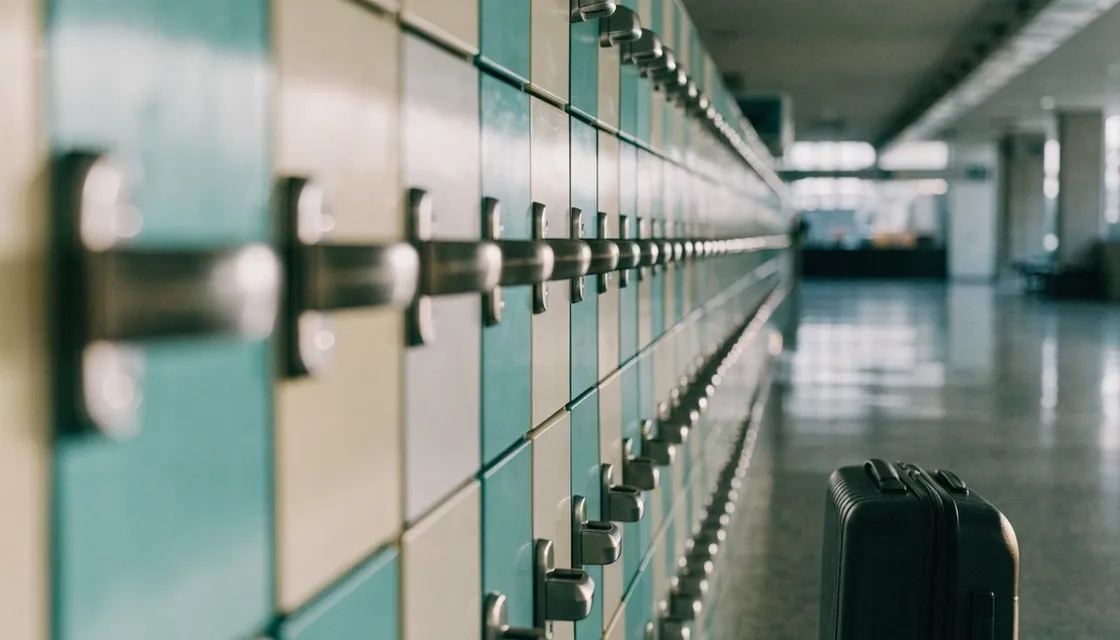
The short version: for most gaps in a Tokyo day, a station coin locker is the answer, and you should plan to use one at a mid-sized station rather than a famous one.
The lockers at Shinjuku, Shibuya, and Tokyo Station are the ones everyone tries first, which is exactly why they are the ones that are full.
A nomad’s calendar is full of awkward in-between hours. You check out of a monthly apartment at ten and cannot get into the next one until four. You have a client call at two and a night bus at eleven. You want to spend the afternoon in a museum without dragging a suitcase through it.
Tokyo has an unusually good answer to all of this, and it is worth understanding properly rather than discovering it in a panic.
How station coin lockers actually work
Almost every train station in Tokyo of any size has coin lockers, usually near a ticket gate, often tucked behind a corner that is not signposted in English.
They come in roughly three sizes. Small ones take a daypack or a laptop bag. Medium ones take a carry-on. Large ones take a checked suitcase, and they are the scarce ones.
Prices vary by station and size, but as a rough guide small lockers tend to sit in the low hundreds of yen per day and large ones a few hundred more. Treat any figure you read online as approximate, including this one.
Most modern lockers are now IC-card operated. You touch your Suica or PASMO to the panel, the door locks, and that same card becomes your key. There is no physical key to lose, which is a genuine relief when you are moving between four places in a day.
Older lockers still take 100-yen coins and give you a physical key. If you meet one of these, keep a small stack of coins on you. They will not take a 1000-yen note, and the change machine is not always nearby.
The locker is not really storage. It is permission to move through the city without your bags deciding your route.
One thing that surprises people: the billing period is not twenty-four hours from when you deposit. It typically resets at midnight or in the early morning, so a bag left overnight is usually charged as two days even if it only sat there for eight hours.
Most lockers also have a maximum stay, commonly around three days. After that, staff clear the locker and move your bag to a station office, where you can retrieve it by paying the accumulated fee. Nothing is thrown away, but it is a bureaucratic afternoon you do not want.
Station by station: where to actually look
Every large Tokyo station has more than one locker bank, and almost everyone only ever finds the first one. Here is roughly how the big six behave.
Tokyo Station. The biggest and the most confusing. Lockers are spread across the Marunouchi side, the Yaesu side, and the underground level, and the three groups do not feel like the same station once you are inside.
If the bank you reach first is full, the underground concourse and the far end of the Yaesu side are usually where space survives longest.
Tokyo Station also has electronic availability displays near some banks, which is faster than walking. There is a staffed baggage room on the Yaesu side for anything oversized.
Shinjuku Station. The busiest station in the world, and the lockers behave accordingly. Banks sit near almost every exit, which sounds generous until you realize the crowd finds them just as fast as you do.
Large lockers here are frequently gone by mid-morning in high season. The New South exit area and the basement levels tend to hold out slightly longer than the East side.
If you have five minutes, Shinjuku-sanchome or Yoyogi one stop away are far better bets than a second lap of Shinjuku.
Shibuya Station. Shibuya has been under continuous redevelopment for years, so locker locations genuinely move. A blog post from two years ago may send you to a bank that no longer exists.
Check the current station map rather than trusting directions, and treat Ebisu or Harajuku as your fallback. Both are one stop and both are calmer.
Shinagawa Station. Underrated. It is a major hub with a wide central concourse, and because it is a transfer station rather than a destination, the pressure on its lockers is lower than at Shinjuku or Ueno.
It is also the natural choice if your day ends at Haneda, since the Keikyu line runs straight to the airport from here.
Ueno Station. Heavy tourist volume because of the park and museums, so the large lockers empty out early in the day and stay occupied. The Park exit side fills first.
Okachimachi, a short walk south, is the standard workaround.
Ikebukuro Station. Big, busy, and split into an East and a West personality. Both sides have banks, and the two crowds rarely cross over, so if one side is full it is worth walking through rather than giving up.
The locker you can find in three minutes is worth more than the cheaper one you find in twenty.
For attractions rather than stations, the pattern is similar. Places like Tokyo Tower or the Shiodome complex usually have their own small locker banks, but they are sized for daypacks, not suitcases. Store the suitcase at a station first, then go.
Where to look when everything is full
This is the part that matters more than the pricing.
At the busiest stations during peak season, the large lockers can be entirely occupied by mid-morning. Standing in front of a wall of red “occupied” lights with a heavy suitcase is a specifically Tokyo kind of despair.
The fix is to go one stop sideways.
Instead of Shinjuku, try a quieter station on the same line. Instead of Shibuya, walk to Ebisu. Instead of Tokyo Station, look at Kanda or Yurakucho. Five extra minutes on a train buys you a wall of empty lockers surprisingly often.
Many stations also have several locker banks, and travelers only ever find the first one. If the bank near the main gate is full, look near a different exit, on a different level, or beside the bus terminal outside.
There are also locker-finding apps and station websites that show live availability at some larger stations. They are not exhaustive and not always accurate, but they cost nothing to check before you commit to a route.
The alternatives to lockers
When lockers fail, or when your bag is genuinely too big for one, Tokyo has a decent second tier.
Staffed luggage storage counters exist at major stations and at some department stores and tourist information centers. They cost more than a locker, they have opening hours you must respect, but they will take an oversized bag without complaint.
Storage-sharing services let you book space in a café, shop, or hostel through an app, usually for a flat daily rate per bag. Coverage is good in central Tokyo and thinner in the suburbs. Booking the night before is wise in high season.
Your hotel or hostel will almost always hold bags before check-in and after checkout, at no charge, for guests. This is the most underused option on the list. If you are moving between two places on the same day, ask the one you are leaving whether they will keep the bag until evening. The answer is usually yes.
Takkyubin, the same-day and next-day luggage delivery network, is the real power move for longer moves. Rather than carrying a suitcase across the city, send it ahead to your next accommodation and travel with a daypack. Convenience stores and hotel front desks both handle it.
A few habits that make this easier
Keep your passport, laptop, medication, and charger on your body, not in the locker. It is not a security worry so much as a flexibility one. Plans change, and you do not want to backtrack across two train lines for a cable.
Photograph the locker number and the station exit the moment you close the door. Coin locker banks are visually identical, and stations are enormous. This single habit has saved a lot of people a lot of walking.
Check whether your locker bank has a size chart posted. Most do, with dimensions in centimeters, and it is faster than trial and error with a suitcase in a crowded corridor.
If you travel with something genuinely large, such as a bike box or a full-size instrument, assume lockers are not an option and plan a staffed counter or a delivery service from the start.
FAQ
What size locker do I need for a suitcase?
Broadly, small takes a daypack or laptop bag, medium takes a cabin-sized carry-on, and large takes a checked suitcase. Most locker banks post a size chart in centimeters beside the doors, and reading it takes less time than testing doors with a suitcase in a crowded corridor. If your case is at the upper end of checked size, plan for a large locker or a staffed counter rather than hoping.
How much do Tokyo coin lockers cost?
Small lockers generally sit in the low hundreds of yen per day and large ones a few hundred more, varying by station and operator. Treat every figure you see online, including that one, as a rough guide rather than a quote. The panel at the locker is the only price that is actually true.
Can I leave a bag in a coin locker overnight?
Usually yes, within the maximum stay limit, but expect the charge to count as two days rather than one. The billing period generally resets at a fixed early-morning hour rather than running twenty-four hours from deposit, so eight hours spanning midnight is normally billed as two days. Check the panel for the posted maximum, commonly around three days.
Can I secure a locker the day before I need it?
Physically yes, and people do this before a big travel day. You occupy the locker with something and it is yours. Just be clear that you are paying for the extra day, and that the maximum-stay clock starts when you close the door, not when you come back.
What happens if I lose the key or my IC card?
For key lockers, contact the station staff office. For IC-card lockers, most panels have a procedure for retrieving items with identification and the receipt code, which is another reason to keep the printed slip if one is issued.
Is it safe to leave a laptop in one?
Coin lockers in Japan have a strong safety record, and theft from them is rare. That said, most travelers still keep laptops with them, largely because you tend to want the laptop during the exact hours the bag is stored.