Eating in Tokyo With Dietary Restrictions: A Practical Guide
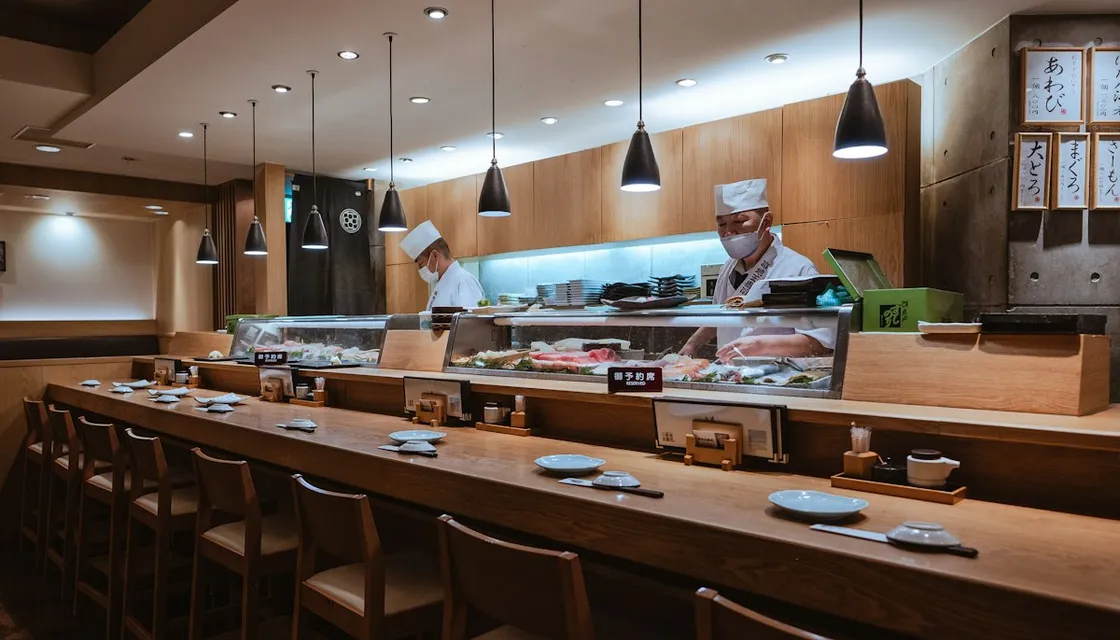
Tokyo is one of the best eating cities on earth, and also one of the trickiest if you avoid certain ingredients. The food is not hostile to restrictions. It simply was not designed around them.
The shortest useful summary is this: the problem is rarely the obvious dish. It is the stock, the sauce, and the assumption that a small amount does not count.
Once you understand where those hide, the city opens up considerably.
Tokyo does not make your diet easy, but it makes it possible, and it rewards anyone who learns to read one or two ingredients.
The three ingredients that quietly break everything
If you remember nothing else, remember dashi, soy sauce, and mirin.
Dashi is the fish and kelp stock underneath an enormous amount of Japanese cooking. Miso soup, simmered vegetables, noodle broth, dipping sauces, savoury egg dishes, even some rice seasonings tend to start with it.
Most dashi contains katsuobushi, dried bonito flakes. That makes a bowl of plain-looking vegetables non-vegetarian in a way that is completely invisible.
Soy sauce is the second one. It is usually brewed from wheat, so standard shoyu is not gluten-free. Tamari exists and is often wheat-free, but it is not the default in restaurants.
Mirin and cooking sake round it out. They are alcohol-based sweeteners used constantly in home-style cooking, which matters if you avoid alcohol for religious or personal reasons.
None of these will appear on an English menu. Asking about them directly is far more effective than asking whether a dish is vegetarian.
Vegetarian and vegan: where to look first
Shojin ryori, the Buddhist temple cuisine served at some restaurants around temple districts, is the closest thing Tokyo has to a built-in vegan tradition. It is usually a full course, often booked in advance, and generally treated as an occasion rather than a Tuesday lunch.
For everyday eating, the practical answer is a mix of three things.
Dedicated vegan and vegetarian restaurants have multiplied over the past decade, concentrated around Shibuya, Nakameguro, Harajuku, Asakusa, and the international pockets of the city. Happy Cow and similar apps are genuinely useful here.
Indian, Nepali, and Middle Eastern restaurants are everywhere and often the fastest reliable option, especially for a working lunch near a coworking space. Vegans should still ask: curries are often made with butter, cream, or ghee, and naan dough can contain milk or egg.
Konbini and supermarkets fill the gaps. Onigiri with umeboshi or kombu, natto packs, tofu, salted edamame, plain rice, cut fruit, and soy milk are all easy to assemble into something decent.
Ramen deserves a specific warning. Vegetarian ramen exists and some shops do it very well, but a standard “vegetable ramen” is almost always built on pork or chicken broth. Treat it as a dish you seek out deliberately, not one you stumble into.
Halal and no-alcohol eating
Tokyo’s halal scene is small but real, and it has grown noticeably around tourist and student areas.
Asakusa, Shinjuku, Shin-Okubo, and the neighbourhoods near major universities tend to have the highest concentration of certified or Muslim-friendly restaurants. Several halal ramen and halal wagyu places have become well known enough to appear in English guides.
Halal grocery stores in Shin-Okubo and around Ueno stock meat and pantry staples, which makes cooking at home the most controllable option if you have a kitchen.
The alcohol question is the subtler one. Mirin and cooking sake appear in a great many dishes that contain no visible alcohol, and staff may not think to mention it because the alcohol is considered cooked off.
If this matters to you, ask about mirin by name.
Gluten-free, and why it is harder here than it looks
Gluten-free is arguably the hardest restriction to manage in Japan, because wheat is embedded in the foundations rather than the surface.
Soy sauce, most miso, many noodle products, tempura batter, and countless sauces contain wheat. Even soba, which is buckwheat, is usually cut with wheat flour unless the shop specifically advertises juwari soba, meaning one hundred percent buckwheat.
Japanese curry is another trap. Common boxed roux such as House Vermont Curry lists wheat flour and pork extract, so a “vegetable curry” made from roux is neither vegetarian nor gluten-free. Even a konbini kombu onigiri can list wheat, because the kombu filling is simmered in soy sauce.
The safer territory is rice. Plain rice, rice bowls seasoned carefully, grilled fish and meat ordered with salt rather than sauce, sashimi with your own tamari, and Japanese sweets made from rice flour are all reasonable.
Carrying a small bottle of tamari is a habit many gluten-free residents adopt, and no one will blink at it.
Awareness of celiac disease is still limited, so a request framed as a preference may be handled more loosely than you want. But celiac disease is not the same thing as a wheat allergy, and saying “wheat allergy” can backfire: a kitchen may check for wheat only and miss barley, rye, or a shared fryer and pot. Say that it is a medical condition, name all three grains, and ask about shared oil and equipment. If a restaurant cannot confirm those points, treat it as unsafe rather than assuming it is fine.
Allergies, and how to be taken seriously
Japan requires nine allergens to be labelled on packaged food: shrimp, cashew nut, crab, walnut, wheat, buckwheat, egg, milk, and peanut. Cashew nut was added in April 2026, and labels have until the end of March 2028 to catch up, so older packaging may not list it yet. A longer set of recommended labels covers things like soy, sesame, and various fruits and nuts.
Packaged food is therefore quite readable once you learn to spot the allergen box, usually printed near the ingredients.
Restaurants are more variable. Chains often publish detailed allergen charts on their websites, which is one of the strongest arguments for eating at a chain when you are tired and cannot negotiate. The curry chain CoCo Ichibanya, for example, publishes an allergen chart and offers a curry made without the mandatory allergen ingredients.
Small independent restaurants may have no formal information at all, and a kitchen that cannot easily separate ingredients. That is not indifference. It is a small operation with one wok.
The most reliable approach is to ask before you sit down, not after you order.
Phrases that actually work
Vague questions produce vague answers. Naming the ingredient produces a real one.
Rather than asking whether something is vegetarian, ask whether it contains dashi, meat, or fish. Rather than asking whether it is gluten-free, ask whether it contains wheat (and, for celiac disease, barley and rye) and whether the soy sauce can be left out.
A few useful ones to keep in your notes app:
- 出汁は入っていますか (dashi wa haitte imasu ka): does it contain dashi?
- 肉と魚は食べられません (niku to sakana wa taberaremasen): I cannot eat meat or fish
- 小麦アレルギーがあります (komugi arerugi ga arimasu): I have a wheat allergy
- セリアック病のため、医学的に小麦・大麦・ライ麦を食べられません。調味料や、揚げ油・調理器具の共用も確認させてください (seriakku-byo no tame, igakuteki ni komugi, omugi, raimugi o taberaremasen. chomiryo ya, ageabura, chori kigu no kyoyo mo kakunin sasete kudasai): because of celiac disease I medically cannot eat wheat, barley or rye; please let me check the seasonings and any shared frying oil or cookware too
- みりんや料理酒は使っていますか (mirin ya ryorishu wa tsukatte imasu ka): do you use mirin or cooking sake?
- 醤油を抜いてもらえますか (shoyu o nuite moraemasu ka): could you leave out the soy sauce?
Showing the written Japanese on your phone works better than pronouncing it, and it removes the risk of a polite nod that means “I did not follow that.”
A workable weekly rhythm
Most people who eat well here long-term end up with a rotation rather than a hunt.
Two or three trusted restaurants near where you work, chosen because you have already had the ingredient conversation and it went well.
A supermarket routine for the evenings you cannot be bothered, built around rice, tofu, vegetables, and whatever protein fits your rules.
One or two chains with published allergen data as a fallback for travel days and late nights.
And a small list of places worth a train ride, for the meals you actually want to look forward to.
That structure removes the daily anxiety, which is the real cost of eating with restrictions in an unfamiliar food culture. The food itself is rarely the problem once the system is in place.
FAQ
Is it realistic to be strictly vegan in Tokyo?
Yes, though it takes more planning than in many Western cities. The combination of dedicated vegan restaurants, South and Southeast Asian food, and cooking at home covers most needs. The friction comes from casual, spontaneous meals, where dashi is very hard to avoid.
Will restaurant staff be annoyed if I ask about ingredients?
Generally no, especially if you ask politely and early. What causes difficulty is a complex request made mid-service in a small kitchen. Asking at the door, or checking a chain’s published chart in advance, avoids most awkwardness.
Are there apps worth installing?
Restaurant discovery apps that let you filter by dietary tags help, as do allergen-lookup and translation apps that can read ingredient labels through the camera. Saving your key phrases as screenshots is low-tech and works even without a signal.