Cycling in Tokyo: Bike Share, Rules, and Where to Park
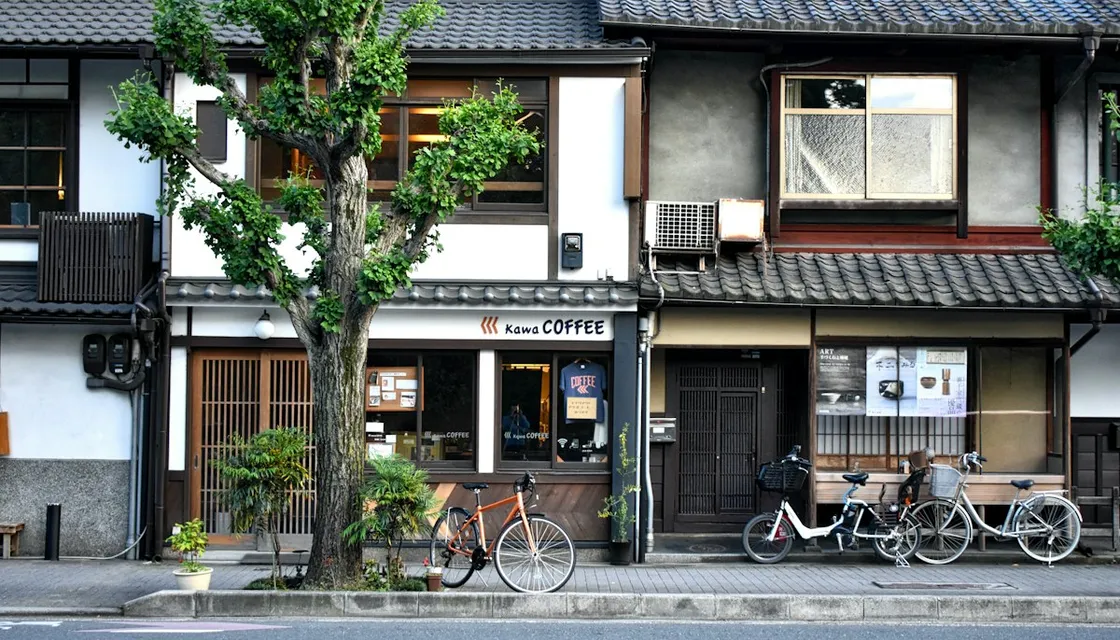
If you are staying in Tokyo for more than a couple of weeks, a bicycle is probably the single best upgrade to your daily radius.
Not because it beats the trains. It does not. The rail network is faster, cooler in August, and it goes further.
A bicycle wins on a different axis: it makes the two-to-five kilometre trip effortless, and that is exactly the distance the train system handles worst.
The café one neighbourhood over. The gym that is a fifteen-minute walk from any station. The friend’s place that needs two transfers for what is, on a map, almost nothing.
The share services are the obvious starting point
Most nomads should not buy a bicycle. Share services cover the need with far less commitment.
Three names come up repeatedly in Tokyo. Docomo Bike Share runs the red electric-assist bicycles you see docked outside ward offices and convenience stores across central Tokyo. HELLO CYCLING operates a similar dock-based network, with strong coverage in some outer wards where Docomo is thinner. LUUP is the newer one, with small e-bikes and electric scooters parked in tiny footprint-sized ports, often inside building lobbies and parking lots.
All three work in a similar way. Register in the app, add a card, unlock with a code or a tap, and return the vehicle to a port with a free slot that belongs to the same service. The return details differ, though. LUUP has you choose a return port when you start the ride (you can change it while riding), and HELLO CYCLING lets you reserve a return slot before you arrive. Once you have returned it, check that the app shows the return as complete, and if your port is full, use the app to find another one nearby.
Pricing is typically a small unlock fee plus a per-minute rate, with day passes available on some services. Rates change, so check the app rather than trusting any article, including this one.
The real difference between them is coverage, not price. Before you commit to one, open all three apps and look at the port map around the two or three places you actually go.
The best bike-share service in Tokyo is whichever one has a port near your front door.
A common approach is to keep two apps installed. Ports empty out during commute hours, and having a backup means you are not standing in front of an empty rack recalculating your morning.
Buying makes sense for longer stays
If you are here for several months and you have a place to park, a second-hand bicycle can be cheaper than a season of share-service minutes.
Recycle shops, some neighbourhood bicycle stores, and ward-run second-hand sales are the usual sources. Expect a basic city bicycle, the kind with a front basket, to sit somewhere in the low tens of thousands of yen.
Two things come with ownership, and neither is optional.
The first is 防犯登録 (bouhan touroku), the anti-theft registration. It is required by law, costs a few hundred yen, and is normally handled by the shop at the point of sale. Keep the paperwork.
Police in Tokyo do stop cyclists to check registration, and if the bicycle is not registered to you and you cannot show a receipt, the conversation gets long. Having the document photographed on your phone helps, but carrying the card is better.
Buying from someone who is leaving Japan, often through a social media group, is the common trap. The bicycle stays registered to the seller until you change it. Ask the seller for a signed transfer certificate (譲渡証明書) and take it, your ID and the bicycle to a registration shop to put it in your name.
The second is bicycle insurance. Tokyo has required cyclists to carry liability insurance since 2020. It is inexpensive, often available as an add-on to travel or renter’s insurance, through some credit cards, or as a standalone plan sold at convenience stores and bicycle shops.
Collisions with pedestrians on Japanese sidewalks are the scenario this exists for, and the judgments in serious cases have been large.
The rules got stricter in April 2026
This is the part worth reading carefully, because the enforcement landscape changed recently.
From 1 April 2026, Japan extended the 交通反則通告制度, the blue-ticket system long used for cars, to bicycles. Riders aged 16 and over can now be fined on the spot for a long list of violations rather than facing the previous all-or-nothing criminal process.
Reported penalty amounts vary by offence, with figures generally cited in the range of several thousand yen up to around twelve thousand. Treat any specific number you read as indicative and check the current police guidance.
The violations that catch visitors most often are not exotic.
Riding while looking at your phone. Riding through a red light, including the small ones at pedestrian crossings. Not stopping at a stop line where a backstreet meets a road. Riding at night without a light. Riding with an umbrella in one hand, which the blue-ticket lists set at 5,000 yen. Riding two abreast, or with headphones in both ears at volume.
Riding after drinking is treated seriously and has been for years. It is not part of the blue-ticket system: it is still handled as a criminal case, and the Tokyo police list the penalty for riding with alcohol in your system as up to three years’ imprisonment or a fine of up to 500,000 yen. A bicycle is legally a vehicle here.
Helmets are an effort obligation rather than a fineable requirement, meaning you are expected to wear one but will not be ticketed for going without. Share services increasingly make them available at ports.
Where to ride, and the sidewalk question
The default is that bicycles belong on the road, on the left, moving with traffic.
Sidewalk riding is permitted where signs allow it, and in practice a lot of Tokyo cycling happens on wide sidewalks. When you are there, pedestrians have priority absolutely, you ride at a speed you can stop from immediately, and you keep to the roadway side.
Tokyo’s backstreets are the genuine pleasure of cycling here. The narrow residential lanes between arterial roads are slow, quiet, and full of the small stuff that the train network flies straight past: shrines, laundromats, a bakery with four seats.
Arterial roads with truck traffic are a different experience, and many riders simply route around them.
The mistake that costs money: parking
This is the one nobody warns you about.
Leaving a bicycle outside a station, a shopping street, or a busy building is not casual in Tokyo. Designated no-parking zones are patrolled, and bicycles left in them are removed to a municipal impound lot.
Retrieving one means travelling to the lot, showing ID and registration, and paying a removal fee that commonly runs to a few thousand yen. The lot will not be near where you left the bicycle.
The fix is simple. Use the paid parking areas, which are often underground near stations and typically cost around a hundred yen or so for several hours, or free for a short initial period.
If you are using a share service instead, none of this applies as long as you return to a proper port. That is a quiet argument in favour of sharing over owning.
FAQ
Do I need a licence or permit to cycle in Tokyo?
No. No licence is needed for a standard bicycle or an electric-assist bicycle. Electric scooters fall under a separate vehicle category with its own rules, so read the terms in the app before unlocking one.
Can I use a bike share with a foreign credit card?
Usually yes. Most major services accept international cards, though some require a Japanese phone number for registration. Setting up a local number or eSIM before you try to register saves frustration.
Is cycling realistic in Tokyo summer?
For short trips in the morning or evening, yes. Midday in August is genuinely punishing, and most experienced riders shift those trips onto the train and save the bicycle for after sunset.
For the current rules and penalty amounts, the Tokyo Metropolitan Police Department page on the bicycle blue-ticket system is the authoritative source.