Okutama Day Trip from Tokyo: Gorges, Lake and Sake
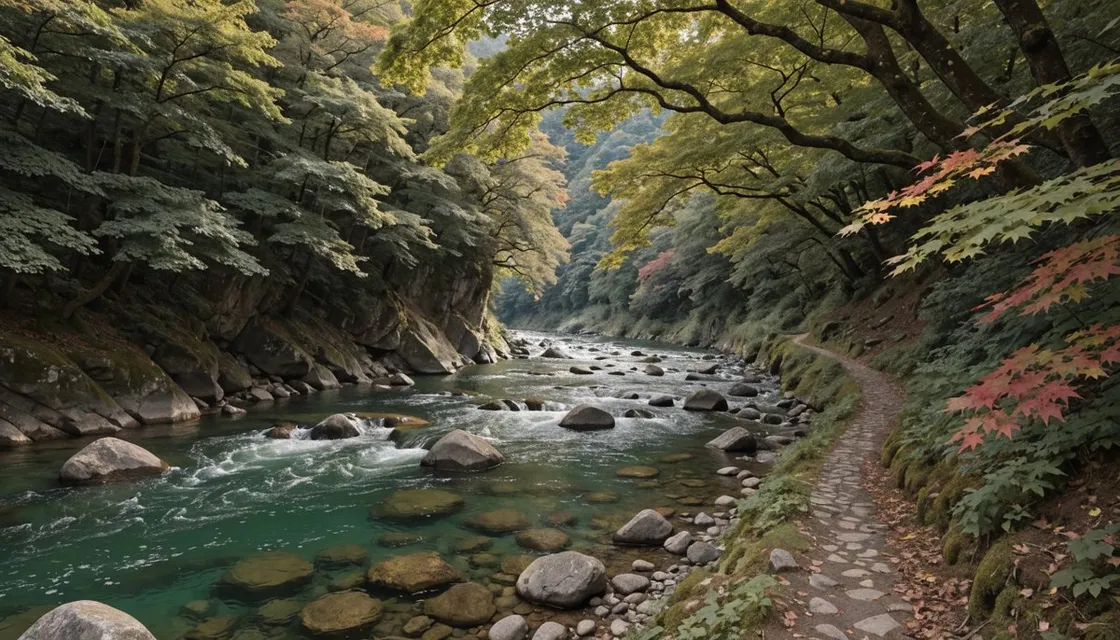
Okutama is the part of Tokyo most people never realize is Tokyo.
It sits at the far western edge of the metropolis, at the end of the JR Ome Line. Clear rivers, steep forested valleys, a big mountain lake. And you can tap in with the same IC card you use for the Yamanote Line.
It’s roughly two hours from Shinjuku. That makes it a full-day trip, not a lunch break.
But if your eyes are tired of screens and your ears are tired of station announcements, it’s one of the best resets the city offers.
Okutama doesn’t ask you to plan much. It asks you to walk slowly beside a river for a few hours.
Getting there
From Shinjuku, take the JR Chuo Line to Tachikawa, then the Ome Line west. No train runs straight through to Okutama, so you’ll change at Ome for the last stretch.
On weekends and holidays the Holiday Rapid Okutama runs from Shinjuku, which saves the change at Tachikawa. Despite the name, it only goes as far as Ome, so you’ll still switch trains there.
The line gets sparse past Ome. Gaps of half an hour or more are normal, especially in the afternoon.
So work out your return train before you leave, not when you’re standing on the platform with cold hands.
Three ways to spend the day
Okutama is spread out along the river, and the stations are the anchors. Pick one plan and you’ll have a much calmer day than if you try to do it all.
Mitake Gorge. The easiest option. A riverside path runs for about 4 km along the Tama River around Mitake station, and you can join it farther downstream from Ikusabata or Sawai. At an easy pace, plan on an hour or two.
Near Sawai station on that stretch is Sawanoi, a sake brewery with a garden right on the river. Tastings and a riverside lunch make this the most relaxed version of the trip.
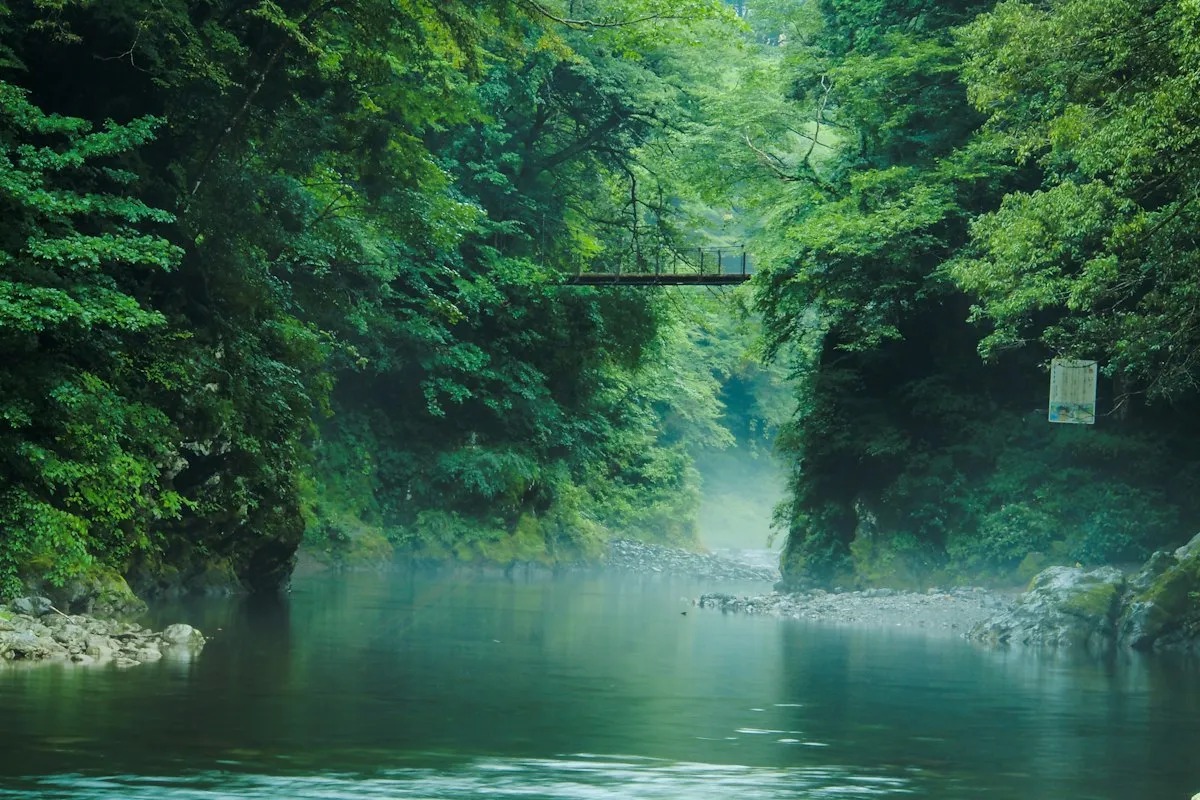
Hatonosu Gorge and Okutama town. Farther up the line, the gorge near Hatonosu station is narrower and more dramatic, with deep green pools and a suspension bridge.
From there you can walk or ride the last stops to Okutama station, where the small town has a few cafes and shops for a break.
Lake Okutama. From Okutama station, a local bus takes you up to Lake Okutama and the Ogouchi Dam. It’s wide, quiet and very still on a weekday.
Buses are infrequent here too, so treat the return bus time as the fixed point of your afternoon.
If you’d rather stay closer to the city, our Mount Takao guide covers a mountain you can do in half a day.
When to go
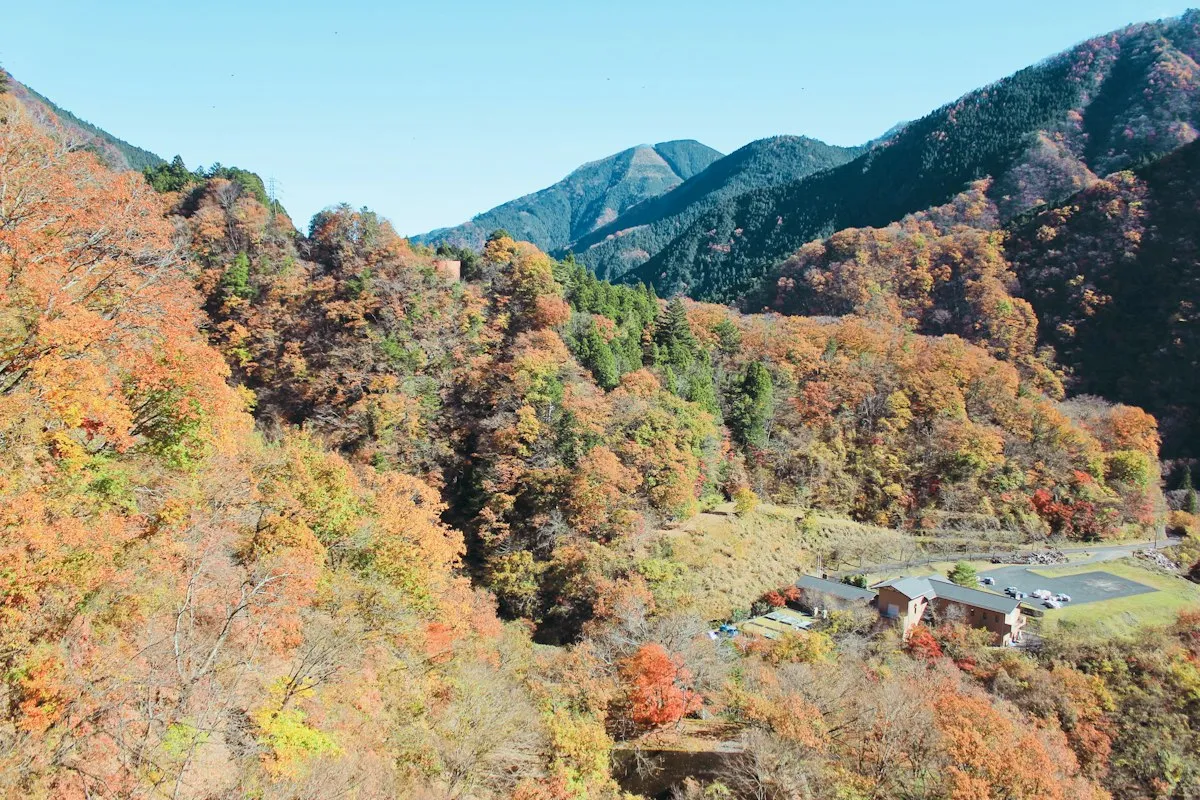
Autumn is the obvious answer. The leaves in the gorges usually peak from early to late November, and a little earlier at higher spots like the lake.
Summer is popular too, because the gorges stay cooler than central Tokyo. Expect more people on the river, including rafting groups.
Weekdays are noticeably quieter. If your schedule lets you swap a weekend for a Wednesday, Okutama rewards that more than most places.
Winter is cold and the days are short. Some shops and buses run reduced hours, so it suits people who want silence more than sightseeing.
Practical notes
Wear proper walking shoes. The gorge paths are easy, but they include stone steps, roots and the occasional wet patch.
Bring cash. Smaller shops and some food stands in the area may not take cards, and convenience stores thin out once you leave the bigger stations.
Bear sightings are reported in the hills around Okutama. On the main riverside paths most visitors never think about it, but check local notices before heading onto quieter trails, and don’t hike remote routes at dusk.
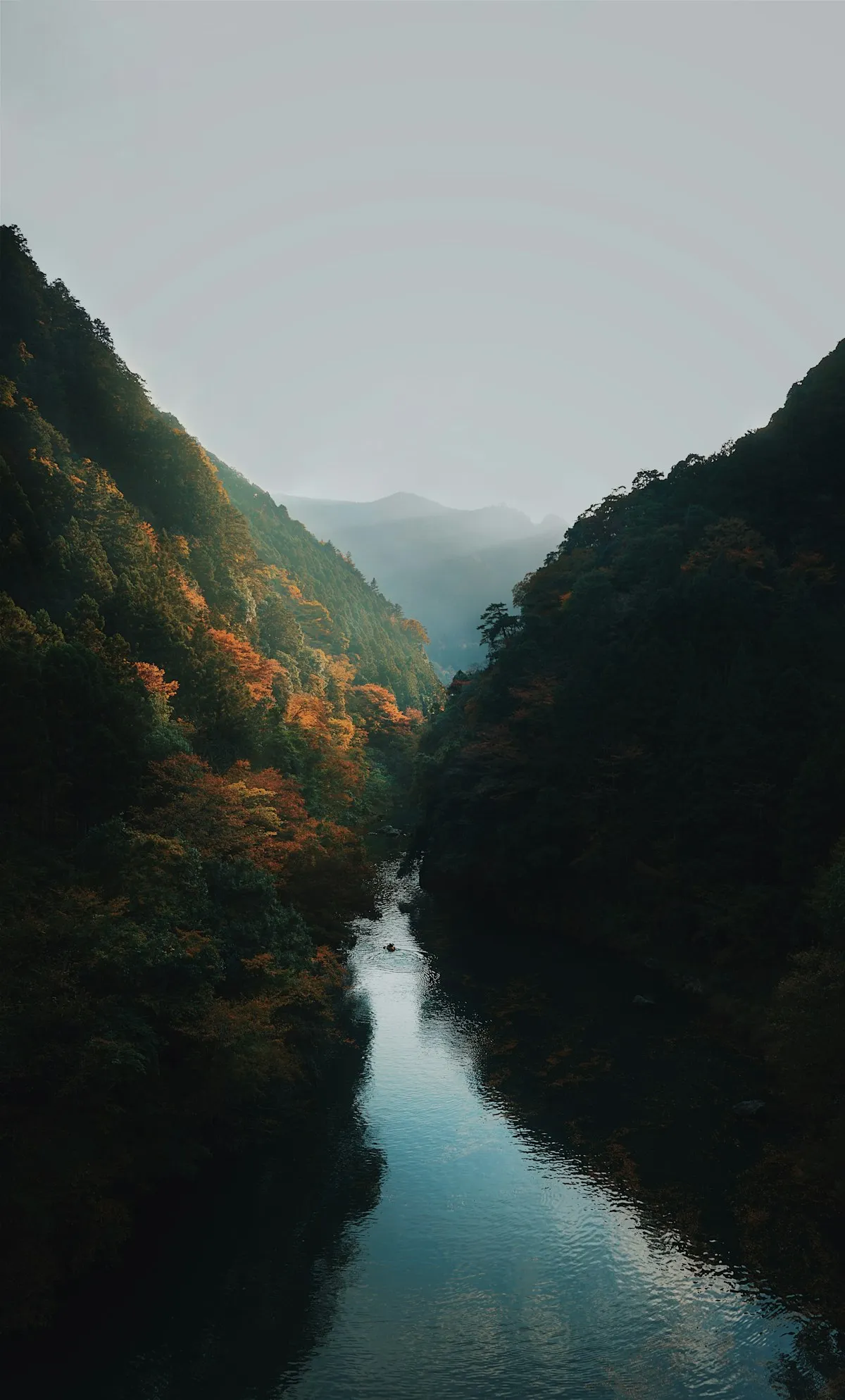
Dress in layers. The valley can feel several degrees colder than Shinjuku, especially once the sun drops behind the ridge in the afternoon.
Working, or not working
You can bring the laptop, but this is not a working day trip.
Signal is fine around the stations, and it can drop in the deeper parts of the gorges. Cafes are small and few.
A version that works for many nomads: clear your inbox on the morning train, put the phone away at Ome, and pick work back up on the ride home.
If you need to stay reachable, Mitake Gorge is the safest choice. It’s closer to the line and never far from a station.
Comparing options before you commit to a full day? The Chichibu day trip guide covers a similar mountain escape from Ikebukuro, with more of a town to explore.
FAQ
Is Okutama really part of Tokyo?
Yes. Okutama town is within the Tokyo Metropolis, even though it feels like the countryside. That’s a big part of the appeal.
Can I do Okutama in half a day?
Mitake Gorge alone can work as a long half day. Okutama station and the lake really need a full day because of travel time and infrequent buses.
Do I need to book anything?
Usually not. Trains and buses take IC cards or cash.
If you want a meal at a popular spot in autumn, going early on a weekday is the simplest way to avoid waiting.