What Is a Shotengai? Tokyo's Covered Shopping Streets, Explained
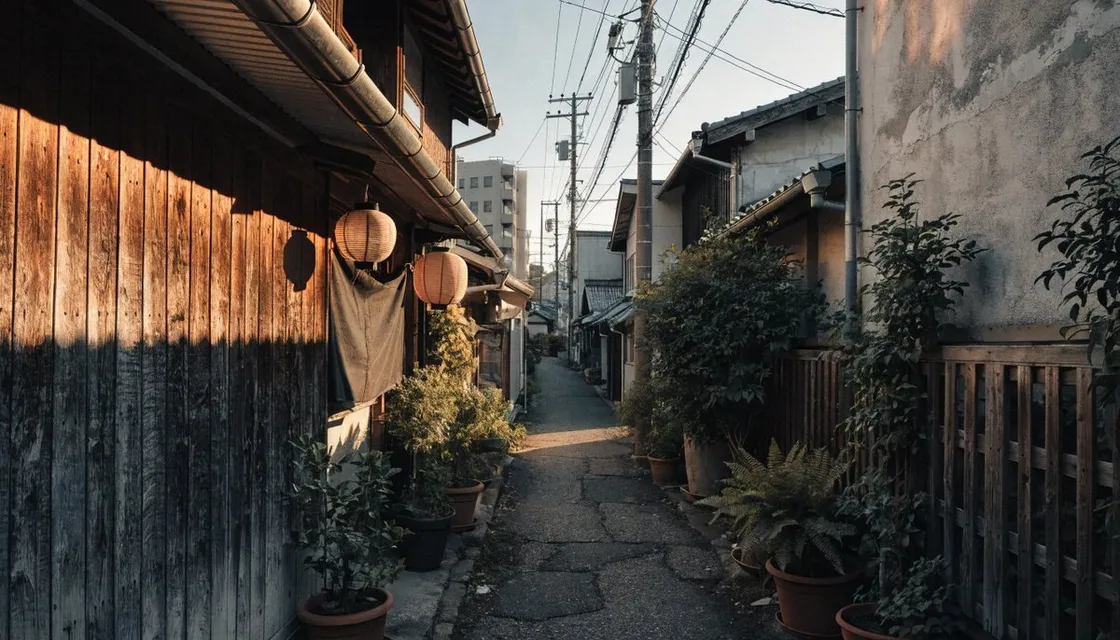
If you are staying in Tokyo for more than a couple of weeks, the single most useful thing you can do is walk the length of your nearest shotengai once, slowly, without buying anything.
A shotengai is a shopping street: a few hundred metres of small independent shops, often under an arcade roof, usually running from a station toward a residential area. Most Tokyo neighborhoods have one. Many nomads walk past theirs for months, headed to the chain supermarket, and never notice what is inside.
That is a mistake, because the shotengai is where a surprising number of small logistical problems get solved without an app, an account, or a delivery window.
What is actually on the street
The mix varies, but the pattern repeats across the city.
There is almost always a greengrocer, a fishmonger, a butcher, a bakery, and a small pharmacy.
Then the less obvious ones: a shoe repair stand, a key cutter, a watch battery shop, a tailor doing hems, a dry cleaner, a stationery shop, a hundred-yen store, a bicycle shop that will fix a puncture while you wait.
And usually a few places to eat that never appear in English-language guides: a standing soba counter, a family-run curry place, a coffee shop that has been there since the seventies.
The shotengai is the part of Tokyo that still runs on people rather than interfaces.
Why the produce is worth the detour
The greengrocer is where the price difference shows up most clearly.
Small independent produce shops on shotengai often sell in-season fruit and vegetables noticeably cheaper than the supermarket down the road, partly because they move volume fast and partly because they are not paying for climate-controlled display cases.
The trade-off is that you buy what is there, in the quantities they have decided on. Bundles of spinach, a net of onions, whatever the season has produced too much of.
If you cook at all, this reshapes your week in a good way. You start eating seasonally by accident.
Late afternoon is often when things get marked down, though the timing depends entirely on the shop.
The repair economy you did not know existed
This is the part that tends to surprise people.
A lot of what a nomad might otherwise replace can simply be fixed on a shotengai, cheaply and in under an hour.
Worn-down shoe heels. A jacket zip that has given up. Trousers that need taking up because you bought them abroad. A watch that stopped. A suitcase wheel. A bag strap.
Prices are usually modest and the work is usually quick, though anything unusual may need to be left for a day or two.
For someone living out of a suitcase, this matters more than it sounds. Repair is lighter than replacement.
How to shop without much Japanese
You need less language than you think.
Point, hold up fingers for quantity, and say kore o kudasai for “this one, please.” That covers most transactions.
Prices are almost always written, so you rarely need to understand a spoken number.
Some smaller shops still prefer cash, so it is worth carrying a few thousand yen when you go, even in a city that has otherwise gone largely cashless.
The other thing to know is that these are not self-service spaces. At a greengrocer or fishmonger, you generally tell the person what you want rather than filling a basket yourself.
The social side, without forcing it
You will not make friends on a shotengai in a week. Nobody does.
But if you buy your vegetables from the same person twice a week for two months, something quietly shifts. You get recognised. You get told what is good today. Occasionally you get an extra something dropped into the bag.
For remote workers, who can easily go days speaking to no one outside a video call, these thirty-second exchanges do real work. They are low-stakes, repeatable, and they make a neighborhood feel like yours.
You do not need to belong anywhere to be recognised somewhere.
Streets worth walking
Rather than treating any one street as a destination, it is usually better to start with the one nearest you.
That said, a few are large or characterful enough to be worth a deliberate visit: Togoshi Ginza in Shinagawa, one of the longest in Tokyo; Sunamachi Ginza in Koto, known for prepared food; Yanaka Ginza near Nippori, small and very photogenic; Musashi-Koyama’s long covered arcade; and Jujo Ginza in Kita, which stays busy and stubbornly local.
Visit in the late afternoon if you can. That is when the food shops are fullest and the street is at its most alive.
The honest caveats
Not every shotengai is thriving.
Some have thinned out considerably, with shutters down along half the street, as older owners retire without successors and shoppers move to the station-side chains. You will see this most in the outer wards.
Opening hours also tend to be shorter than you expect, and many individual shops close one weekday each week. A street that felt busy on Saturday can be half-shut on Tuesday afternoon.
And prices are not universally lower. Meat and fish are often good value, but packaged goods and household basics are usually cheaper at a drugstore or discount chain.
Use the shotengai for what it is good at, and use the supermarket for the rest.
FAQ
Do I need cash?
Not always, but bring some. Larger shops and any recently renovated ones usually accept cards and IC payment, while smaller family-run stands may not. A few thousand yen covers most trips.
Is it rude to browse without buying?
Walking the street and looking is completely normal. Handling produce yourself at a greengrocer is less so, so it is safer to ask rather than pick things up.
When is the best time to go?
Late afternoon, roughly before the evening rush, when food shops are fully stocked and markdowns start appearing. Sunday evenings and Tuesday afternoons are often quiet, with more shops closed.