Getting a Haircut in Tokyo Without Speaking Japanese
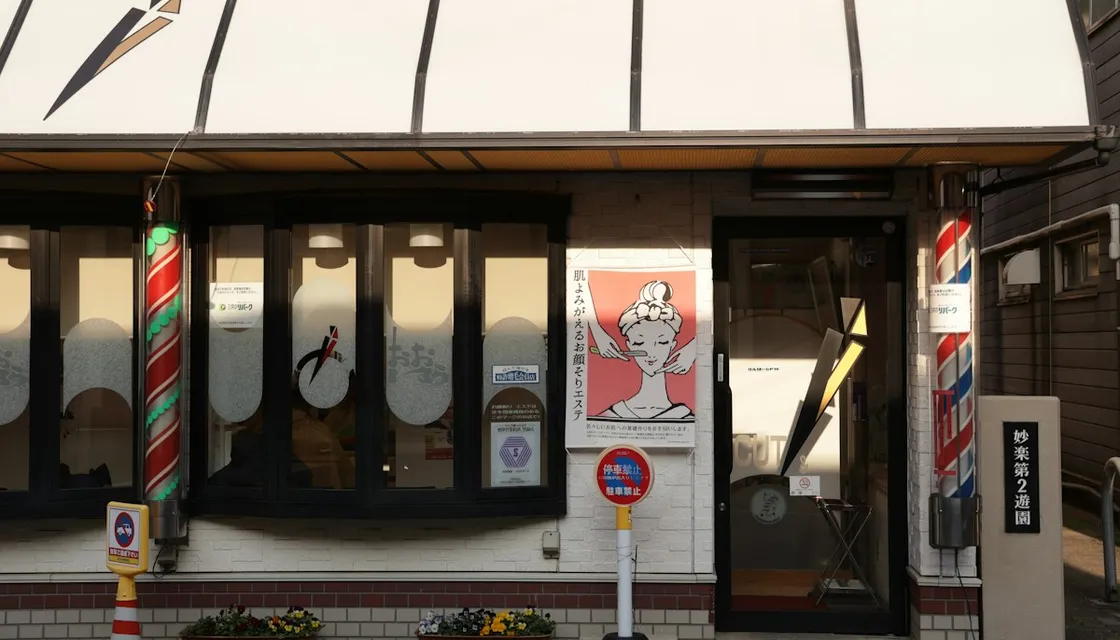
The short version: you can absolutely get a good haircut in Tokyo without speaking Japanese, and the single most useful thing you can do is bring photos.
Not a description. Photos. Two or three, from different angles, of hair that looks like yours.
Everything else in this guide is detail around that one habit.
A haircut is a strange little pressure point when you move somewhere new. It is not urgent, so it gets postponed. Then it becomes urgent, and suddenly you are trying to explain “texturize the ends but keep the weight on top” to someone across a language gap, in a chair, with scissors already moving.
The good news is that Tokyo has an unusually deep bench of options at every price and speed, and the standard of technical work is high almost everywhere.
The three tiers you are choosing between
Tokyo roughly sorts into three kinds of places, and picking the right tier matters more than picking the right shop.
Quick-cut chains are the fast, no-frills option. You buy a ticket from a machine, wait your turn, and get a cut in around ten to fifteen minutes. There is usually no shampoo and no blow-dry, and a vacuum hose handles the loose hair instead. QB House is the best known of these, and there are branches in most stations and shopping centers.
This tier is ideal if you just need length taken off and you do not want a conversation. It is the closest thing to a utility.
Neighborhood barbers, marked by the classic red-blue-white pole, sit in the middle. Many are older, family-run, and quiet. A cut typically comes with a shampoo, a shave, and hot towels, and the whole thing feels less like a transaction than a small ritual.
Japanese is more useful here, but photos and gestures carry you a long way, and the atmosphere is genuinely lovely.
Salons are where most nomads with any opinion about their hair end up. These are the design-forward places clustered in Omotesando, Daikanyama, Shibuya, Nakameguro, and Ginza, and increasingly in quieter neighborhoods too.
Expect a longer appointment, a proper consultation, a head massage during the shampoo, and a stylist who has thought carefully about the shape of your face.
The tier you choose is really a choice about how much of your afternoon you want the haircut to be.
Booking, and why the apps matter
Walk-ins work fine at quick-cut chains and many barbers. Salons generally expect a reservation.
The two booking platforms that dominate are Hot Pepper Beauty and Minimo. Hot Pepper Beauty is the larger of the two, with extensive listings, photo galleries, and price menus. Minimo skews younger and toward assistant stylists, often at reduced rates in exchange for being a practice client.
Both are Japanese-language, but they are highly visual and browser translation handles browsing reasonably well. You are mostly filtering by area, date, and price, then looking at photos. The harder part is the booking step itself, a Japanese sign-up and contact form; if it stalls, messaging the salon on Instagram or calling is a perfectly normal way to book.
Instagram is the underrated third option. Many Tokyo stylists post their work there, and a good number list a booking link in their profile. Searching a neighborhood name alongside terms like hair salon in Japanese surfaces stylists whose aesthetic you can actually see before committing.
If you want English-speaking service specifically, it exists, though usually at a premium. Areas with large international populations such as Hiroo, Azabu, Roppongi, and parts of Shibuya have salons that advertise English support directly.
Saying what you want
Here is where the photos do the heavy lifting.
Save three or four reference images before you go. Ideally include one of your own hair at a length you liked, and one or two of the target cut from the front and back.
Stylists in Tokyo are used to this. Nobody will find it odd.
A few phrases are worth having ready in a notes app:
- 短くしてください (mijikaku shite kudasai): please make it shorter
- 少しだけ切ってください (sukoshi dake kitte kudasai): just a little off, please
- すいてください (suite kudasai): please thin it out
- 前髪 (maegami): bangs or fringe
- 後ろ (ushiro): the back
- このくらい (kono kurai): about this much, while showing with your fingers
Length is often discussed in centimeters, so knowing roughly how many centimeters you want removed is more useful than adjectives.
One genuine caution: if your hair is very curly, coily, or textured, do not assume any salon can handle it. Many Tokyo stylists train primarily on straight Asian hair, and the cutting techniques differ meaningfully.
Specialist salons for textured and curly hair do exist in Tokyo and have grown in number, but this is a case where researching a specific stylist beforehand pays off far more than walking into whatever is nearby.
What it costs and how it runs
Prices vary widely, so treat any figure as a rough band rather than a quote.
Quick-cut chains sit at the low end, typically around the price of a nice lunch. Neighborhood barbers land in the middle. Salons range from moderate to genuinely expensive depending on the stylist’s seniority and the district, with color and treatments adding substantially on top.
Salon menus are usually itemized, so cut, shampoo, color, and treatment each carry their own line. Check what is bundled before you agree, because a treatment can quietly double the bill. Also note that many coupon prices on Hot Pepper Beauty are marked 新規 (first visit only), so a return visit to a salon you liked can cost more than the price that drew you in.
Tipping is not customary in Japan, and this holds in salons too. The listed price is the price.
Payment is increasingly cashless, but smaller barbers and older shops may still be cash-only, so carrying some is sensible.
Small things that make it go smoothly
Arrive on time. Salon scheduling is tight and stylists are often booked back to back.
Expect the shampoo to be more thorough than you are used to. Many salons drape a light cloth over your face during it, which is normal and meant for comfort.
You will often be offered a drink and sometimes magazines. Working on your laptop mid-appointment is generally fine at salons if you ask, though awkward during the cut itself.
If something is not right, say so while you are still in the chair. Adjustment is easy then and awkward later, and stylists would much rather fix it than have you leave unhappy.
Finally, if you find someone good, ask for their card and book your next appointment before you leave. Good stylists fill up, and having a standing person to return to removes the whole problem from your life for as long as you are in the city.
A haircut is one of the fastest ways a new city stops feeling temporary.
FAQ
Do I need a reservation?
For quick-cut chains and most traditional barbers, no. For salons, almost always yes, and often several days ahead for popular stylists. Hot Pepper Beauty and Minimo are the standard booking routes.
Will anyone speak English?
Sometimes, especially in international districts and at salons that advertise it. Elsewhere, assume not. Photos plus a few saved phrases handle the vast majority of appointments, and a translation app covers the rest.
Is there anywhere for curly or textured hair?
Yes, and the number has grown, but it requires searching for a specialist rather than choosing by convenience. Look for stylists who show textured hair in their portfolio, and message them before booking to confirm they work with your hair type.