Daikanyama for Remote Workers: Books, Cafés, Calm
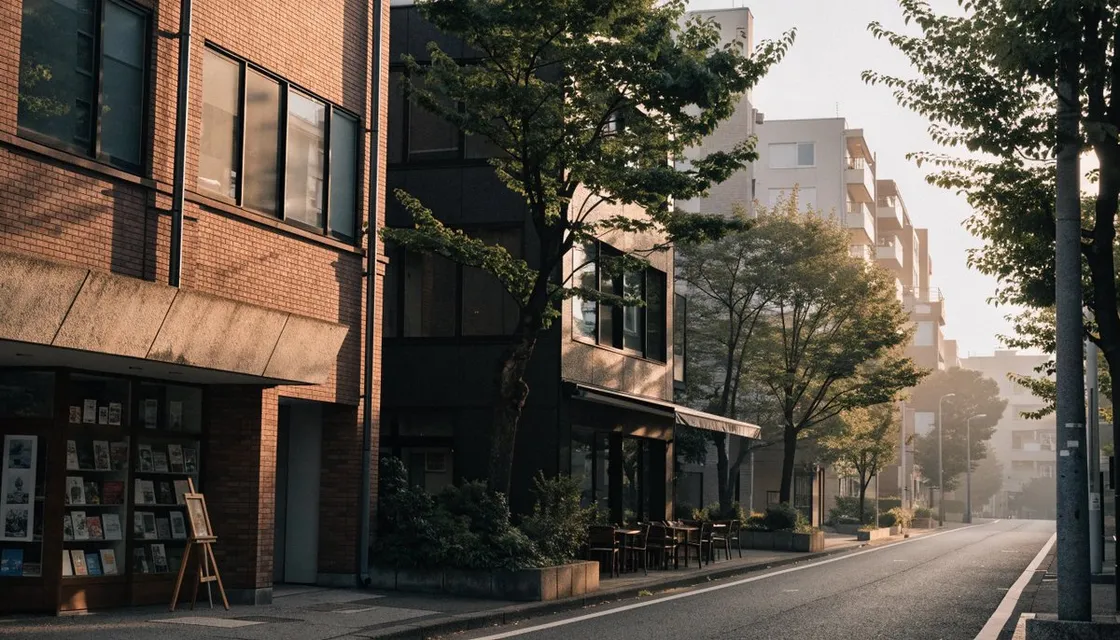
Daikanyama works best as a place to spend a workday, not a place to live for a month.
It is small, calm and unusually pleasant to walk. It is also one stop from Shibuya, which means you can have the quiet and the big-city options in the same day.
A small neighborhood gives you less to choose from and more time to actually work.
Why it suits a focused day
Daikanyama sits on the Tokyu Toyoko Line, between Shibuya and Nakameguro. The station is compact and the streets around it are low-rise, so the whole area feels more like a village than a district.
Many nomads find that this changes how a day feels. There is no giant station to cross and no wall of signage competing for attention.
You arrive, walk for five minutes, and you are already where you meant to be.
Where the work happens
The neighborhood is known for its bookstore and café culture. Daikanyama T-SITE, built around Tsutaya Books, is the best-known example, and it tends to be built around browsing, coffee and long stays. Its Starbucks lets you read the first-floor books at your table, and the complex also has Share Lounge, a space that T-SITE describes as usable as an office. Check the current terms before you count on a seat.
Smaller independent cafés are tucked along the side streets.
A few honest notes before you plan a day around any of them:
- Power outlets and Wi-Fi vary a lot from place to place, so check before you unpack.
- Weekend afternoons get busy, and laptop use may be discouraged at peak times.
- Many places are designed for reading and conversation, not for video calls.
Weekday mornings are the sweet spot. If you want a broader look at what a good work café looks like in the city, the café guide covers the basics.
Eating and breaks
Lunch is easy but not especially cheap. Expect café sets and small restaurants rather than the cheap teishoku counters you find in more commuter-heavy areas.
The konbini fallback is always there if the budget needs a reset. Our konbini playbook has the usual rotation.
A short walk is part of the appeal. The side streets and the slow stretch of green nearby make a good thirty-minute reset between work blocks.
Staying nearby vs. visiting
Monthly rents in this area are generally on the higher side, and the housing is mostly small apartments rather than share houses. Treat any figure you see as something to verify yourself.
For most people the smarter move is to live a stop or two away and come in for the day. Neighbors such as Nakameguro and Ebisu offer similar calm with more everyday shops, though rents there are just as high, so the gain is convenience rather than savings.
If you are still deciding where to base yourself, the neighborhood comparison is a good place to start.
When Daikanyama is not the right call
It is a poor fit if you need cheap meals, late-night options, or a coworking space with a strong community.
It is also less useful on busy weekends, when the quiet that makes it appealing can disappear.
Think of it as a change of scenery for a deep-work day. A few hours here, then back to your regular base.
FAQ
Is Daikanyama good for working remotely?
Yes for a day or half day, mainly through cafés and bookstores. It is less suited as a long-term base because of cost and limited everyday services.
How far is it from Shibuya?
It is one stop on the Tokyu Toyoko Line, and a walk is also possible if you like a longer stroll. Check a route app for the current timing.
Is it expensive?
It tends to be pricier than average for food and housing. Budget a bit more than in areas like Koenji or Nakano.