Atami Day Trip from Tokyo: Hot Springs and a Sea Desk
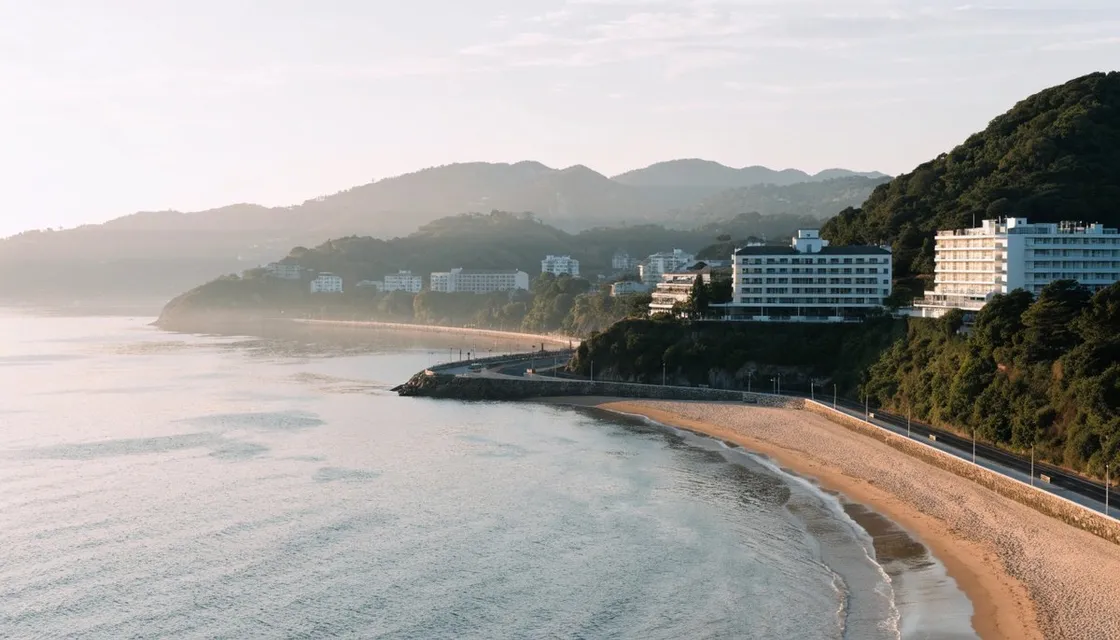
Atami is the hot-spring town that feels like a different country but sits an hour from your desk. Hills fall straight into the bay, and the streets climb up from the station like a staircase.
It works as a day trip, and it works even better as a reset on a slow week.
Getting there
There are four ways to ride the same 105 km or so, and the prices are closer than you might expect. These are from a route search on 16 October 2026, one way from Tokyo Station:
| Option | Time | Fare |
|---|---|---|
| Tokaido Shinkansen (Kodama) | about 45 min | ¥3,740 unreserved, ¥4,470 reserved |
| Limited express Odoriko | about 1 hr 20 min | ¥3,670 reserved |
| Tokaido line, ordinary seat | about 1 hr 50 min | ¥2,090 |
| Tokaido line, Green Car | about 1 hr 50 min | about ¥3,640 with a Suica Green ticket |
Kodama and some Hikari trains stop at Atami. The Green Car figure is the post-revision price given in news reporting on JR East’s March 2026 fare revision, not from the route search, so treat it as approximate.
For a work day, the Green Car is the interesting one. Most Tokaido line trains carry one, with unreserved seats; buy a Green ticket on your Suica before boarding and you get a seat and close to two hours of quiet desk time for about the Shinkansen price. Check the timetable, since a few trains run without one. If you just want to arrive fresh, take the Shinkansen out and a relaxed local train back.
Fares and timetables change, so check them before you go.
Start with the footbath
Right in front of the station is Ieyasu no Yu, a free hot-spring footbath and a good first stop if you arrive with a heavy laptop bag. Ten minutes with your feet in warm water is a gentle way to switch modes.
It is open in the daytime only, 9:00 to 16:00 according to the Atami tourism association, and can close early, so make it a morning or early-afternoon stop.
Atami is a town where the first thing you do is sit down and slow your breathing.
The walk to the sea
From the station, the shopping streets, starting with Nakamise and Heiwa-dori right in front of it, run downhill toward the water. Expect small shops, seafood snacks and sweets, and a gradual slope that feels longer on the way back.
At the bottom, the beach and promenade open up along the bay. On a clear weekday morning it is quiet, and the view alone justifies the trip.
Where to work
Atami has a modest set of cafes and a few places that welcome laptops, mostly near the station and along the shopping streets. Many nomads plan one focused block of two or three hours, then spend the rest of the day outside.
Older guides point to naedoco, a coworking space on Atami Ginza street. It closed on 9 June 2026, according to its own website, so do not plan the day around it.
Do not count on outlets or fast Wi-Fi. Bring a full battery, and set your phone as a backup hotspot. Our Odawara day trip guide has the same advice, because the pattern is similar on this stretch of coast.
If you need a proper desk, plan the work first in the city and travel afterwards.
Things to see
Atami has a few classic stops: the great camphor tree at Kinomiya Shrine, said to be over 2,000 years old and a national natural monument; the MOA Museum of Art on the hill above Sagami Bay (closed Thursdays); and Atami Castle, an observation deck in castle form. The castle was built in 1959 as a sightseeing spot, not a historic fortress, so go for the view.
Most of these involve a hill or a bus, so choose one or two rather than all of them. Check opening days before you go, since smaller sites close on set weekdays.
A hot-spring soak
Atami is known for onsen, and many hotels sell day-use bathing. If you want a full soak, call or check the hotel’s website for day-use hours and prices.
Our sento and sauna guide covers bath etiquette, including tattoos and towel rules, which apply here too.
Pairing it with other trips
Atami sits on the same line as Odawara and the road to Hakone. If you are planning a longer loop, the Hakone trip guide explains when a day is enough and when to stay overnight.
For more ideas by distance and effort, see our weekend trips roundup.
A simple day plan
Take a morning Shinkansen and have a work block ready by late morning. Walk down to the sea after lunch, and finish with a footbath or a day-use soak.
Leave in the late afternoon, and you are home before the evening rush has fully built.
FAQ
Can Atami be done as a day trip from Tokyo?
Yes. The Shinkansen ride is about 45 minutes and ¥3,740 unreserved one way, so a full day is comfortable. On a budget, the ordinary Tokaido line takes under two hours for ¥2,090.
Is it good for remote work?
For a short block, yes. For a full day of calls, a city desk is more reliable, since outlets and connections vary.
Is it worth staying overnight?
If you want a proper onsen evening, many people think so. Otherwise a day is enough for the main sights.