What Tokyo Looks Like After You Leave Japan
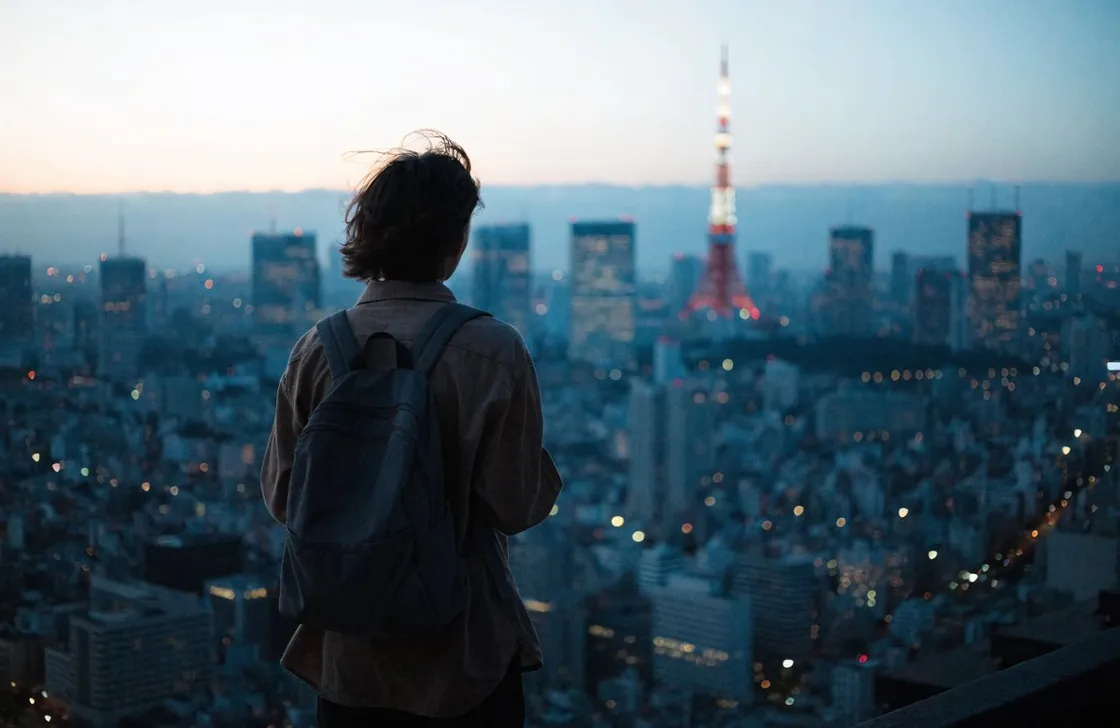
I’m Japanese, and I left. I wasn’t running from anything. At some point I just wanted to find out whether I was living in Japan on purpose or only by default.
So I went. I built my business in Taiwan for a while, kept moving from there, and now I run it from wherever the 35 kilograms and I happen to land.
Here’s the strange part nobody warns you about: you only really see your own country after you leave it.
When you grow up inside a place, it’s just the water you swim in.
Tokyo was my idea of “normal,” invisible the way your own accent is invisible. It took living elsewhere, and comparing cities the way nomads do, before I could look back and see Tokyo as one option among many. Before that, it was simply where I was born.
You never really choose the country you’re born in. You only get to choose it later, once you’ve seen the alternatives.
What I only noticed after leaving
From the outside, the clichés about Tokyo turned out to be true, just for different reasons than the guidebooks give. Yes, the trains run on time. What I actually missed was the quiet trust underneath: the assumption that things will work, that people will be considerate, that you can cross a huge city without bracing yourself.
You don’t notice how rare that is until you’ve lived without it.
I’d stopped seeing the convenience too. The konbini, the vending machines, the way almost anything you need is a few minutes away at any hour.
Living in places where that isn’t a given taught me it isn’t a given. Tokyo does this better than almost anywhere, and it’s exactly what a location-independent worker needs so they don’t burn energy on logistics.
Then there’s safety, which I don’t take lightly anymore as a woman moving around the world alone. Walking home late without running a threat assessment in the back of my mind is a big deal.
From inside Japan you can’t see it. From outside, it’s one of the first things I’d put on the list.
Seeing Tokyo as a base, not a birthplace
This is the shift that surprised me most. Once Tokyo stopped being my default and became a choice, I liked it more.
As a nomad, I ask different questions about a city than a resident would. Can I work here without friction?
Can I leave easily and come back? Is it safe, is it connected, does it have a rhythm I can actually live with?
Tokyo does well on all of them, without making a fuss about it, and its two airports put most of Asia a short, frequent flight away. As a base, the city I grew up in turns out to be one of the strongest options on the map.
I just couldn’t see that until I’d left.
Choosing your own home country on purpose comes with its own kind of freedom. It stops being where you ended up and becomes where you decided to be, knowing full well what else is out there.
Anyone can make that switch, Japanese or not. If you’re a nomad weighing Tokyo, you get to make the same choice without spending decades taking it for granted first.
The place you’re from can become the place you choose. It just takes leaving long enough to see it clearly.
What I’d tell a nomad eyeing Tokyo
I won’t pretend it’s simple. Tokyo isn’t cheap, the paperwork can be slow, and at first the language politely keeps part of the city out of reach.
Those are real problems. It’d be dishonest of me to wave them away just because this is my home country.
But if you want a base that works, that’s safe and calm, and that connects you to the rest of Asia, Tokyo deserves a serious look. My only real edge in saying so is that I’ve seen it from both sides: from inside, where I couldn’t see it at all, and from outside, where I finally understood what it was.
Leaving Japan didn’t make me love it less. It let me choose it, and that’s a much better thing.
That’s the Tokyo I’d want any nomad to meet. Not somewhere you’re stuck by default, but a base you pick on purpose and make your own.