Living on 35 Kilograms: What a Nomad CEO Actually Carries
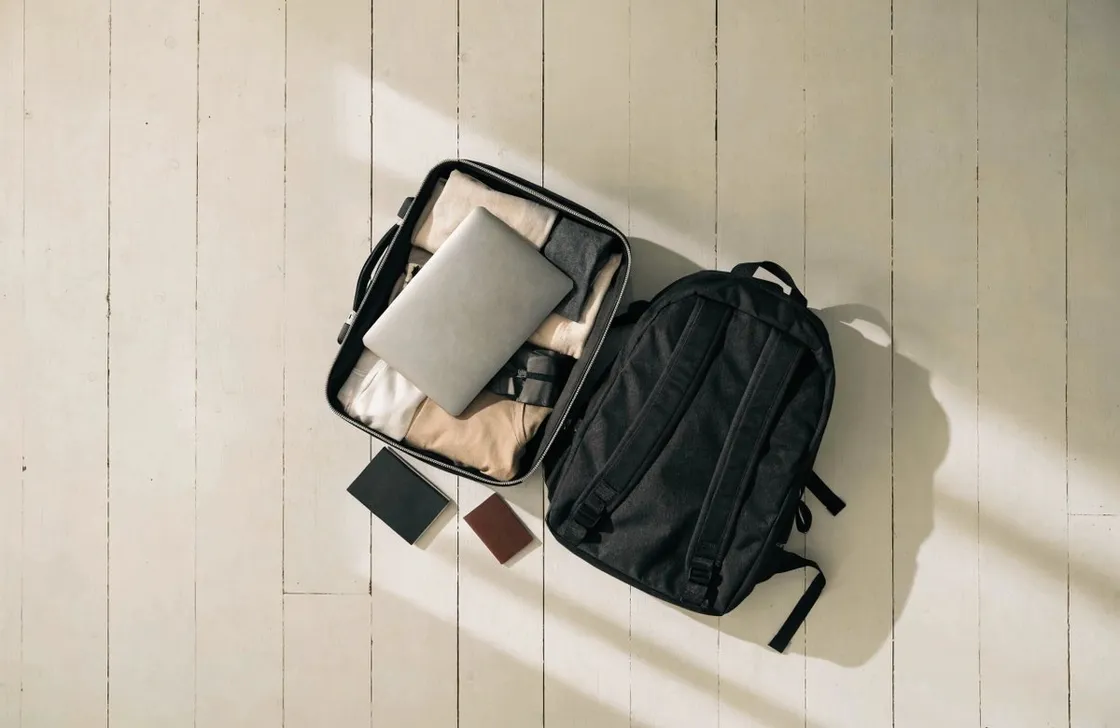
Everything I own fits in 35 kilograms. One checked bag, one carry-on, one backpack.
That’s the whole life: the clothes, the work, the small pile of things I’ve decided are worth carrying across borders. When people hear that, they assume it’s about discipline, or sacrifice.
It isn’t. Living on 35kg turned out to be the clearest decision-making tool I’ve ever owned.
I didn’t plan any of this. I left Japan, spent time building in Taiwan, and kept moving from there.
Every move taught me the same lesson, quietly: the stuff I dragged along “just in case” almost never earned its place, and most of the weight I carried was weight I’d never questioned. At some point I stopped trying to pack more efficiently.
The question changed from “how do I fit this in” to “does this deserve to come at all.”
Every object you own is a small, ongoing decision. Living light just means you make those decisions on purpose.
What 35kg actually looks like
People expect some kind of secret. There isn’t one.
The bag is boring, and that’s kind of the point.
The heart of it is work: a laptop, a spare drive, chargers, a battery, the two or three cables I actually use. A little over a week of clothes, picked so everything goes with everything, because a wardrobe that all works together is lighter than a bigger one that doesn’t.
A tiny kit of things that are annoying to rebuy in a new country. And then a very short list of things that aren’t useful at all. They’re just mine, and they make a rented room feel like somewhere I live instead of somewhere I’m passing through.
That last category matters more than packing guides let on. Living light doesn’t mean owning as little as possible.
It means admitting that a handful of things really matter to you, and letting almost everything else go.
Why less baggage means more freedom
The obvious benefit is logistics. When you don’t own much, moving cities takes an afternoon. It’s not a project.
You say yes to things faster. A last-minute month somewhere new is just a decision, not a relocation.
The bigger benefit is quieter. When everything you own has to justify being there, you stop mistaking “having options” for “being free.” A closet full of clothes you don’t wear isn’t freedom. It’s a decision you keep putting off.
Thirty-five kilograms makes you decide, once, and then gives you back all the attention you were spending on that stuff.
And that attention is what you really get out of it. Owning less didn’t make my life smaller.
It made room for the parts I care about: the work, the moving, the people, the next place. Most of what I gave up, I’ve never missed once.
Freedom isn’t having every option open. It’s knowing which few things you’d actually carry, and not apologizing for leaving the rest.
Why Tokyo rewards traveling light
This is where Tokyo comes in, because few cities are this kind to someone living on 35kg. The rooms are small, but everything is built around that: clever storage, a konbini on every corner for whatever you forgot to pack, coin lockers when you don’t want to haul your bag around (and luggage delivery between the airport and your hotel when the big case won’t fit in one), a phone that’s also your train pass and your wallet.
You can land, drop your bag, and be up and running within an hour.
Cities that assume you own a lot make life hard when you don’t. Tokyo assumes the opposite.
It’s built for people moving through tight spaces with what they need and not much more, which is exactly how I already live. For a nomad who travels light, that fit is a real reason to make it a base and not just a stop.
One practical note if you’re flying in on a low-cost carrier around Asia: check the cabin weight limit before you pack. It’s often lower than what a full carry-on weighs.
The real reason I keep the bag small
I could own more now. The 35kg isn’t a budget anymore, it’s a choice, and I keep making it.
Because the bag is really a filter for everything else. When a new thing doesn’t clearly earn its weight, it’s a small preview of all the other times I say “yes” too easily: the meeting, the commitment, the project that sounds fine and quietly costs more than it gives back.
Keeping the bag light keeps me honest about the rest. That’s the philosophy I try to live by, packed into a luggage scale: you’re allowed to choose your life, on purpose, and own it.
Thirty-five kilograms is just where I practice.